Collections for the Classroom: George Washington: From Soldier to Commander in Chief
George Washington Teacher Workshop, American Revolution Institute
virtual July 8, 2021
George Washington subscribed (literally and figuratively) to the aims of the Society of the Cincinnati as they were outlined in its Institution, and he served as the Society’s president general from its inception until his death. Those aims, which were Washington’s aims as well as the aims of the Society, included perpetuating the fellowship of the officers of the Continental Army and Navy, perpetuating the memory of the achievement of American independence, and advocating for justice to be done for veteran officers.
These collection items were selected for a workshop with teachers participating in the first virtual George Washington Teacher Institute studying “George Washington: From Soldier to Commander in Chief.”
Click for a larger view.
The Institution of the Society of the Cincinnati
May 1783
The Society of the Cincinnati Archives
Adopted at the founding meeting on May 13, 1783, the Institution remains the principle guiding document of the organization to the present day. The first official copy was inscribed on a large, irregularly shaped sheet of parchment and signed by George Washington and thirty-five other officers. The Institution lays out the tenets and organizational structure of the Society, the rules of eligibility to membership, the establishment of constituent branches and details of the Society’s insignia. To join the Society, the original members were required to sign their names to the Institution, thus pledging their allegiance to the immutable principles upon which the Society was founded.
Click for a larger view.
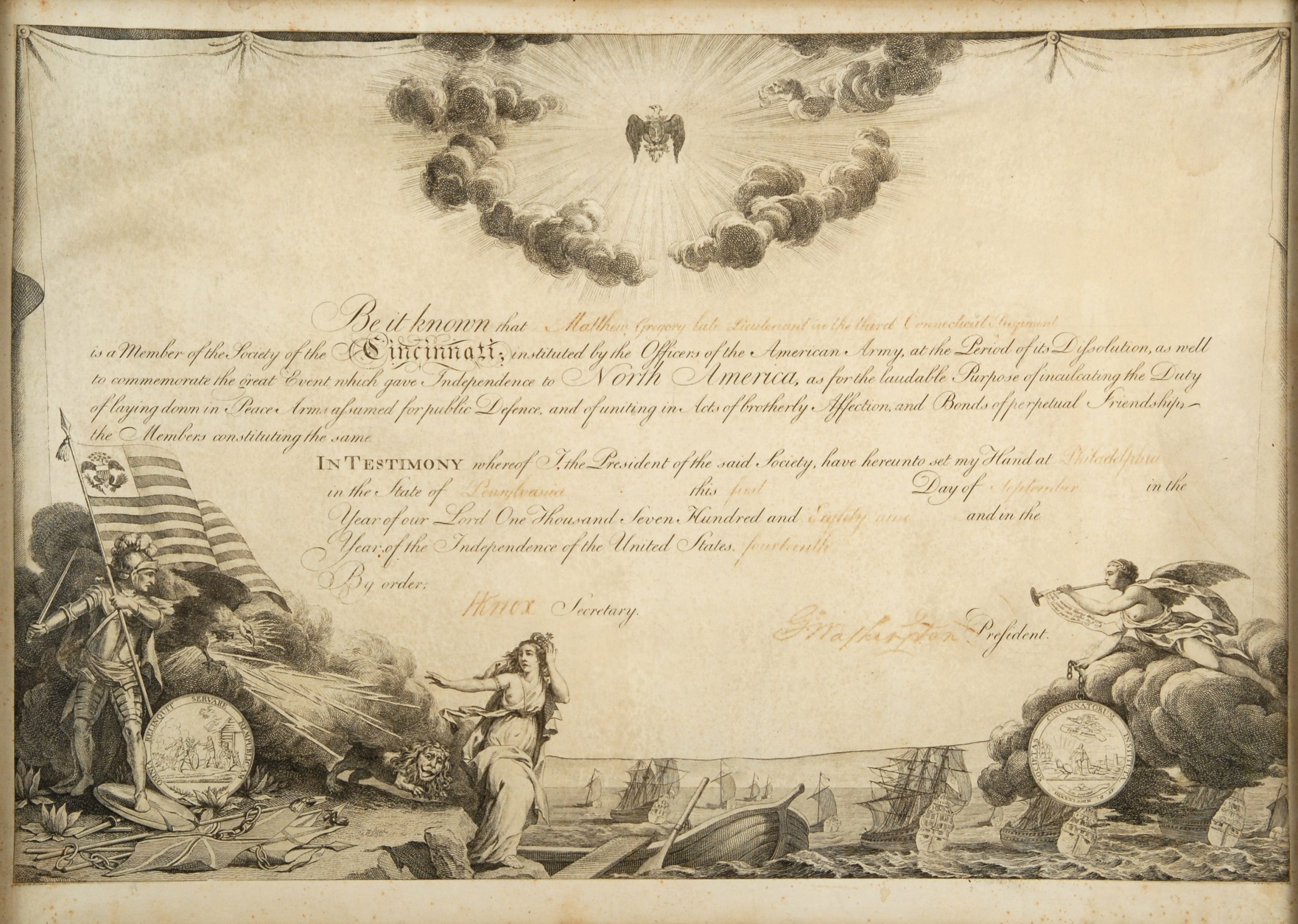
Society of the Cincinnati diploma
September 1, 1789
Gift of Mrs. Edward Correa, 1955
The imagery on this diploma is based on Pierre L’Enfant’s original sketch for the Society’s membership certificate. The medal featuring the story of Cincinnatus is in the lower left and right corners. This diploma belonged to Lt. Matthew Gregory, who served in the Third Connecticut Regiment, and is signed by Henry Knox and George Washington.
Click for a larger view.
Drawing of the diploma of the Society of the Cincinnati
Pierre-Charles L’Enfant
June 1783
The Society of the Cincinnati Archives
Concerned that all members of the Society might not be able to afford to purchase an Eagle, L’Enfant also submitted this design for an elegant membership certificate, to be called the diploma. The imagery depicts America forcing Britannia away from its shores, with Fame heralding the achievement of American independence. The Society adopted the diploma and the Eagle as the official emblems of membership at its June 19, 1783, meeting.
Click for a larger view.
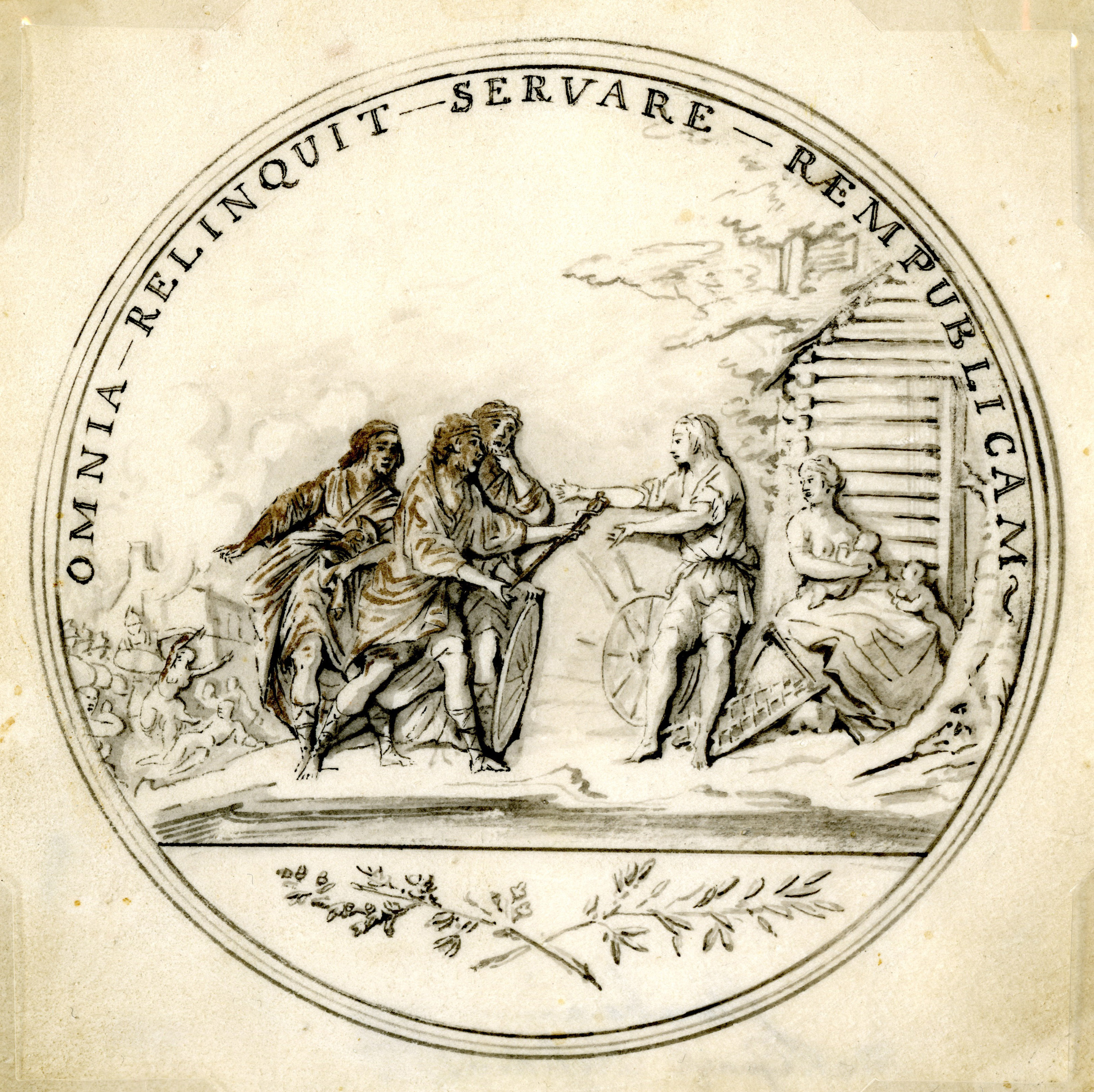
Drawing of the Society of the Cincinnati medal
Pierre-Charles L’Enfant
June 1783
The Society of the Cincinnati Archives
At the request of the Society, Pierre-Charles L’Enfant, a French volunteer in the Continental Army Corps of Engineers, drew a design for a medal bearing imagery of the life of the fifth-century BC Roman hero Cincinnatus, from whom the Society takes its name. The obverse, shown here, depicts Cincinnatus receiving his sword from Roman senators as he leaves home to lead his country against its enemies.
Click for a larger view.
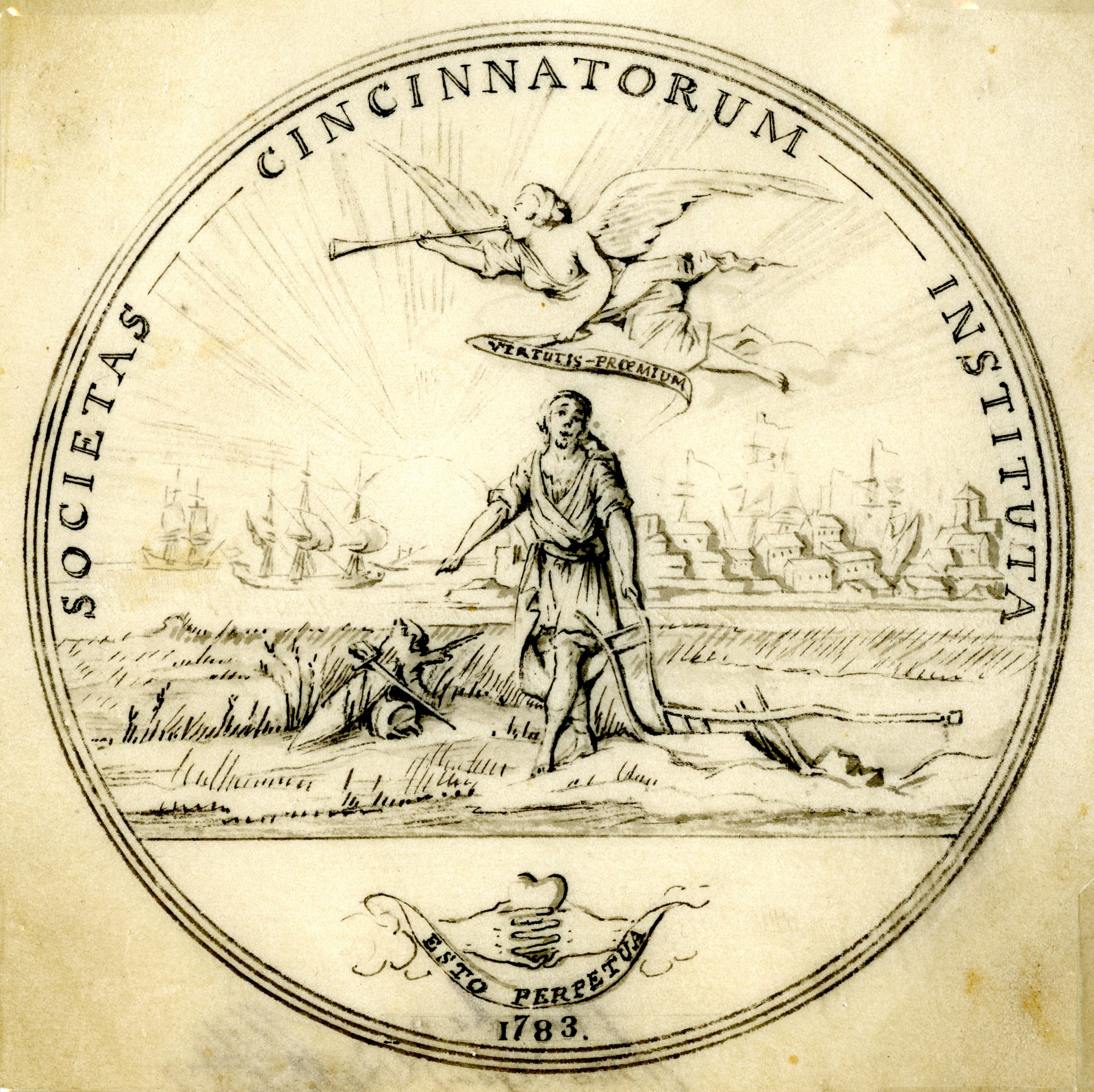
Sketch for the Society of the Cincinnati medal, reverse
Pierre-Charles L’Enfant
June 1783
The Society of the Cincinnati Archives
The reverse side of the medal shown in L’Enfant’s pen-and-ink drawing features the victorious Cincinnatus returned to his plow, with the figure of Fame flying over him holding a banner that reads “Virtutis Praemium.”
Click for a larger view.
Sketch for the Society of the Cincinnati Eagle
Pierre-Charles L’Enfant
June 1783
The Society of the Cincinnati Archives
L’Enfant’s original sketch for the Society’s insignia, cut out to convey its actual proportions, is endorsed by Maj. Gen. Friedrich Wilhelm von Steuben, a founding member of the Society who served as acting president general briefly before George Washington took office. It bears on each side a medallion depicting scenes of the life of Cincinnatus.
Click for a larger view.
Sketch for the Society of the Cincinnati Eagle
Pierre-Charles L’Enfant
June 1783
The Society of the Cincinnati Archives
The reverse of L’Enfant’s original sketch for the Society’s insignia.
Click for a larger view.
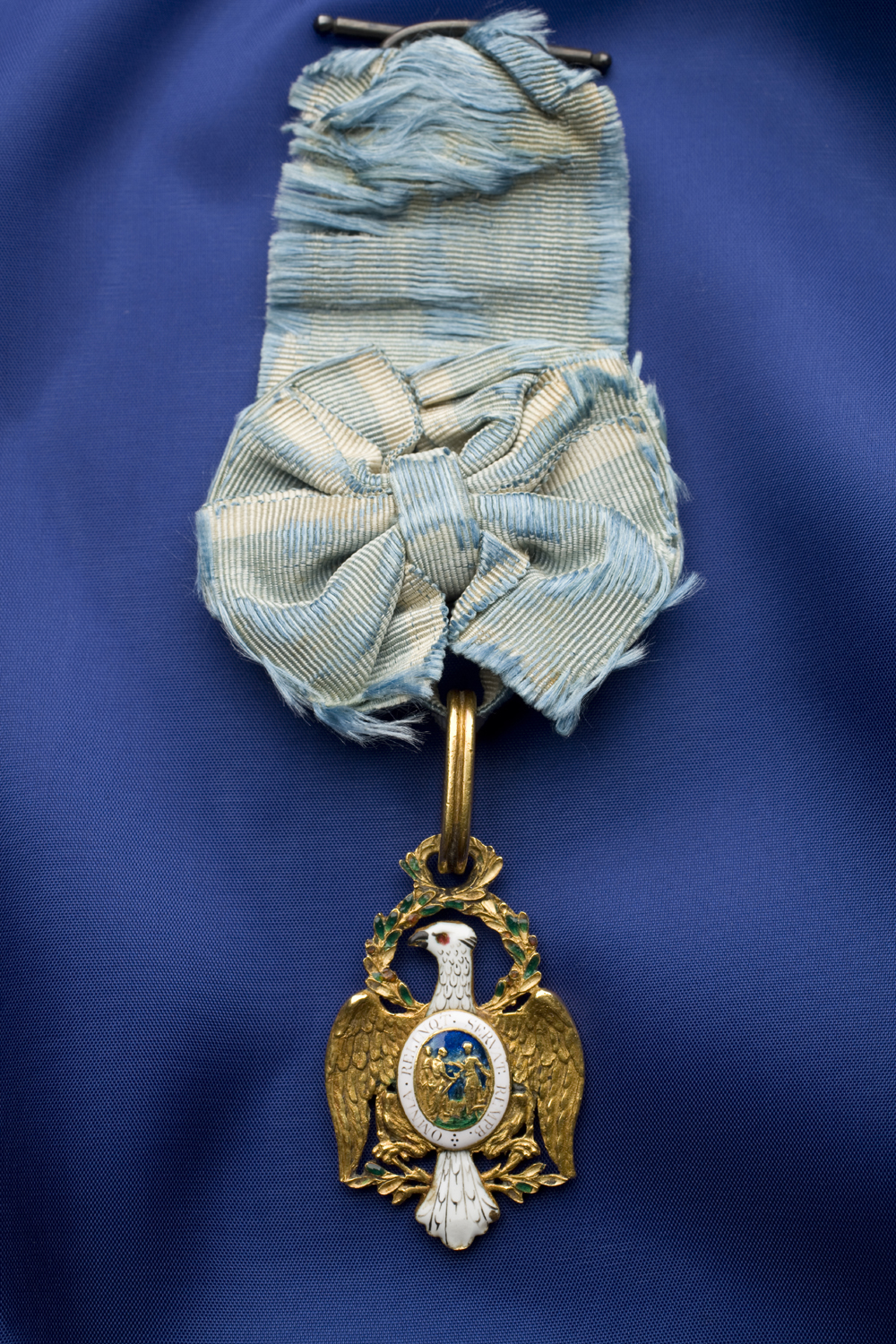
Society of the Cincinnati Eagle insignia owned by Tench Tilghman
Nicolas Jean Francastel and Claude Jean Autran Duval, Paris
1784
Gift of Harrison Tilghman, Society of the Cincinnati of Maryland, 1953
George Washington, the first president general of the Society, purchased eight gold Society insignias to give to former aides-de-camp who joined the organization. He presented this one to Tench Tilghman of Maryland, to whom Washington entrusted the duty of delivering to Congress the Articles of Capitulation after the Siege of Yorktown. Tilghman's Eagle retains its original silk ribbon and metal clasp.
Click for a larger view.
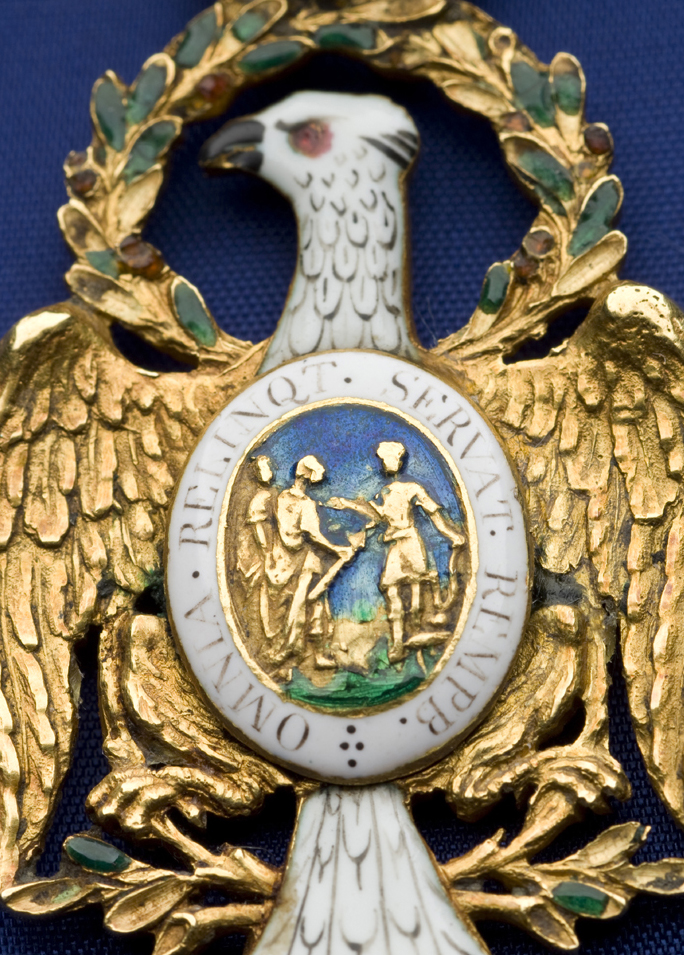
Detail of the Society of the Cincinnati Eagle insignia, obverse
Nicolas-Jean Francastel and Claude-Jean-Autran Duval, Paris
1784
Gift of Harrison Tilghman, Society of the Cincinnati of Maryland, 1953
The oval medallion on the obverse of the Eagle depicts Cincinnatus receiving a sword from two representatives of the Roman senate.
Click for a larger view.
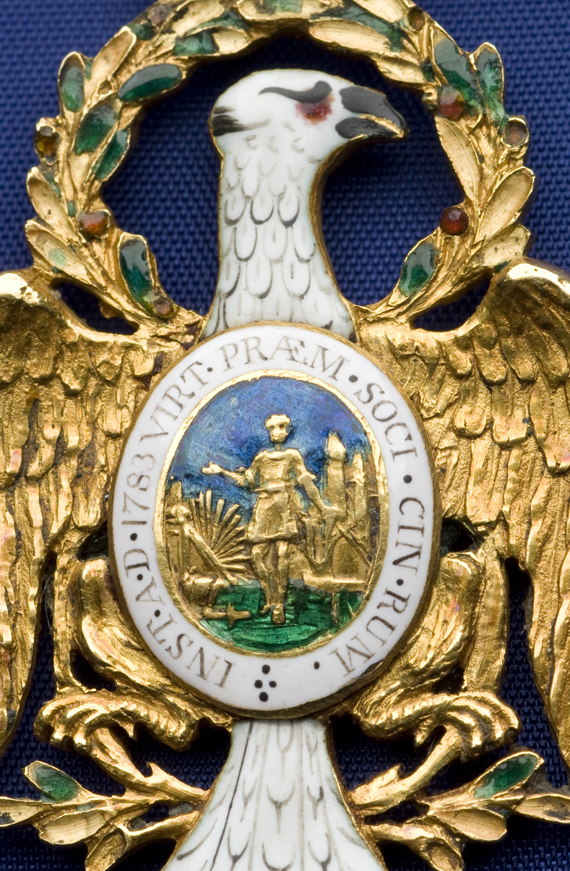
Detail of the Society of the Cincinnati Eagle insignia, reverse
Nicolas-Jean Francastel and Claude-Jean-Autran Duval, Paris
1784
Gift of Harrison Tilghman, Society of the Cincinnati of Maryland, 1953
The oval medallion on the reverse of the Eagle shows Cincinnatus having returned triumphantly to the plow.
Click for a larger view.
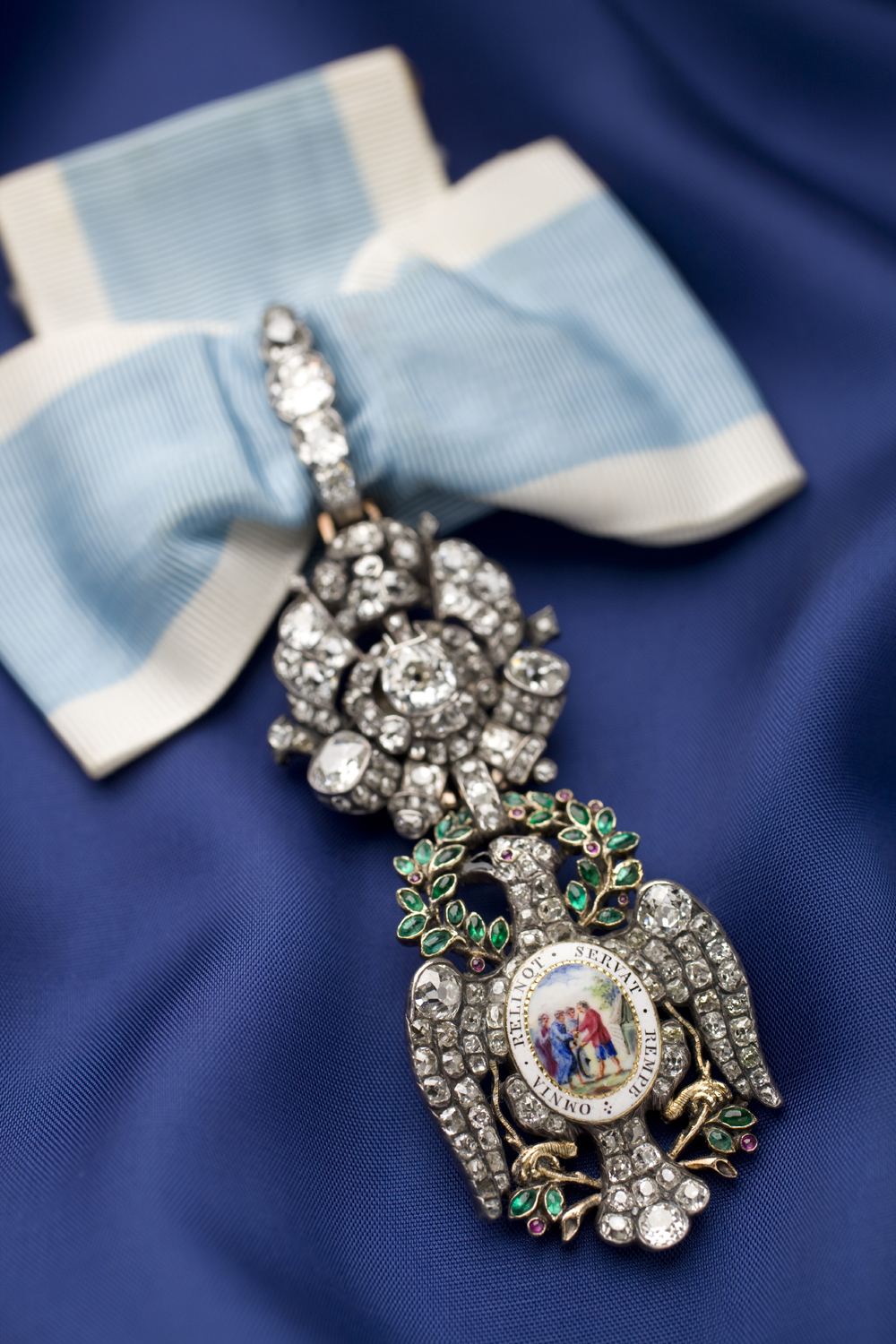
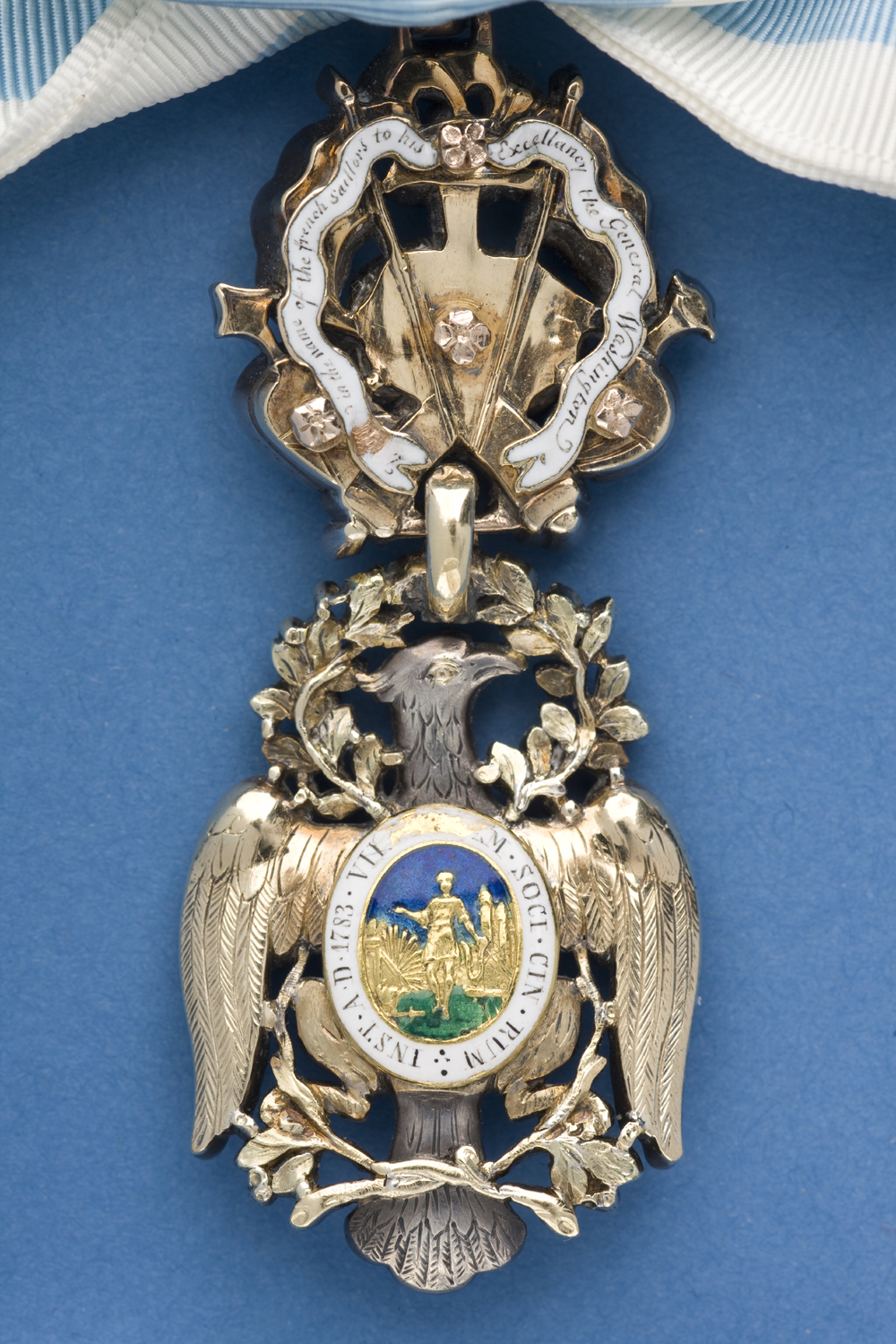
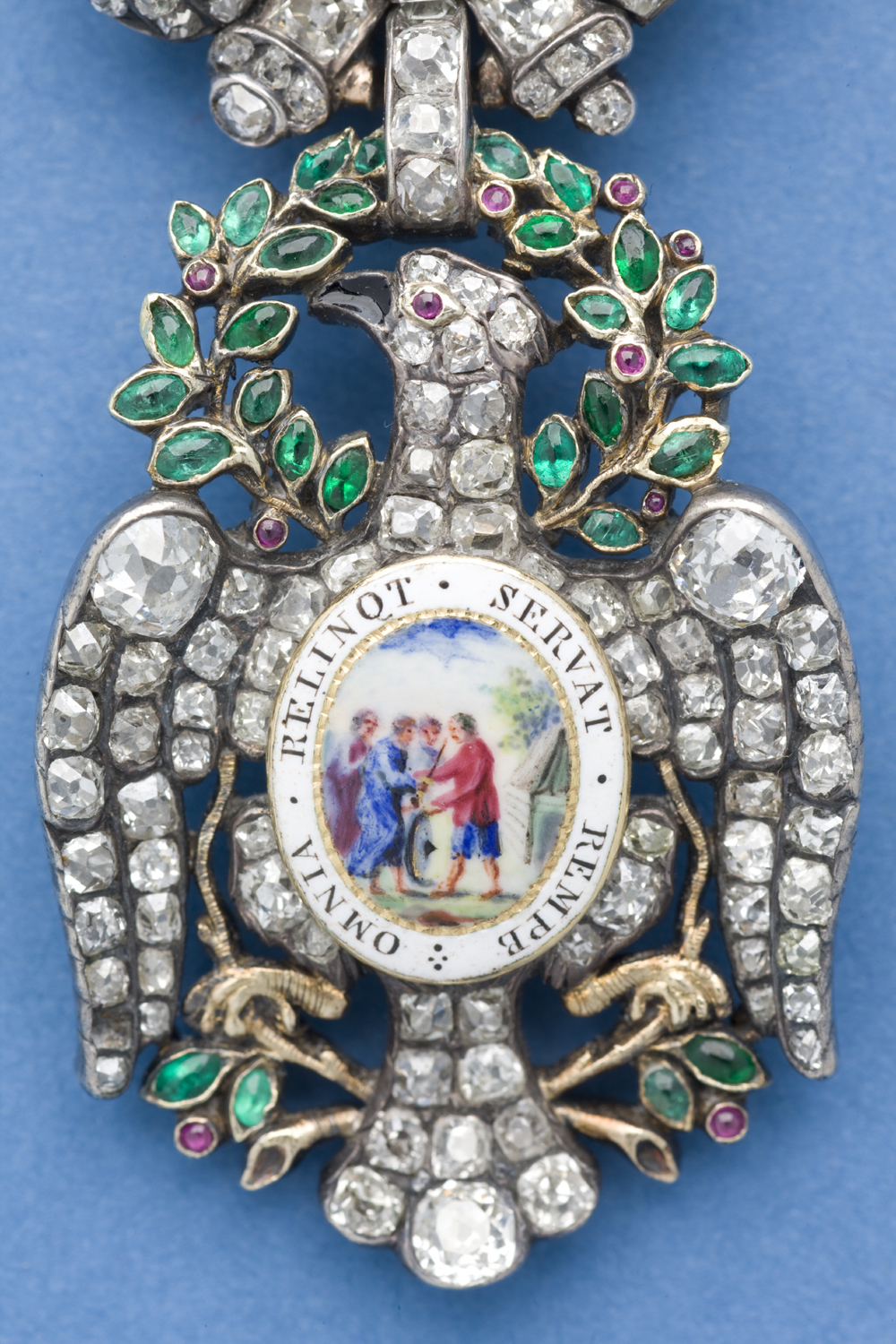
Diamond Eagle of the Society of the Cincinnati
Nicolas Jean Francastel and Claude Jean Autran Duval, Paris
1784
The Society of the Cincinnati Collections
The double-sided Diamond Eagle consists of an eagle-shaped body surmounted by a circular trophy suspended from a blue-and-white silk ribbon. The gold-and-enamel body and silver trophy are adorned with 198 diamonds, emeralds and rubies.
Click for a larger view.
Reverse of the Diamond Eagle
While the reverse of the Diamond Eagle gleams with expert goldwork, it is decidedly simpler than the obverse, even incorporating an oval medallion made for one of the standard Society insignias made by Francastel and Duval about the same time. The inscription on the white enamel banner on the reverse of the trophy reads: “Donated in the name of the french sailors to His Excellancy the General Washington.”
Click for a larger view.
Obverse of the Eagle body
The body of the insignia takes the shape of a bald eagle, with diamonds forming the head, neck, wings, legs and tail. These stones are mounted in silver cups backed with gold. Most of the diamonds in the head, tail and wings are channel set, meaning that they are held in place with a metal rim, or channel, attaching the top edge of the stone to the cup.
Click for a larger view.
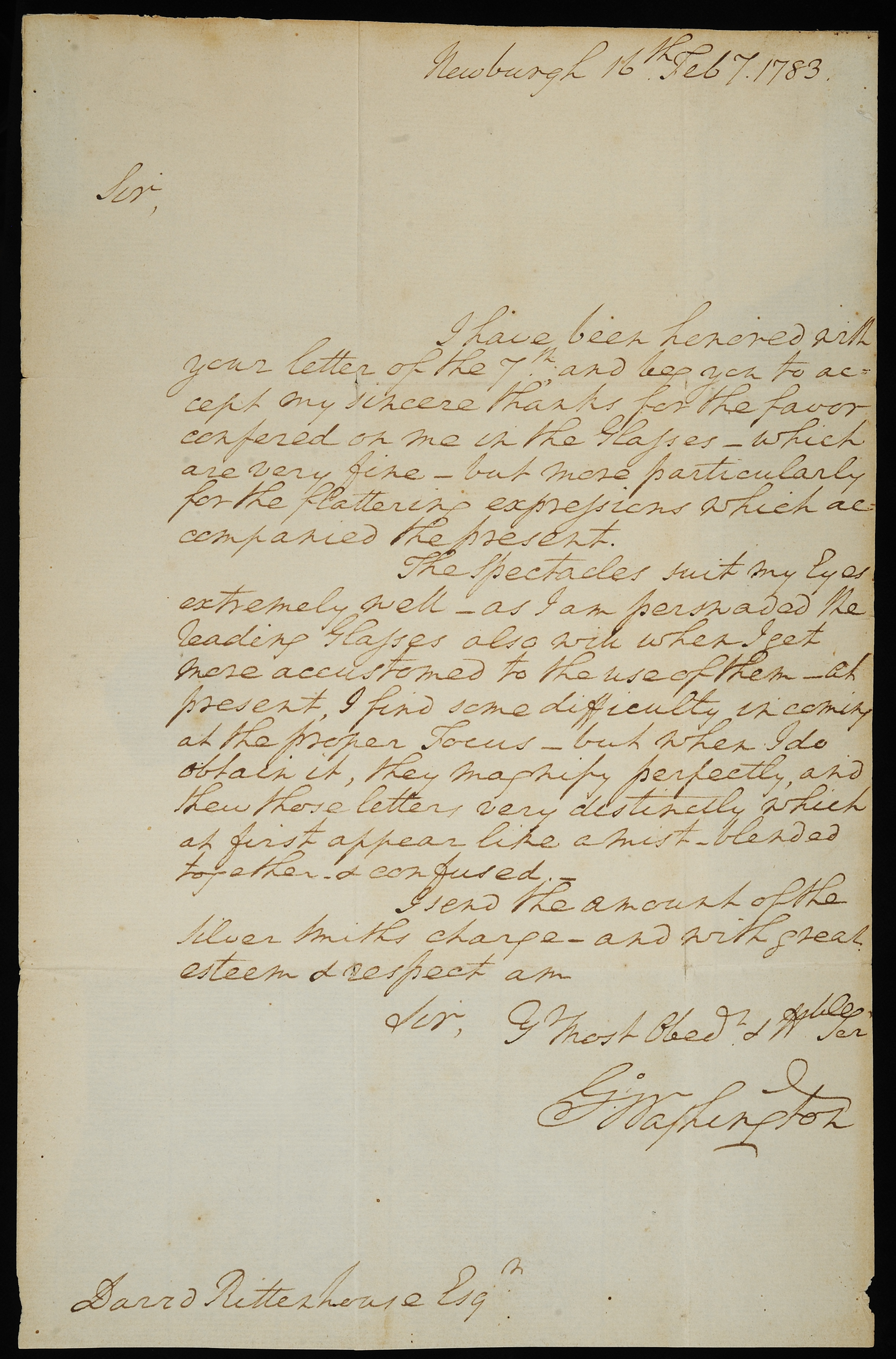
George Washington to David Rittenhouse
Newburgh, Feburary 16, 1783
The Society of the Cincinnati, Gift of George Miller Chester, Jr., in honor of his great-great-great-great grandfather, Col. John Chester, 2015
Washington's letter of thanks to the noted American inventor and instrument maker, David Rittenhouse, who had made a set of spectacles (one for distance and one for reading) for the General.
"The Spectacles suit my Eyes extremely well," Washington wrote, "as I am persuaded the Reading Glasses also will when I get more accustomed to the use of them - at present, I find some difficulty in coming at the proper Focus - but when I do obtain it, they magnify perfectly, and shew those letters very distinctly which at first appear like a mist blended together & confused." Three weeks later the reading glasses would be used to great effect when Washington, in attempting to quell a brewing mutiny of officers at Newburgh, pulled them from his pocket and said "Gentlemen, you must pardon me. I have grown gray in your service and now find myself growing blind." Partial red wax seal remains on address leaf.
Click for a larger view.
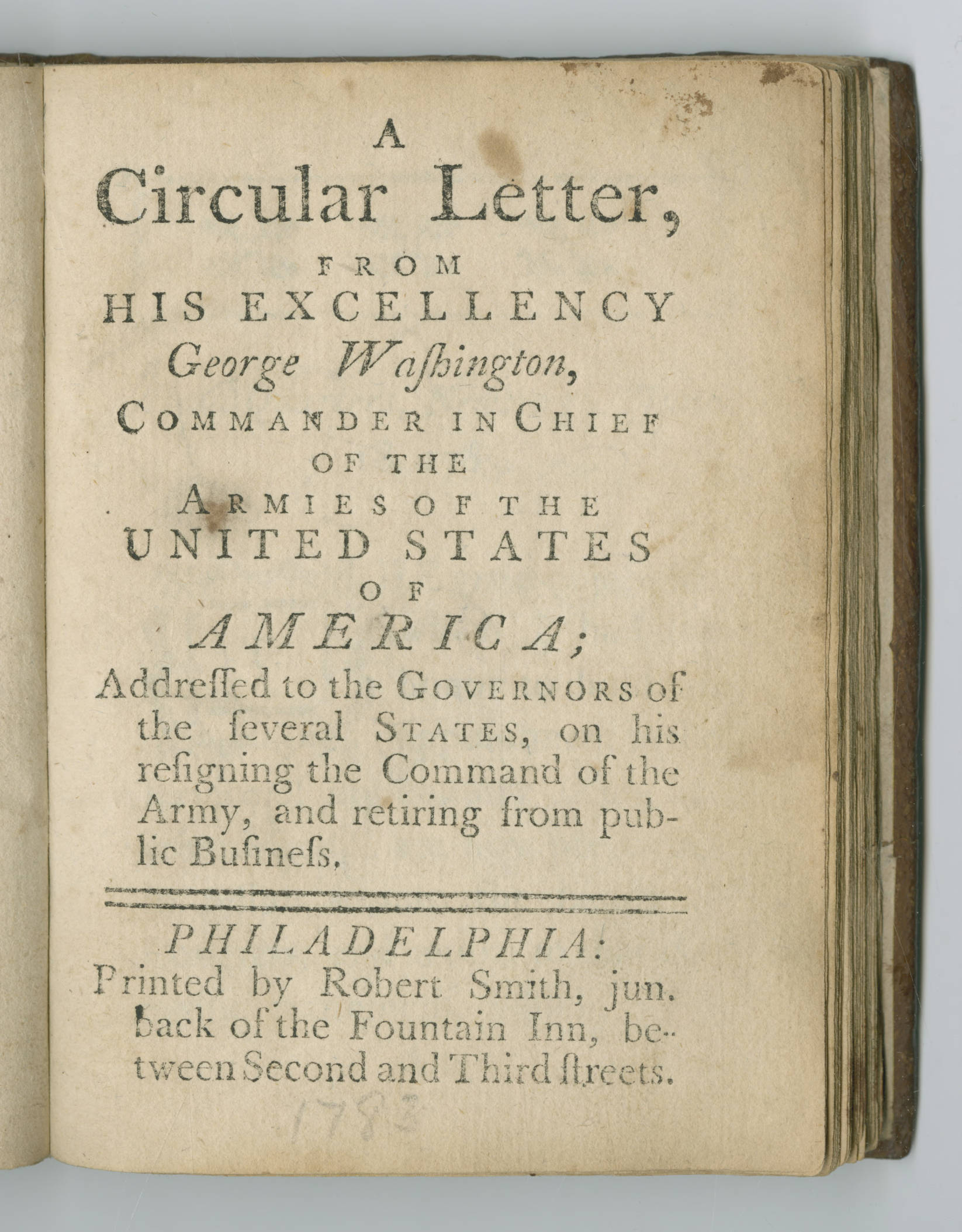
A circular letter, from His Excellency George Washington, commander in chief of the armies of the United States of America : addressed to the governors of the several states, on his resigning the command of the army, and retiring from public business
George Washington
Philadelphia: Robert Smith, 1783
The Society of the Cincinnati, The Robert Charles Lawrence Fergusson Collection
At the end of the Revolutionary War, Washington issued a “circular letter” to the governors of the states, in which he reflected on the great achievement of independence and laid out his opinions on how the nation must proceed to keep this independence secure.
Click for a larger view.
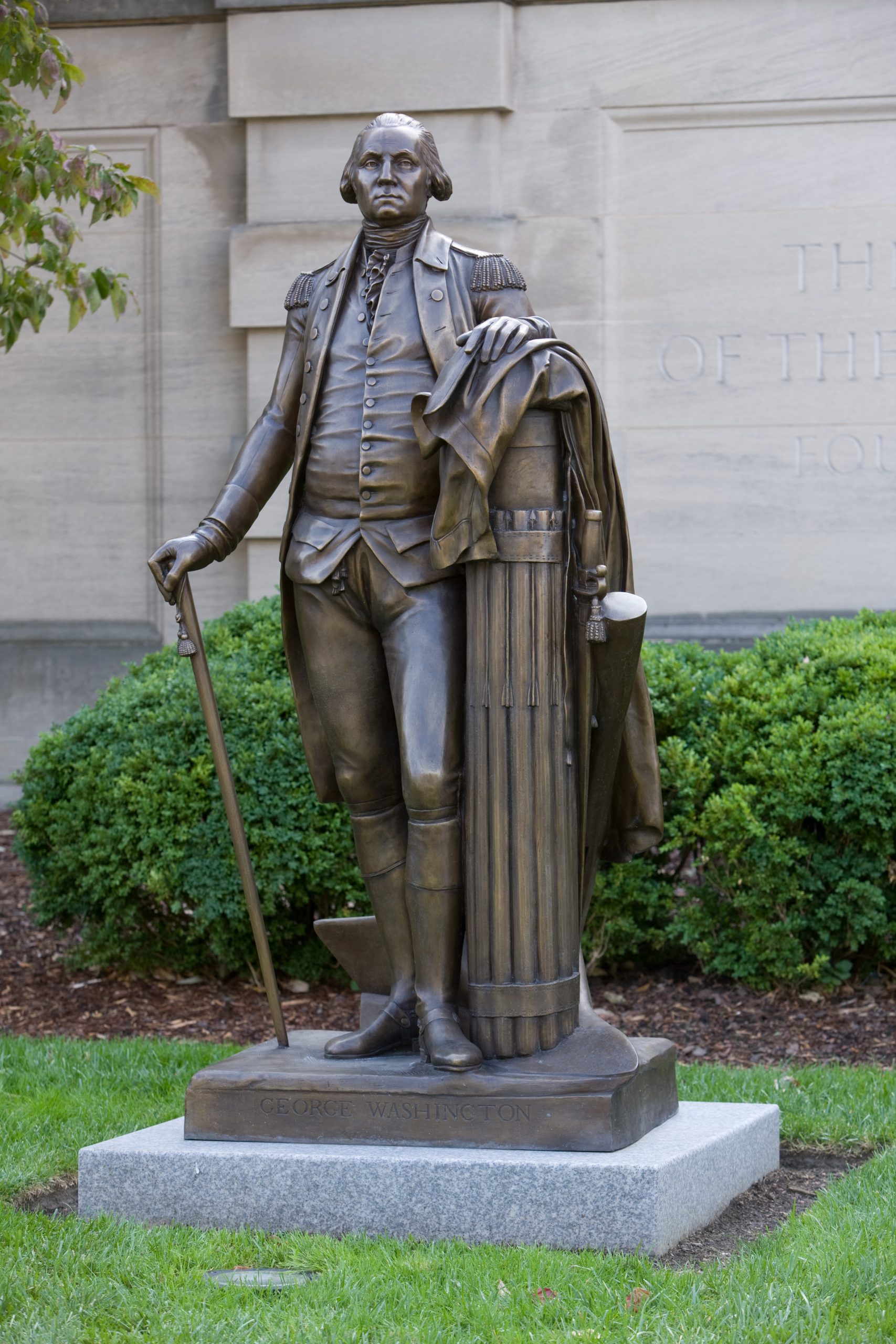
George Washington
cast from the original marble Jean-Antoine Houdon 1785 commission for the Virginia general assembly by Paul King Foundry, Johnston, RI under the direction of sculptor Robert Shure of Skylight Studios, Woburn, MA
2008
The Society of the Cincinnati
Click for a larger view.
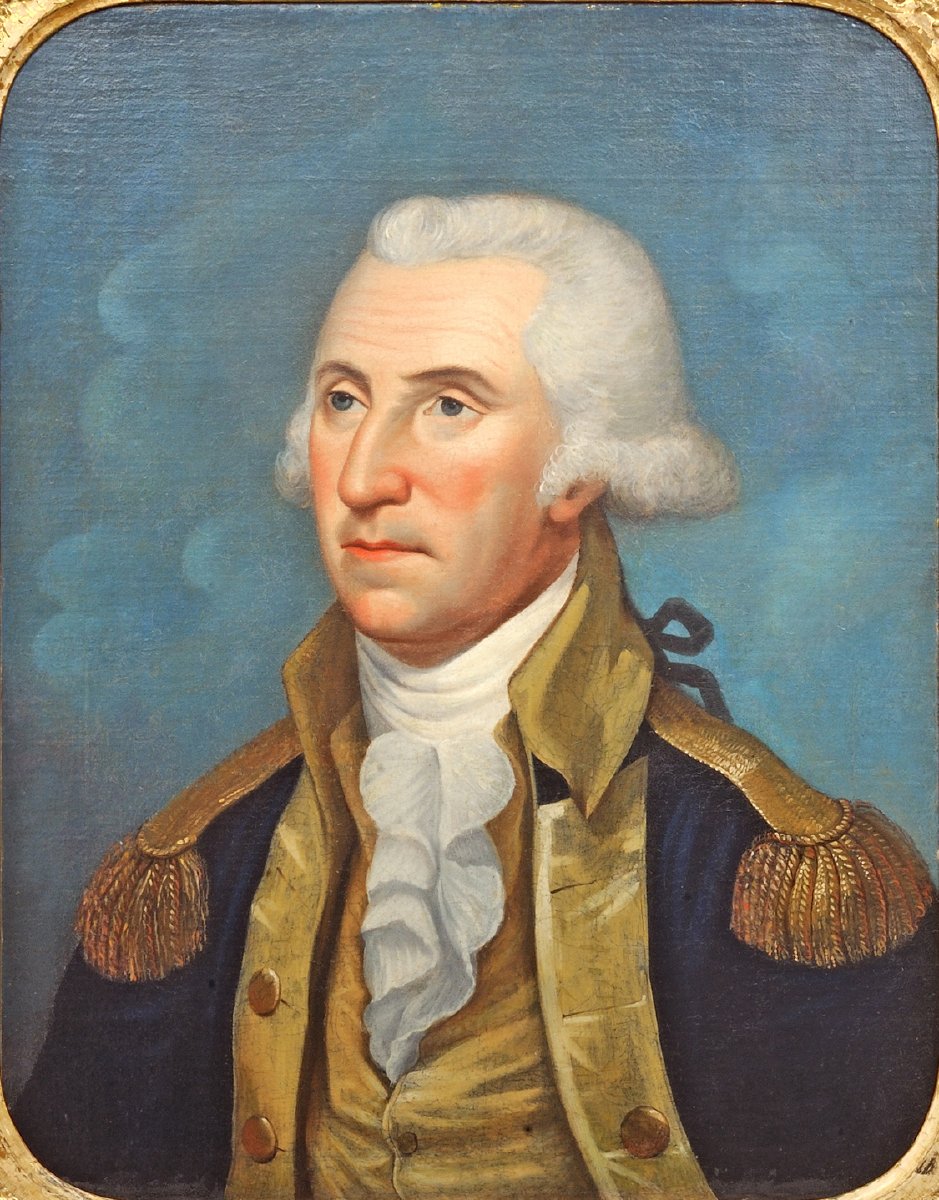
George Washington
after Charles Peale Polk
Late 18th-early 19th century
The Society of the Cincinnati, Gift in memory of Blanchard Randall by his heirs, 1986
George Washington was the ideal hero of the revolutionary era. His army was never large or powerful enough to drive the British out of the United States, but he held the Continental Army together through a war lasting eight long years. He won minor victories when he could
and maintained continuous pressure on the British, who finally abandoned their efforts to conquer their former colonies and conceded American independence. Washington gave
credit to others, refused rewards for his services, and returned home to his farm as soon as the war was won. He was admired throughout America and Europe. Portraits of Washington decorated homes and public buildings throughout America. This painting by an unknown artist is typical.
Click for a larger view.
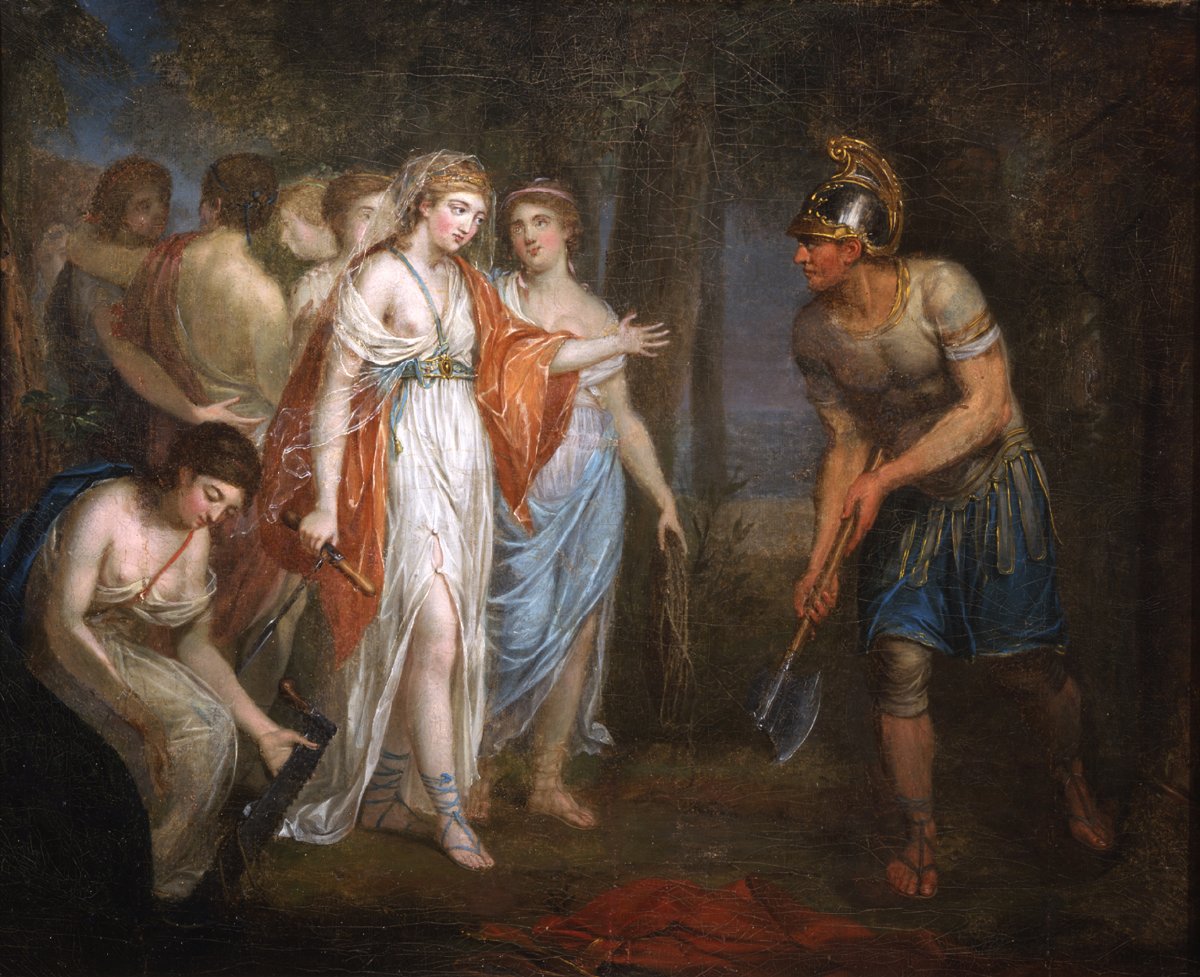
The Return of Cincinnatus
Attributed to Angelica Kauffmann (1740-1807)
ca. 1775
Gift of Margaretta Kingsbury Maganini, 1969
Classical myths and legends were popular subjects of allegorical paintings in the seventeenth and eighteenth centuries.
Click for a larger view.
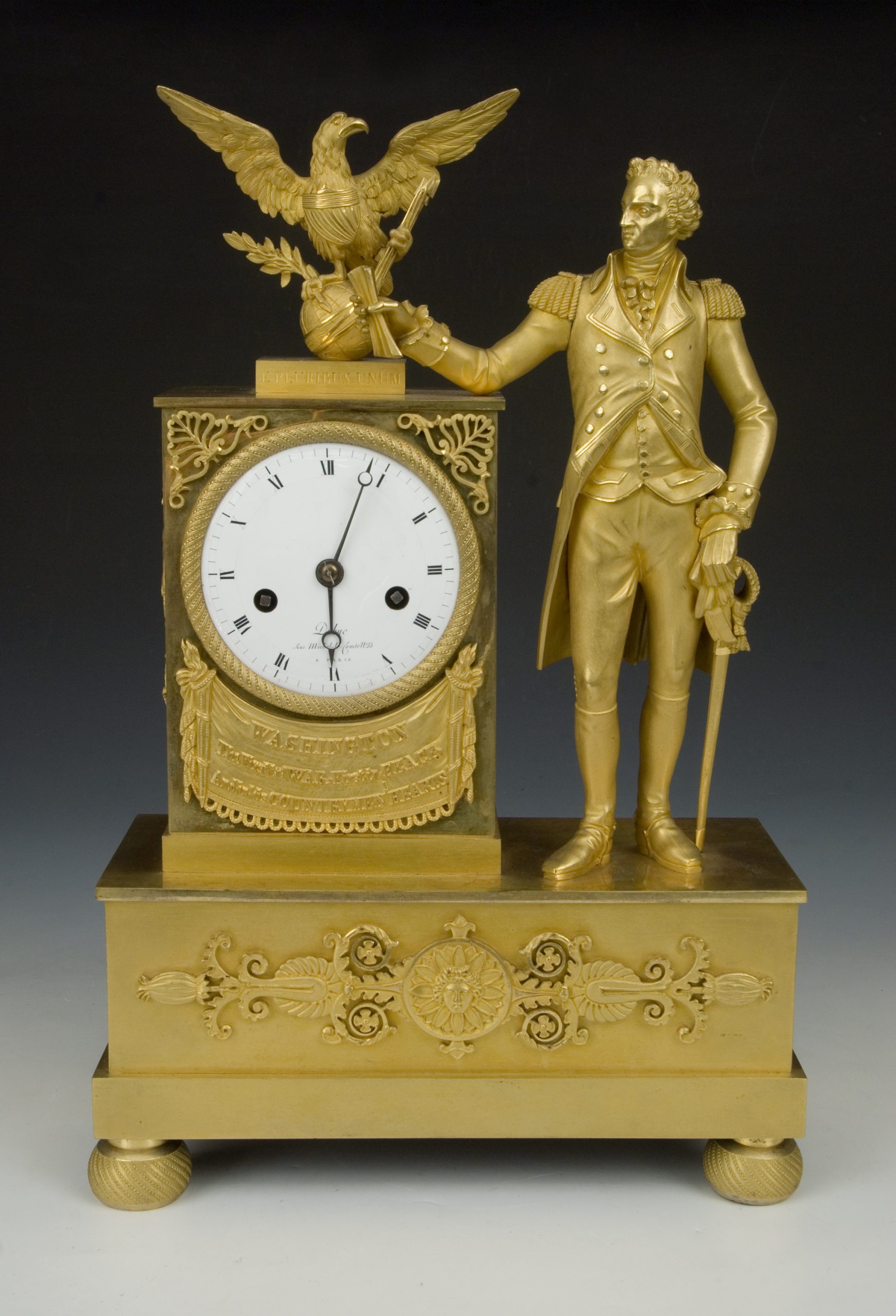
George Washington mantel clock
Jean-Baptiste DuBuc, Paris
ca. 1800-1810
The Society of the Cincinnati, Gift of David Gordon Sutton, Frank Taylor Sutton III, and Frank Taylor Sutton IV, 2001
George Washington's death inspired artists and craftsmen in America, France and Great Britain to produce commemorative ceramics, medals, textiles and other objects memorializing the first president. This Neoclassical mantel clock, designed for the American market, features a standing figure of Washington in military uniform. The French clock's maker modeled the image of Washington after John Trumbull's 1792 portrait of the general before the battlefield at Trenton. The scroll held in Washington's right hand may allude to his resignation of his commission, an act comparable to Cincinnatus putting down his sword and returning to his plow.
Click for a larger view.
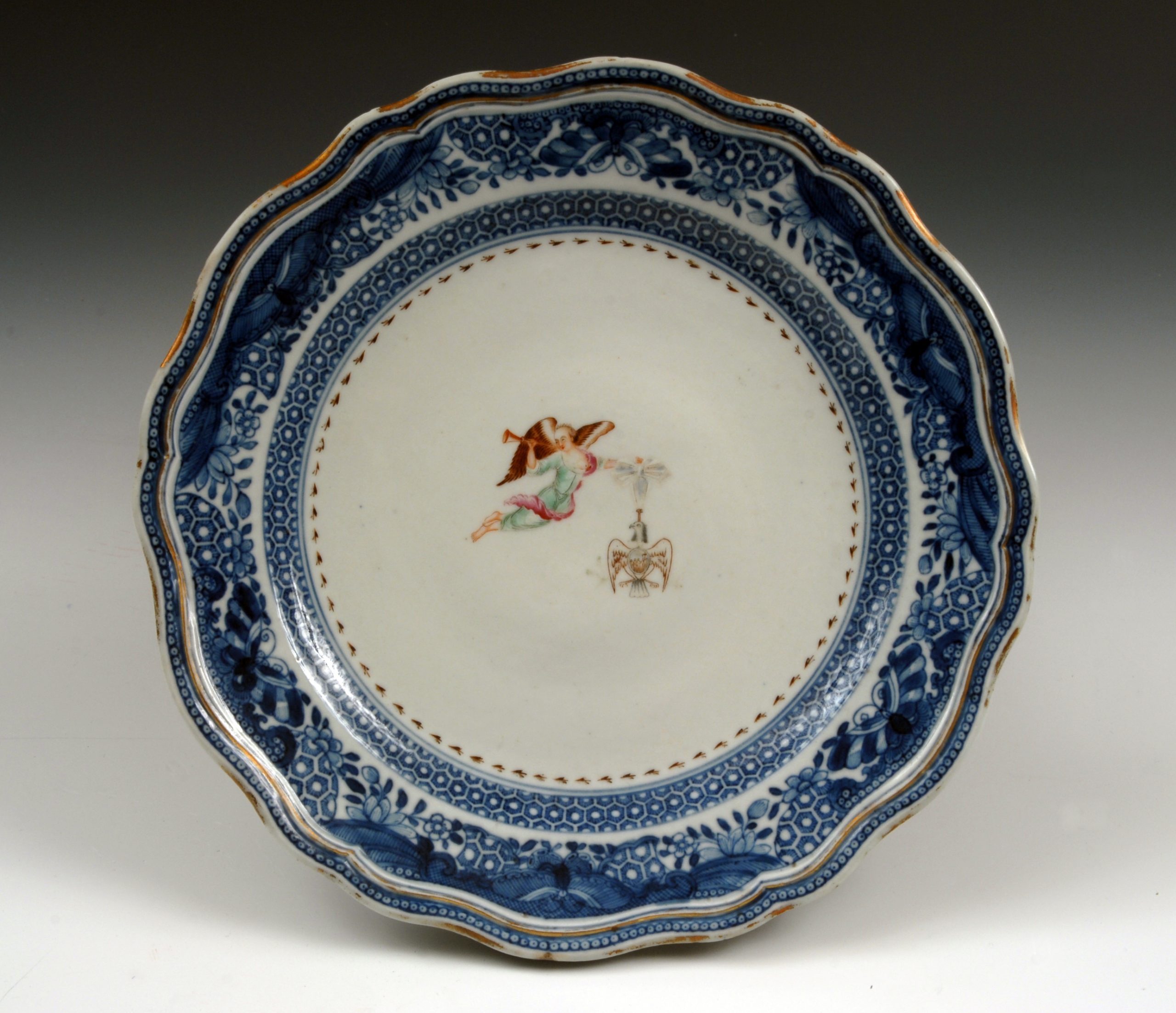
Dinner plate
Jingdezhen, China
ca. 1784-1785
Gift of Mrs. A. D. Pollock Gilmour and Miss Lilias Janney, 1963
The most famous Society porcelain service features a blue Fitzhugh border and was purchased for $150 by George Washington in 1786 for use at Mount Vernon.
Click for a larger view.
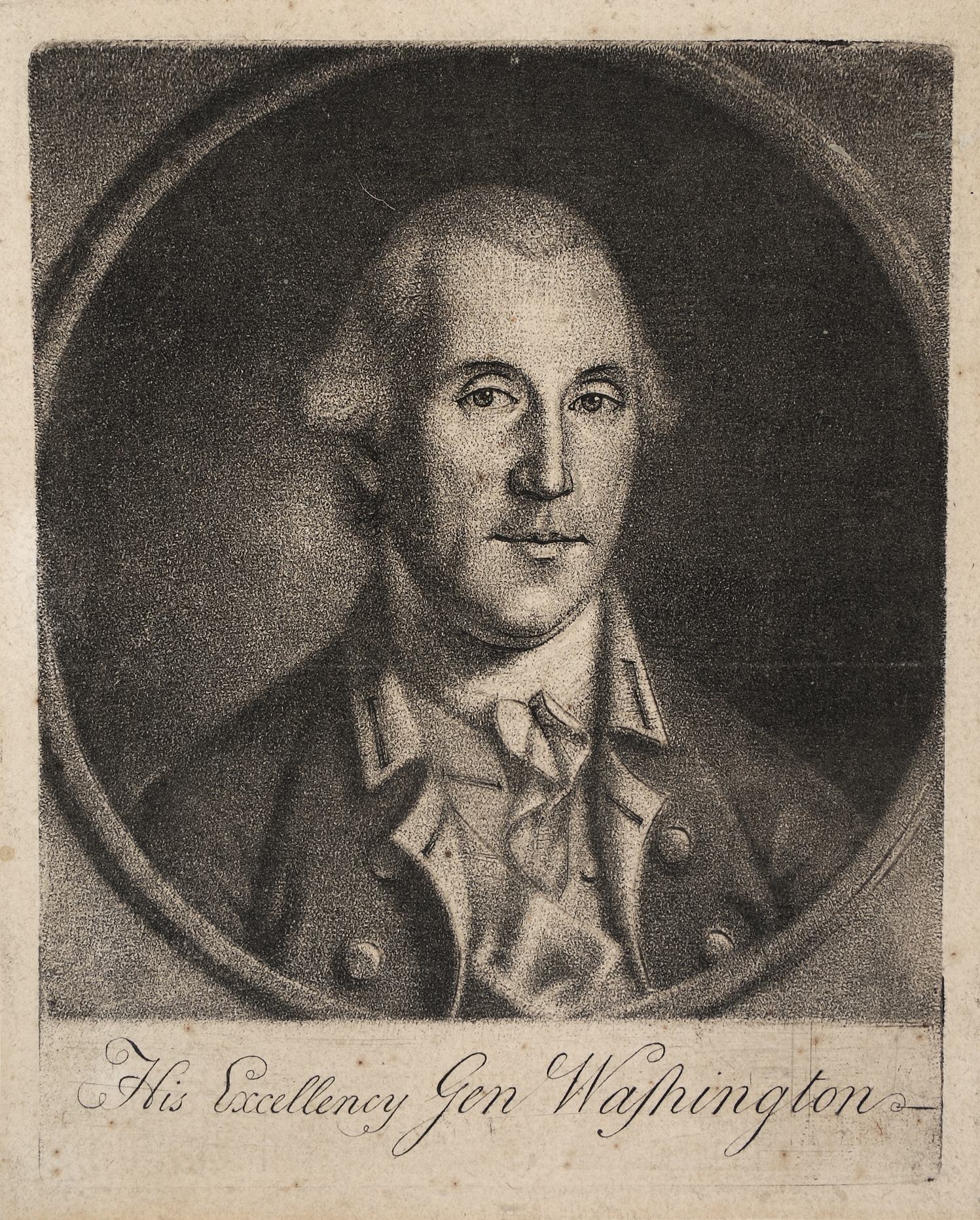
"His Excellency Gen Washington"
Charles Willson Peale
Philadelphia, 1778
The Society of the Cincinnati, The Robert Charles Lawrence Fergusson Collection
Peale's mezzotint is based on his own painting of Washington from life, the first authentic likeness of Washington to appear in print. One of only three examples of the mezzotint known (the other examples are in the collection of the National Portrait Gallery, Washington, DC; and in the Archivo General de Indias, Seville, Spain).
Our museum and research library will be closed to the public from Thursday, October 22 through Saturday, October 24, 2026, for Society of the Cincinnati meetings.
The museum will reopen for regular hours on Sunday, October 25. The research library will reopen for regular hours on Monday, October 26.
![Institution of the Society of the Cincinnati 1783 Archives [oversize]](https://www.americanrevolutioninstitute.org/wp-content/uploads/2018/08/Institution-of-the-Society-of-the-Cincinnati-1783-Archives-oversize.jpg "Click for a larger view.")
![Society of the Cincinnati diploma drawing 1783 Archives [oversize]](https://www.americanrevolutioninstitute.org/wp-content/uploads/2018/08/Society-of-the-Cincinnati-diploma-drawing-1783-Archives-oversize.jpg "Click for a larger view.")
![Society of the Cincinnati Eagle drawing by L'Enfant 1783, obverse, white background Archives Box 7 Folder 5A [flat]](https://www.americanrevolutioninstitute.org/wp-content/uploads/2020/09/Society-of-the-Cincinnati-Eagle-drawing-by-LEnfant-1783-obverse-white-background-Archives-Box-7-Folder-5A-flat-scaled.jpg "Click for a larger view.")
![Archives Box 7 Folder 5A [flat] Eagle L’Enfant white background reverse large](https://www.americanrevolutioninstitute.org/wp-content/uploads/2021/06/Archives-Box-7-Folder-5A-flat-Eagle-LEnfant-white-background-reverse-large-scaled.jpg "Click for a larger view.")