A rare French eyewitness account of the Battle of the Chesapeake is now available as a digital surrogate on The Field, the digital archive of the American Revolution Institute of the Society of the Cincinnati.
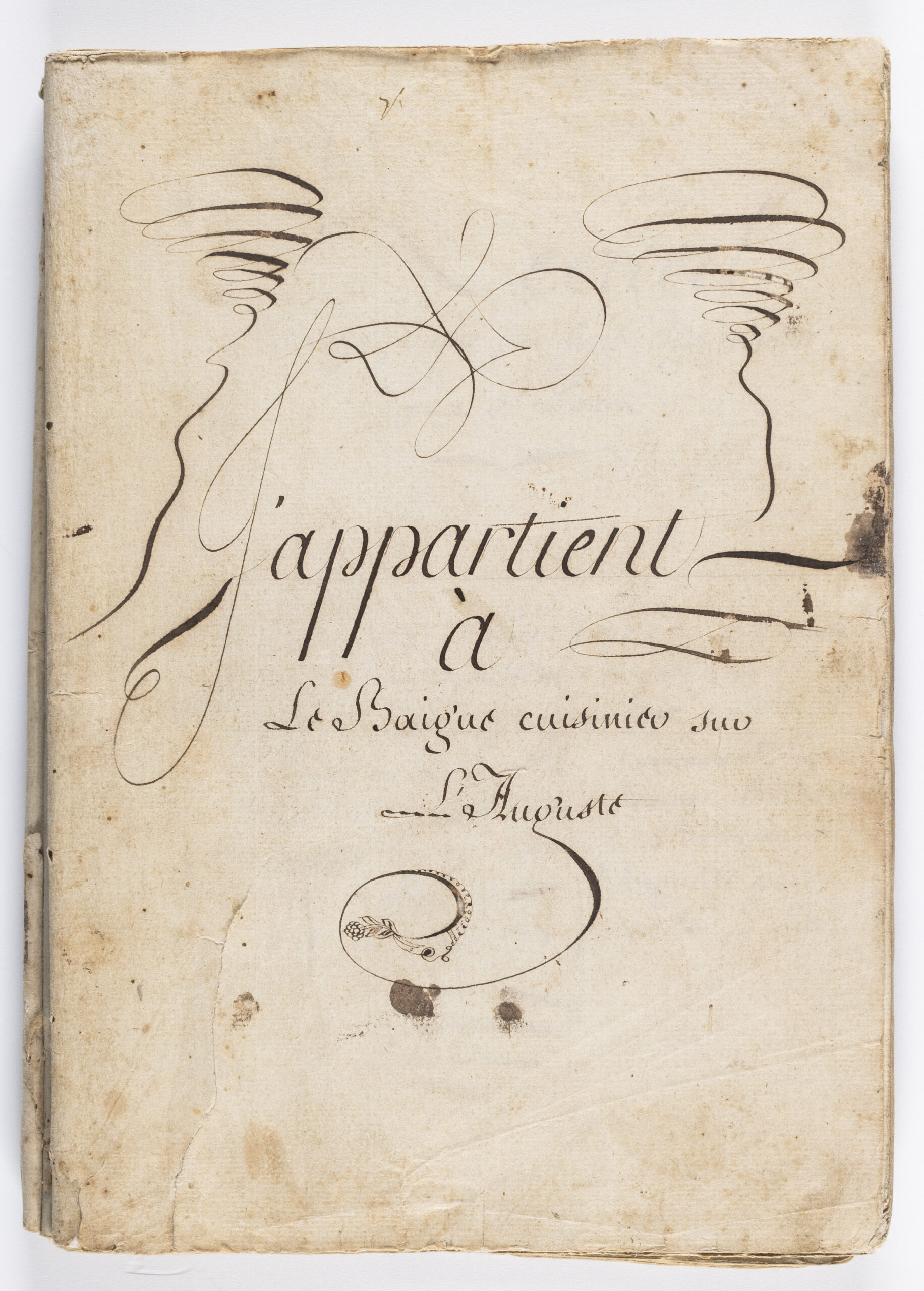 The unpublished 185-page naval journal was kept aboard the ship Auguste, an eighty-gun ship of the line serving in the fleet of Admiral François Joseph Paul, comte de Grasse, during the Yorktown campaign. Its digitization advances one of the central purposes of the Institute’s library: to preserve and make accessible rare printed and manuscript materials relating to the art of war in the Revolutionary era, documenting the conduct of the war and the achievement of American forces and their French allies in securing the independence of the United States. Written in French by Charles Martin Le Baigue, who served as cuisinier (cook) aboard the French ship, the manuscript offers a rare eyewitness account of the Battle of the Chesapeake from within the French line of battle itself.
The journal’s value lies partly in the way it restores the maritime character of Yorktown. Cornwallis’s army could be defeated only if the Chesapeake was closed to British reinforcement or evacuation. On September 5, 1781, as the French fleet lay at anchor in the bay, the Auguste first ran aground on a sandbar before being freed by the rising tide. Soon afterward, French frigates reported sails to the east. What officers first believed might be the expected convoy carrying siege artillery from Newport proved instead to be the British fleet under Admiral Thomas Graves, standing toward the Capes to contest control of the bay. Le Baigue recorded the moment of recognition: “Monsieur de Bougainville immediately identified the man on lookout who reported that he indeed saw several sails.”
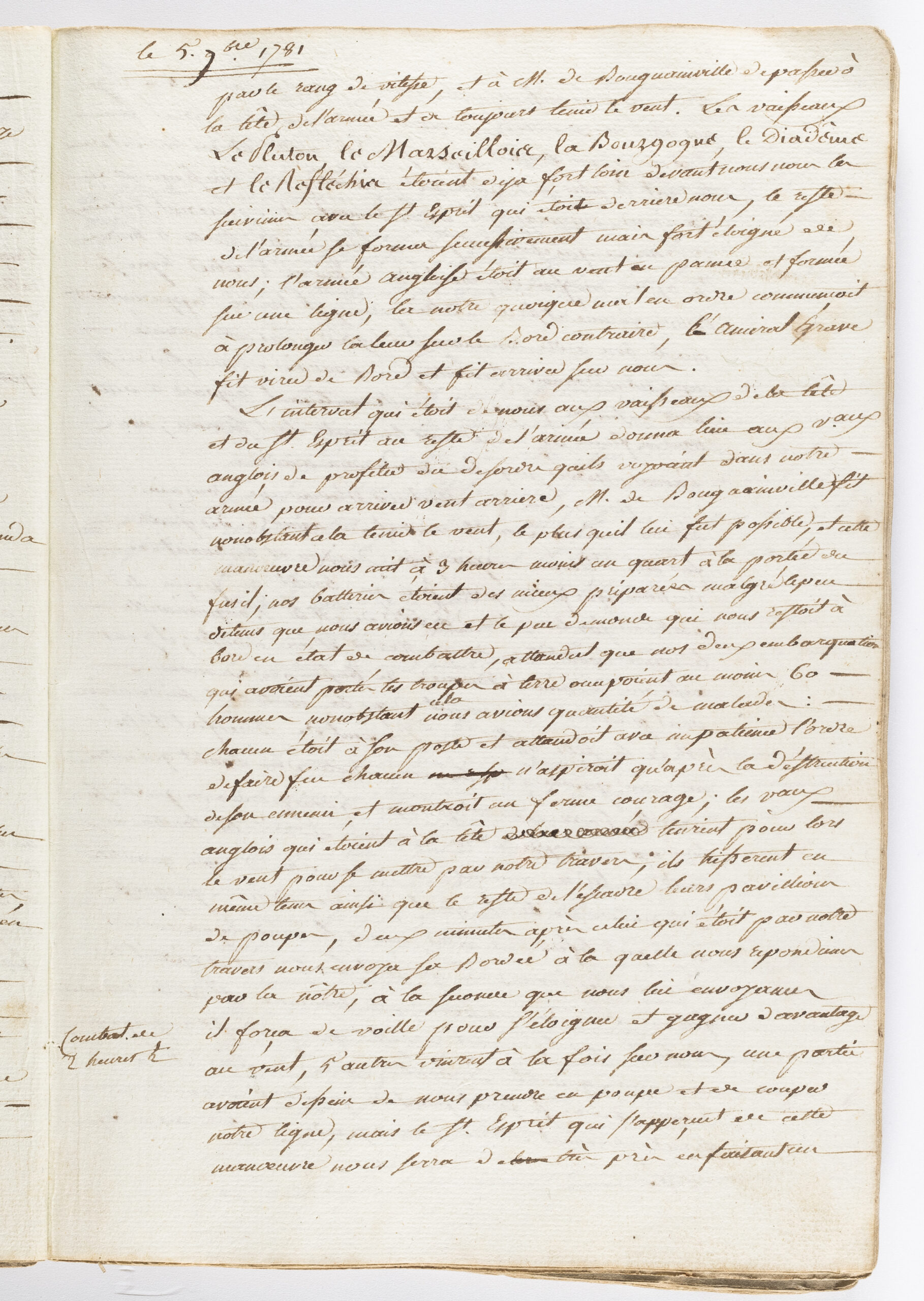 De Grasse’s response was decisive and risky. Rather than preserve the fleet’s ordinary sailing order, he ordered his ships to form the line of battle according to speed, allowing the fastest ships to clear the bay and engage. The Auguste served in the French van, or lead division, under the command of Louis Antoine de Bougainville, a veteran of the Seven Years’ War, celebrated circumnavigator and original member of the Society of the Cincinnati in France. The Auguste was among the first ships into action. Le Baigue’s account captures the tension of a crew preparing to fight: “Each one was at his post and impatiently awaited the order to fire.” As the fleet maneuvered under pressure, he observed that “good order was beginning to reign in our fleet,” a striking phrase for the restoration of tactical coherence in the opening phase of battle.
The fighting continued until sunset. The manuscript records not only the movement of fleets but the physical cost of combat aboard an eighteenth-century ship of the line. “We had the misfortune of having a dozen men killed in combat,” Le Baigue wrote, including an officer struck by a cannonball near Bougainville himself. The damage to the Auguste was extensive: “Our sails were completely riddled and a large part of the ropes cut.” These translated passages give the journal its force. They reveal naval warfare as an experience of discipline, noise, splintering material, severed rigging, and men holding their stations inside a vast tactical machine.
The translated passages shared here are only a glimpse of what the Auguste journal may reveal. As part of our ongoing work with the manuscript, we are also exploring how AI-assisted tools can help staff move more efficiently from digitized image to provisional reading, translation, and interpretation. We are not publishing a full transcription or translation at this stage, and any such work requires careful human review. Even so, this experiment points toward the next phase of access: using new tools to help identify significant passages, support internal research, and make rare manuscript sources more discoverable for future scholarship.
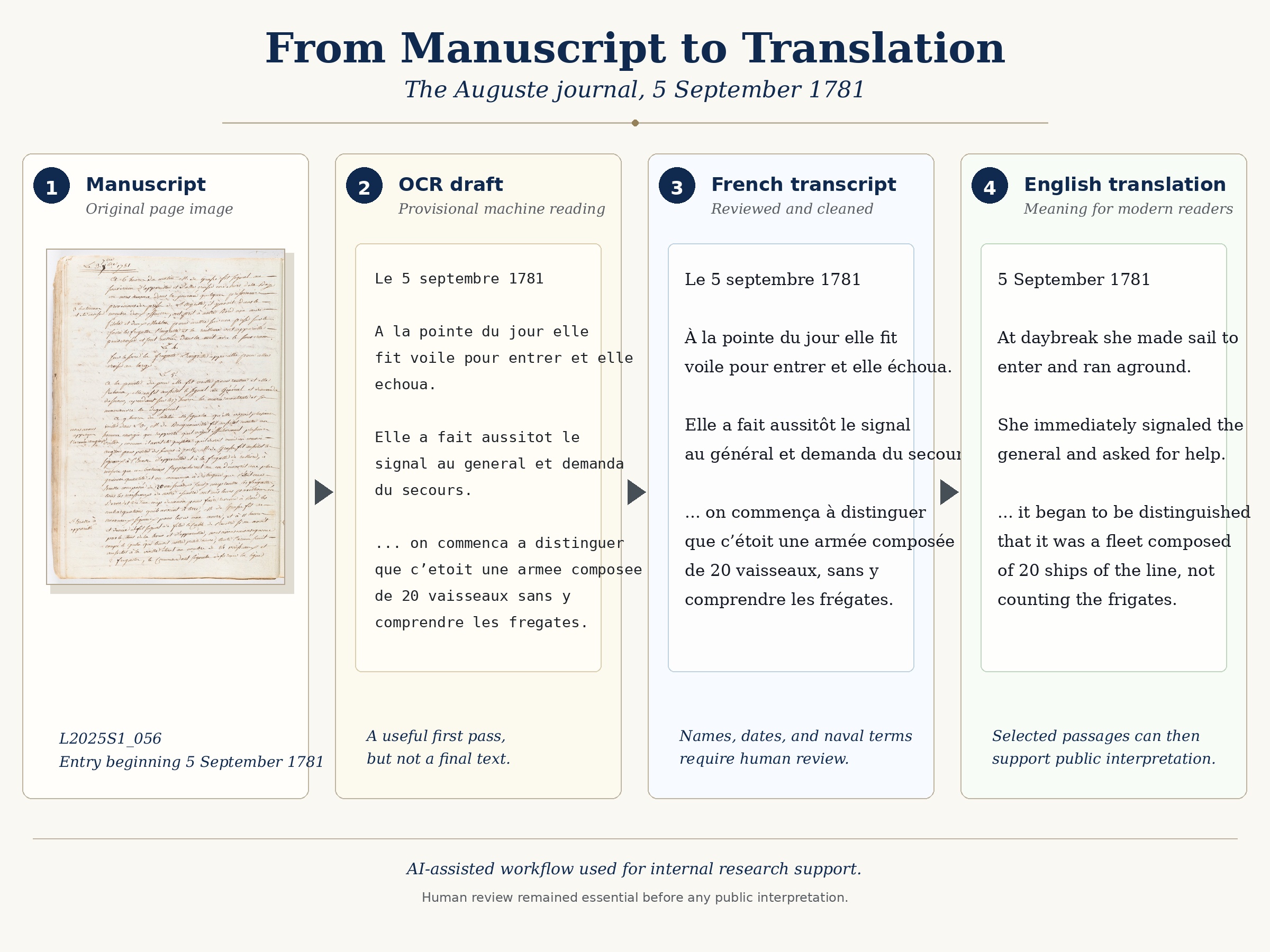
The British fleet failed to force the Chesapeake and withdrew toward New York, leaving Cornwallis isolated at Yorktown. French command of the bay allowed the Franco-American siege to proceed, ending in Cornwallis’s surrender on October 19, 1781. Now available through The Field, this remarkable manuscript invites readers to reconsider Yorktown as a victory made possible by sea power. From the deck of the Auguste, Le Baigue witnessed the moment when French naval control transformed a campaign in Virginia into the decisive allied victory of the American Revolution. We look forward to sharing more from the Auguste journal as we continue to explore how AI-assisted transcription and translation, combined with careful human review, can help make rare manuscript sources more accessible to researchers and the public.
About the Library
The research library of the American Revolution Institute houses more than fifty thousand rare books, manuscripts, prints, broadsides, maps and modern reference sources, and is one of the most important resources in the world for advanced study on the Revolution. The library welcomes researchers to use the collections by appointment and supports scholarship by offering several research fellowships each year to graduate students and advanced scholars. To learn more, and make an appointment click here.