Timothy E. Hicks, Ed.D., Dent Middle School (Richland School District Two), Columbia, South Carolina
DESIGN LEVEL: Middle-High School
Overview
At the heart of the Revolutionary War were our highest ideals of liberty and sacrifice. However, at the same time, enslaved Africans toiled to support the American economy. John Laurens, son of Continental Congress President Henry Laurens and a member of the South Carolina aristocracy, dared to challenge the racial status quo, suggesting that African Americans should be allowed to serve in the military in return for their own freedom. His unconventional idea foreshadowed the crusade for racial equality the nation has been working on since.
Objectives
Students will:
- Analyze written correspondence identifying bias, claims, and evidence.
- Design and create a broadside modeled after a Revolutionary-era example including content and quotations from primary sources to explain Laurens’ views on race and idea for a his black regiment.
Essential Question
How did John Laurens’ beliefs about race, liberty, and military success lead him to challenge the practice of slavery?
Materials
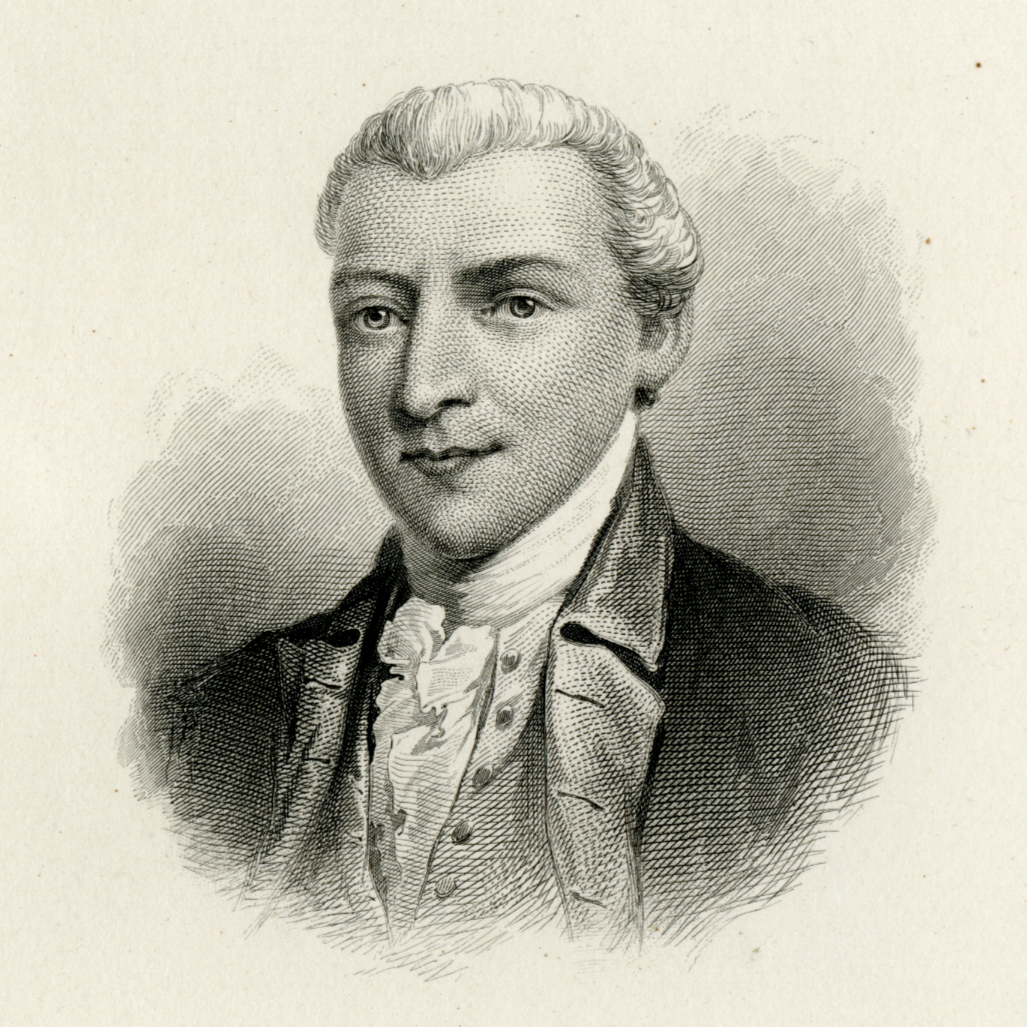
- John Laurens, engraved by Charles Kennedy Burt, New York: Bradford Club, c. 1867. The
Society of the Cincinnati. - Teacher Created “Timeline of the Life of John Laurens”
- Teacher Created “Source Set #1”
- Teacher Created “Source Set #2”
- Teacher Created “Source Set #3”
- Teacher Created “Source Set #4”
- Teacher Created “Source Set #5”
- Teacher Created “Source Set #6”
- Yorkshire Light-Dragoons. London?:s.n. 1779. The Society of the Cincinnati, The Robert Charles Lawrence Fergusson Collection.
- “Teacher Created Yorkshire Light-Dragoons Broadside Context and Vocabulary Guide”
- Teacher Created “John Laurens Broadside Instructions and Rubric”
- Teacher Created “John Laurens Broadside Gallery Walk”
Recommended Time
Two or three days.
Lesson Activities
Display the following quotation from the Declaration of Independence:
We hold these truths to be self-evident, that all men are created equal, that they are endowed by their Creator with certain unalienable Rights, that among these are Life, Liberty and the pursuit of Happiness.–That to secure these rights, Governments are instituted among Men, deriving their just powers from the consent of the governed.
Lead a class discussion or direct students to work in small groups to discuss the following questions:
- What does the quote mean?
- What are the specific rights that would fall under “life, Liberty and the pursuit of Happiness?”
- What groups of people did not have these rights at the time of the Revolution?
Introduce the lesson by stating that one of the contemporaries of Thomas Jefferson (the primary author of the Declaration of Independence) was a South Carolinian named John Laurens. Next display the John Laurens engraving from the Society of the Cincinnati collection. Invite students to read the teacher created “Timeline of the Life of John Laurens” to learn about his story.
Next, divide students into six groups and give each group one of the teacher created source sets of documents and images that examine Laurens’ crusade to end slavery by creating a regiment of enslaved African Americans who would be emancipated once the Revolution concluded. Instruct each group to collaboratively complete the guided reading assignment for their respective source set. [Each source set includes a guided reading assignment, images of the documents’ authors, and excerpts from a number of documents, predominantly letters.]
- Source Set #1: Henry and John Laurens’ Views of Slavery
- Source Set #2: John Laurens Black Regiment Plan and Henry Laurens Initial Reaction
- Source Set #3: John Laurens Defense of His Plan
- Source Set #4: Henry Laurens’ Concerns
- Source Set #5: Reactions of the Continental Congress and the South Carolina Government
- Source Set #6: John Laurens’ Final Attempt with the South Carolina Government
After students complete their group analysis of their source set, explain that each group is going to create a broadside incorporating the major points of their documents.
Explain that a broadside was a large poster publicly advertising an opportunity or promoting a viewpoint on a topic. To help students understand the nature of broadsides, share a broadside from the Society of the Cincinnati collection titled Yorkshire Light-Dragoons, accompanied by the teacher created “Yorkshire Light-Dragoons Broadside Context and Vocabulary Guide.”
After examining this broadside as a class, give each group a copy of the teacher created “John Laurens Broadside Instructions and Rubric.” Instruct each group to then create a broadside that explains its source set topic and incorporates short key quotes. After all groups have completed their broadside, students will engage in a gallery walk of the broadsides. As they rotate to each one, they will answer three key questions on the teacher created handout “John Laurens Broadsides Gallery Walk:”
● What were John Laurens’ beliefs about the rights of African Americans?
● How did John Laurens want to promote the ideals of liberty for enslaved African Americans?
● What obstacles to his ideas and plan did John Laurens face?
The lesson will conclude with a class discussion of the questions they answered during the gallery walk.
ASSESSMENT
Check for completion of the group’s respective source set guided reading assignment and “John Laurens Broadsides Gallery Walk” key questions. The summative assignment is the John Laurens broadside, which will be evaluated using the Teacher Created “John Laurens Broadside Instructions and Rubric.”
OPTIONAL EXTENSION ACTIVITIES:
- Ask students to use the excerpts from John and Henry Laurens to write an essay responding to the following Document Based Question (DBQ): How did John Laurens’ belief about race, liberty, and military success lead to his challenge of slavery?
- Ask students to research the First Rhode Island Regmient, which included African American soldiers. Using the “Yorkshire Light Dragoons Broadside,” direct them to create an original broadside urging others to enlist in this regiment.
- Invite students to read:
* Massey, G. D. (2000). John Laurens and the American Revolution. University of South Carolina Press.
* Weir, R. M. (1976, April). “Portrait of a hero.” American Heritage, 27 (3), 16-19, 86-88.
Standards Addressed
COMMON CORE STANDARDS
Common Core: English Language Arts Standards – History/Social Studies – Grade 6-8
CCSS.ELA-LITERACY.RH.6-8.1: “Cite specific textual evidence to support analysis of primary and secondary sources.”
CCSS.ELA-LITERACY.RH.6-8.6: “Identify aspects of a text that reveal an author’s point of view or purpose (e.g., loaded language, inclusion or avoidance of particular facts).”
CCSS.ELA-LITERACY.RH.6-8.8: “Distinguish among fact, opinion, and reasoned judgment in a text.”
SOUTH CAROLINA COLLEGE- AND CAREER-READY STANDARDS FOR SOCIAL STUDIES
Grade 8: South Carolina and the United States
8.2.CO (Comparison): “Compare the motives and demographics of loyalists and patriots within South Carolina and the colonies.”
8.2.CE (Causation): “Explain the economic, political, and social factors surrounding the American Revolution.”
8.2.CX (Context): “Contextualize the roles of various groups of South Carolinians as the colonies moved toward becoming an independent nation.”
8.2.E (Evidence): “Utilize a variety of primary and secondary sources to analyze multiple perspectives on the development of democracy in South Carolina and the United States.”
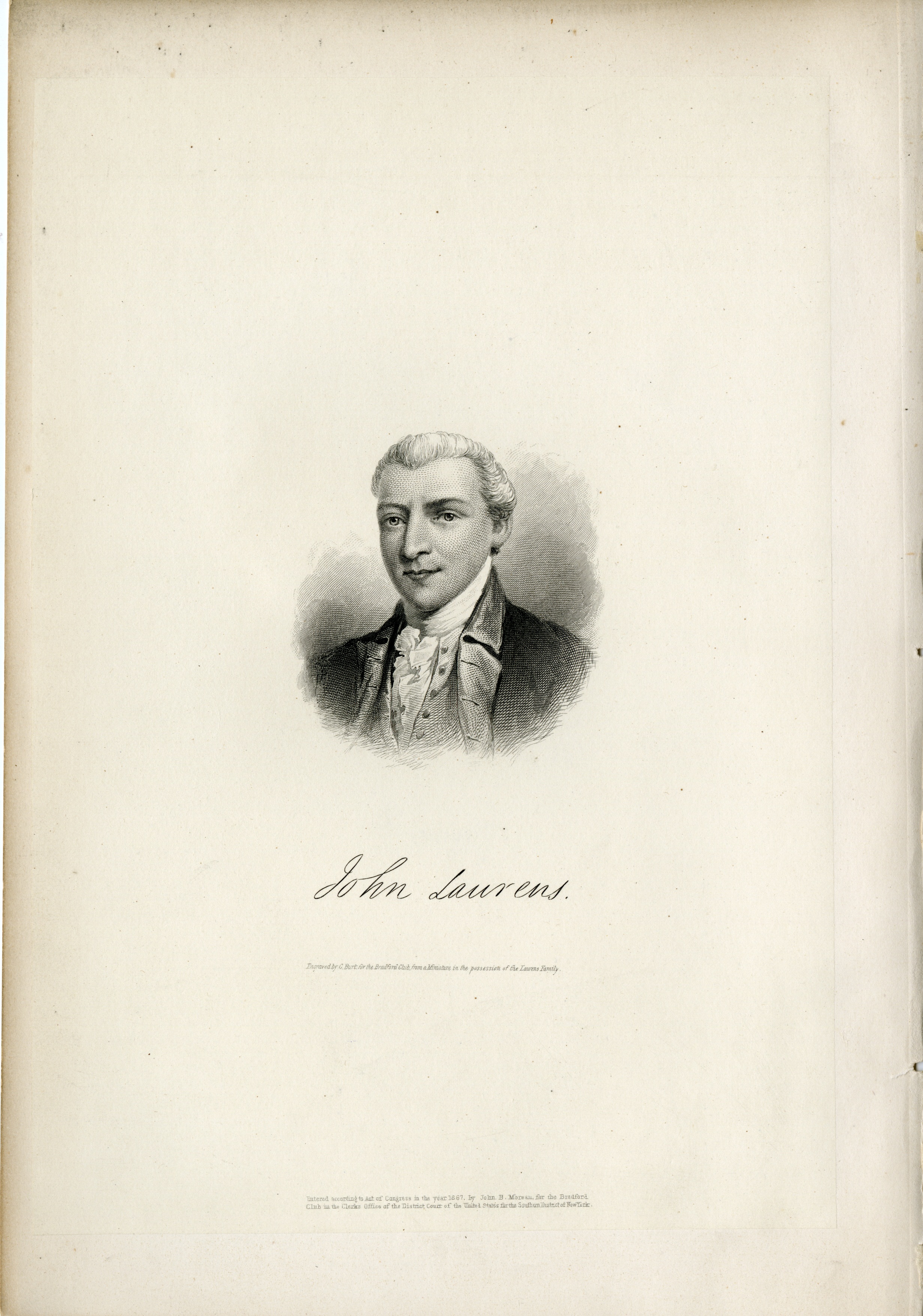
John Laurens
New York: Bradford Club, ca. 1867The Society of the Cincinnati, The Robert Charles Lawrence Fergusson Collection
John Laurens, an Aide-de-Camp to General Washington and was killed in 1782, was an eligible member of the Society of the Cincinnati from the state of South Carolina.Title is facsimilie signature. Below title is printed: "Engraved by C. Burt for the Bradford Club from a miniature in the possession of the Laurens family."
Slavery and America’s Revolutionary Leaders, Part 2 of 3: "Slavery and Washington, Marshall, Hamilton and Laurens"
James H. Hershman, Jr. Professor of Liberal Studies, Georgetown University
July 3, 2013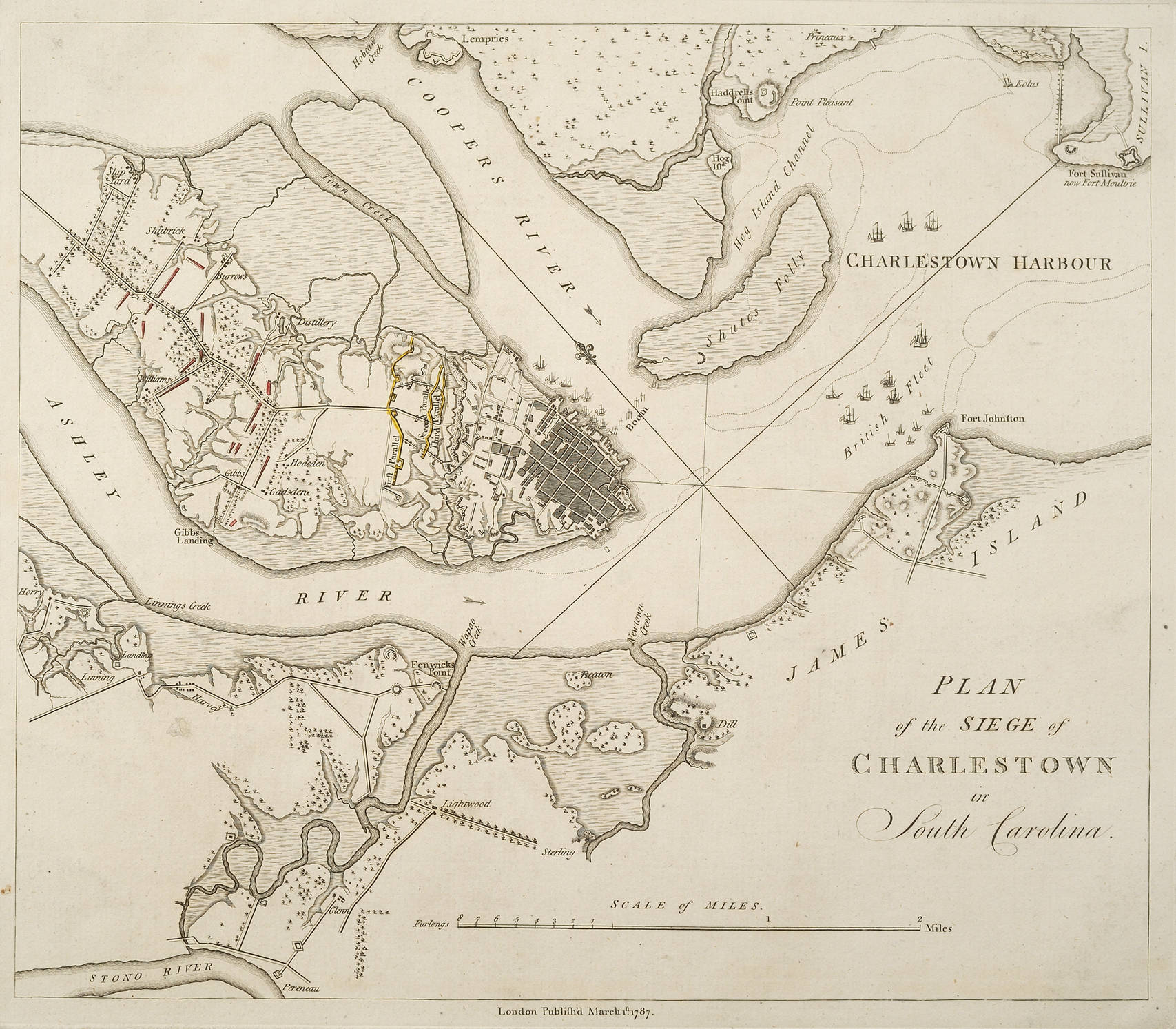
Plan of the siege of Charlestown, in South Carolina
William Faden
London: Printed for A history of the campaigns of 1780 and 1781, in the southern provinces of North America, 1787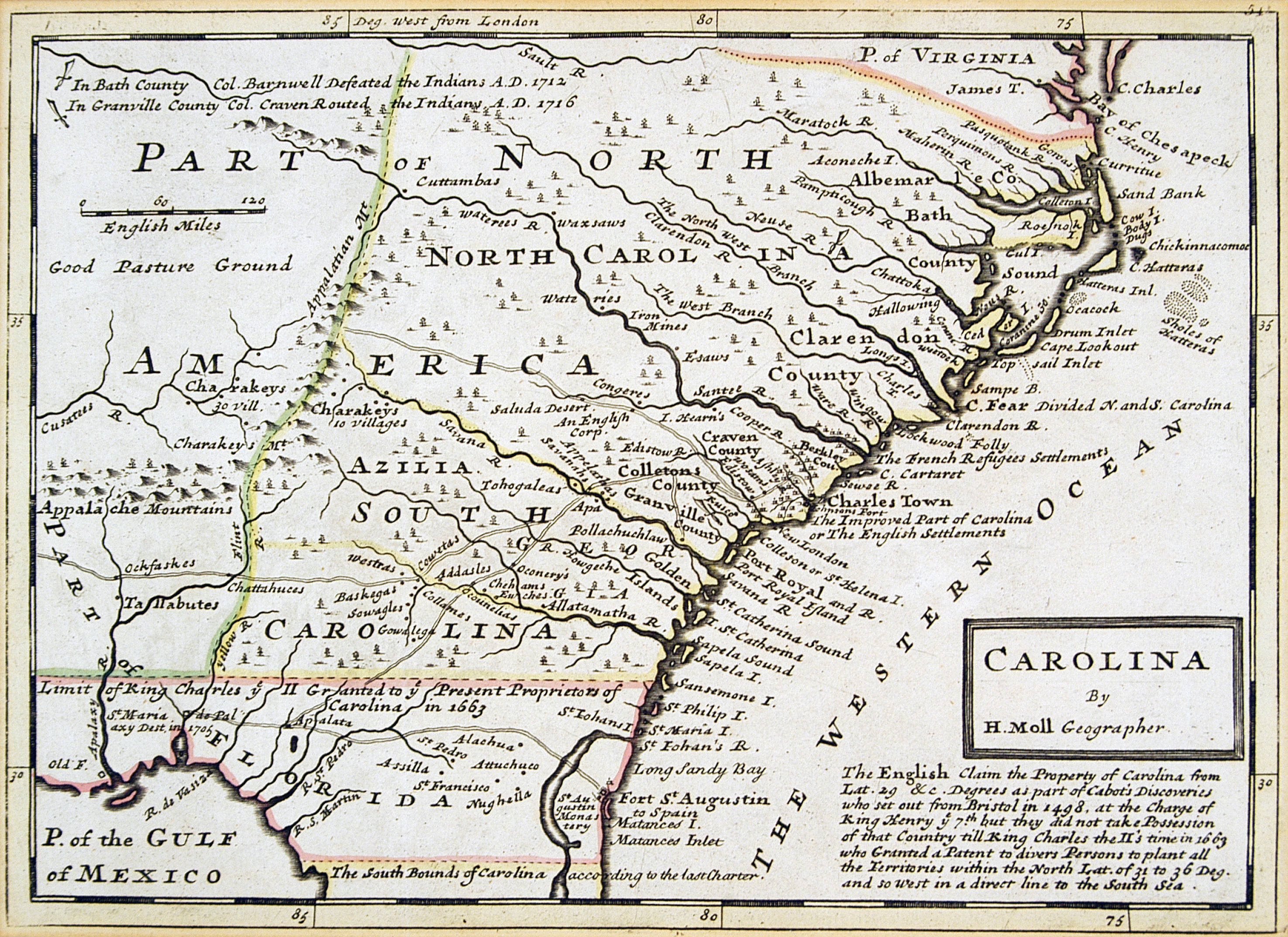
Carolina
Herman Moll
London: 1736The Society of the Cincinnati, The Robert Charles Lawrence Fergusson Collection
This map, which extends from the south bounds of Carolina to C. Charles in Virginia, shows the location of American Indian tribes in the Carolinas. It gives the chief roads or trading routes westward from Charleston, and many islands along the coast are identified by name for the first time on a printed map. In later states of map, "Azilia" was changed to "Georgia."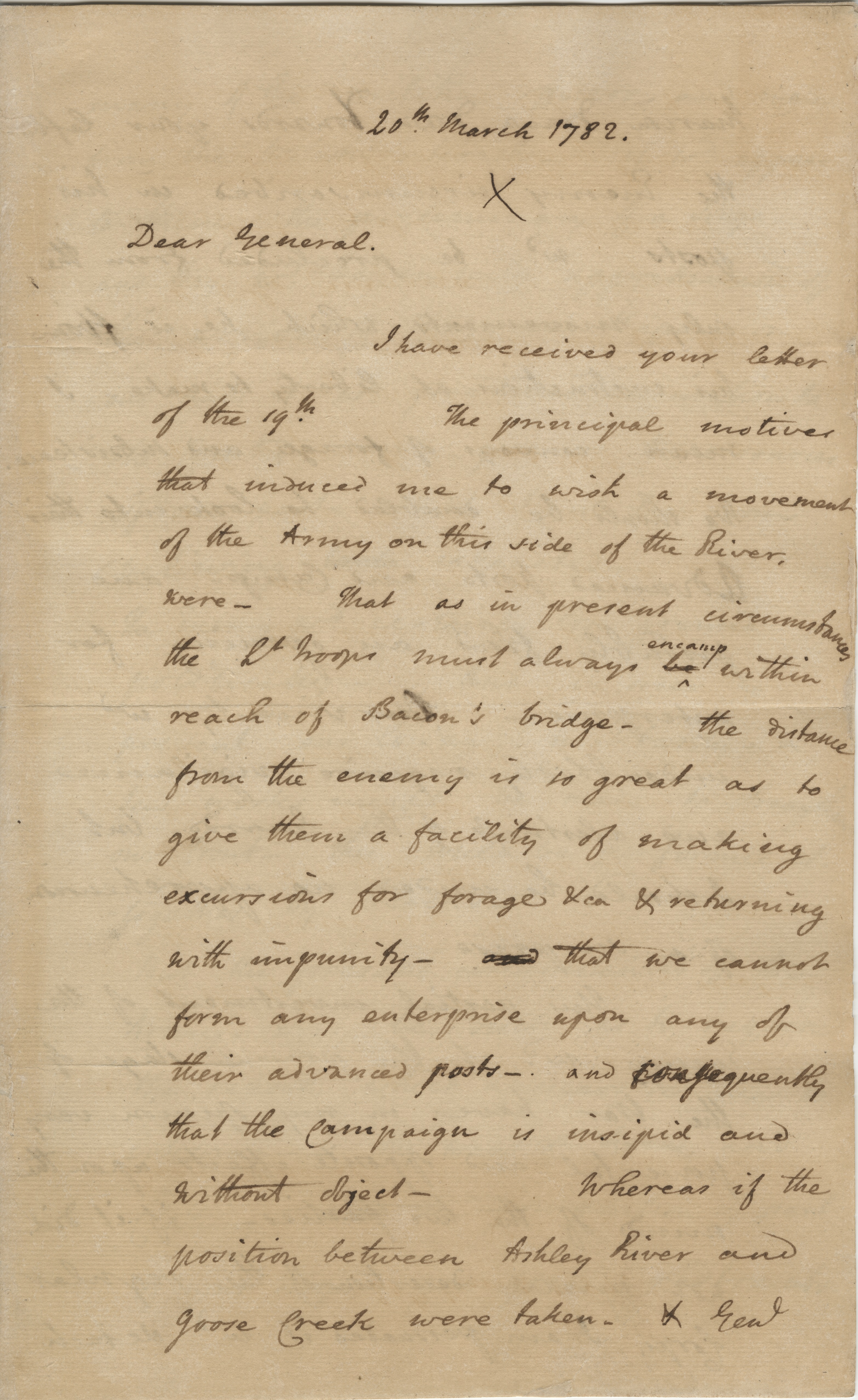
John Laurens to Nathanael Greene
March 20, 1782The Society of the Cincinnati, The Robert Charles Lawrence Fergusson Collection
Lt. Col. John Laurens joined the army as an aide-de-camp to General Washington in 1777. He was an opponent of slavery and an advocate of allowing slaves to earn their freedom by fighting as soldiers in the revolutionary war. In this letter to General Greene, Laurens recommends advancing the American positions to more closely engage with the enemy, and suggests strengthening their front by building new works that could be "performed altogether by blacks." He laments the lack of arms and clothing among the American troops, and he reports on the successful capture of a British schooner by a Captain Rudolph.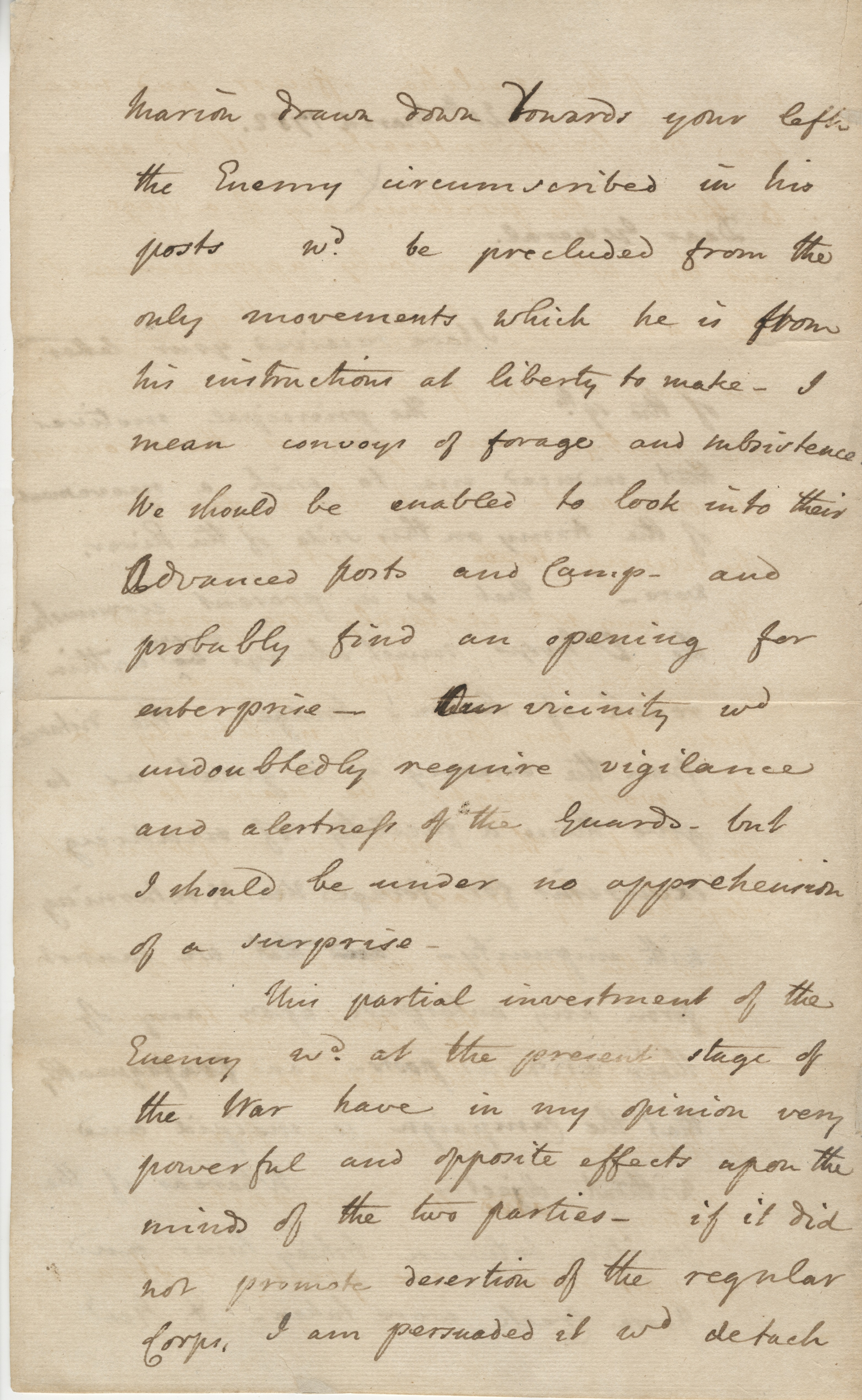
John Laurens to Nathanael Greene
March 20, 1782The Society of the Cincinnati, The Robert Charles Lawrence Fergusson Collection
page 2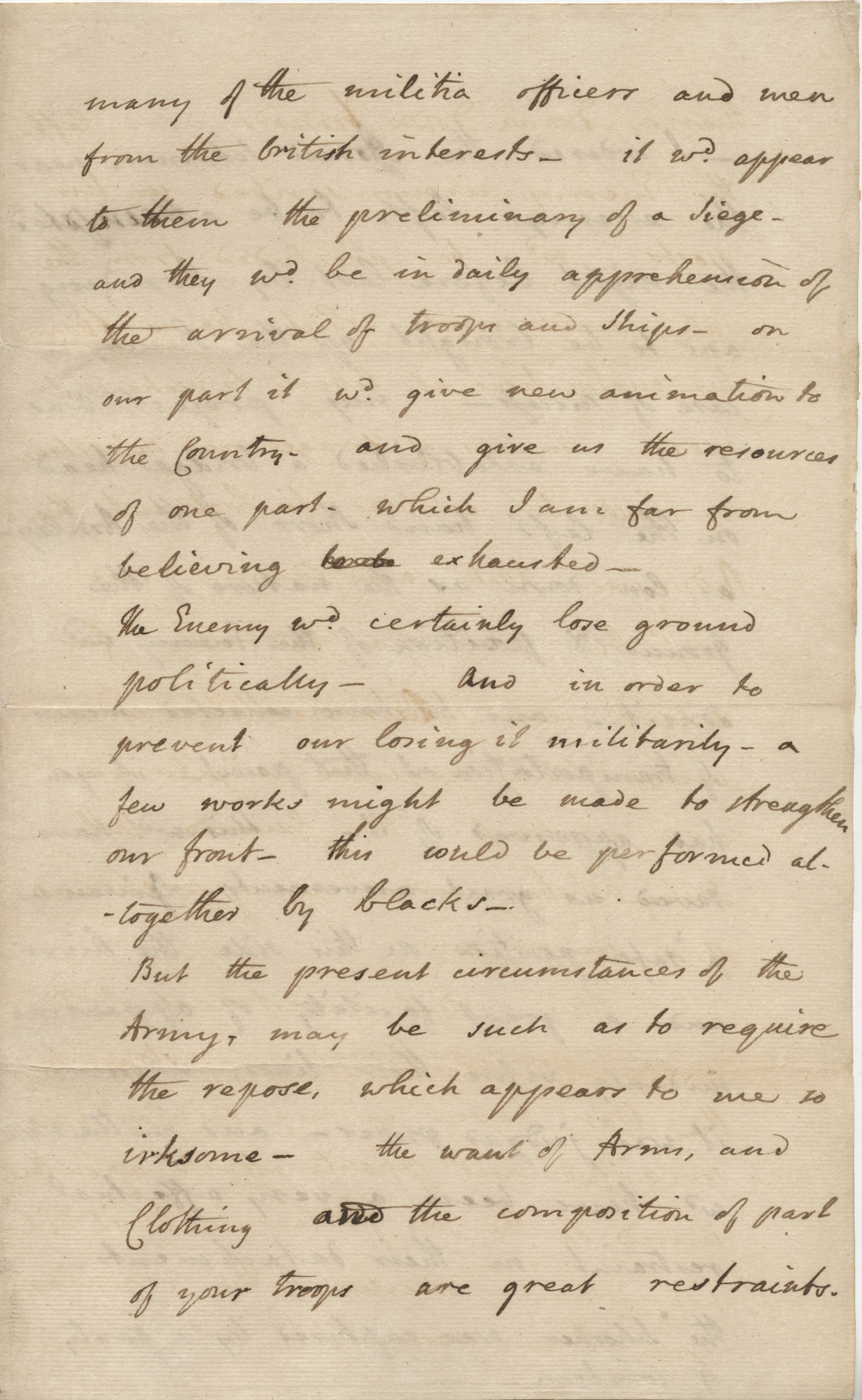
John Laurens to Nathanael Greene
March 20, 1782The Society of the Cincinnati, The Robert Charles Lawrence Fergusson Collection
page 3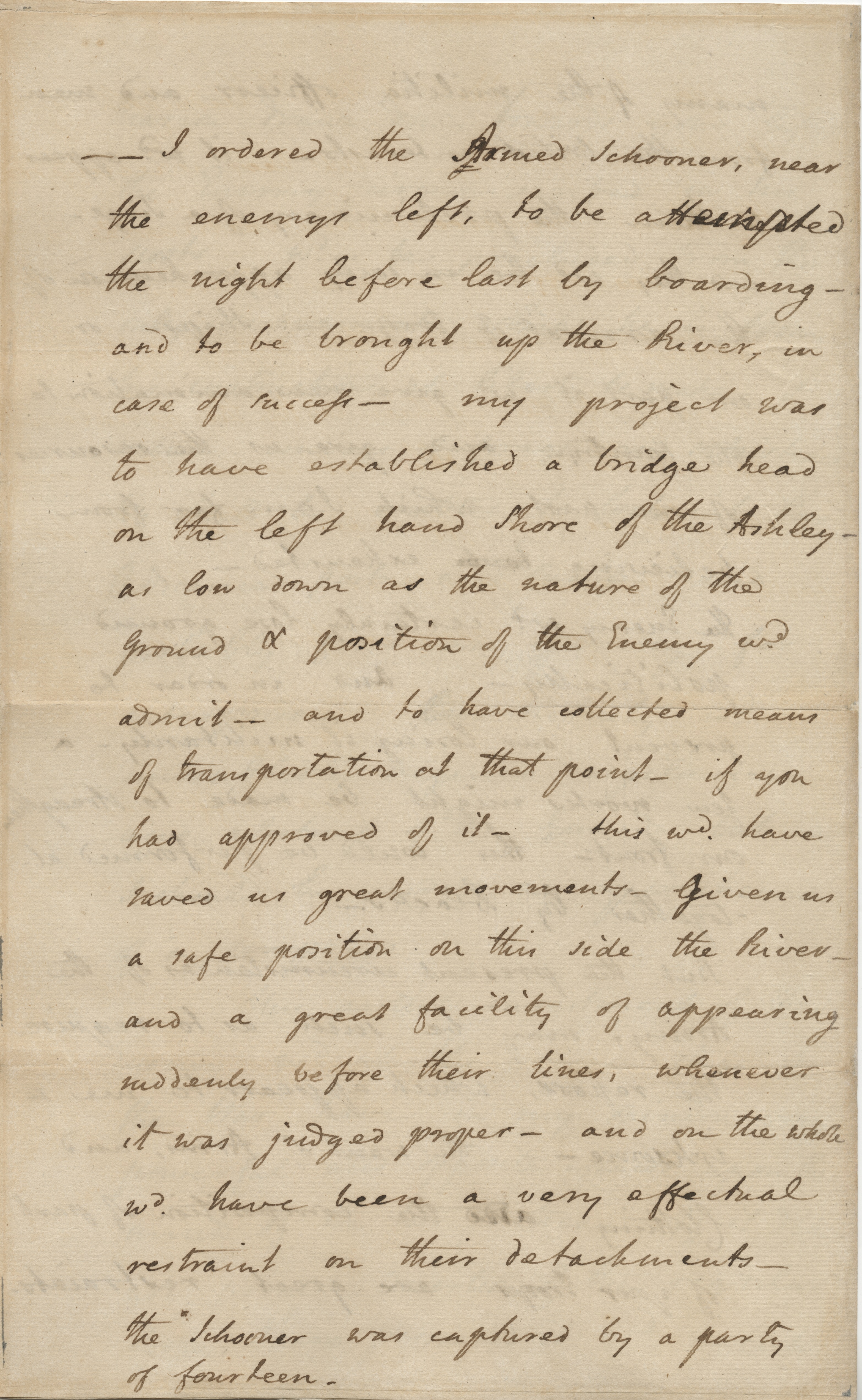
John Laurens to Nathanael Greene
March 20, 1782The Society of the Cincinnati, The Robert Charles Lawrence Fergusson Collection
page 4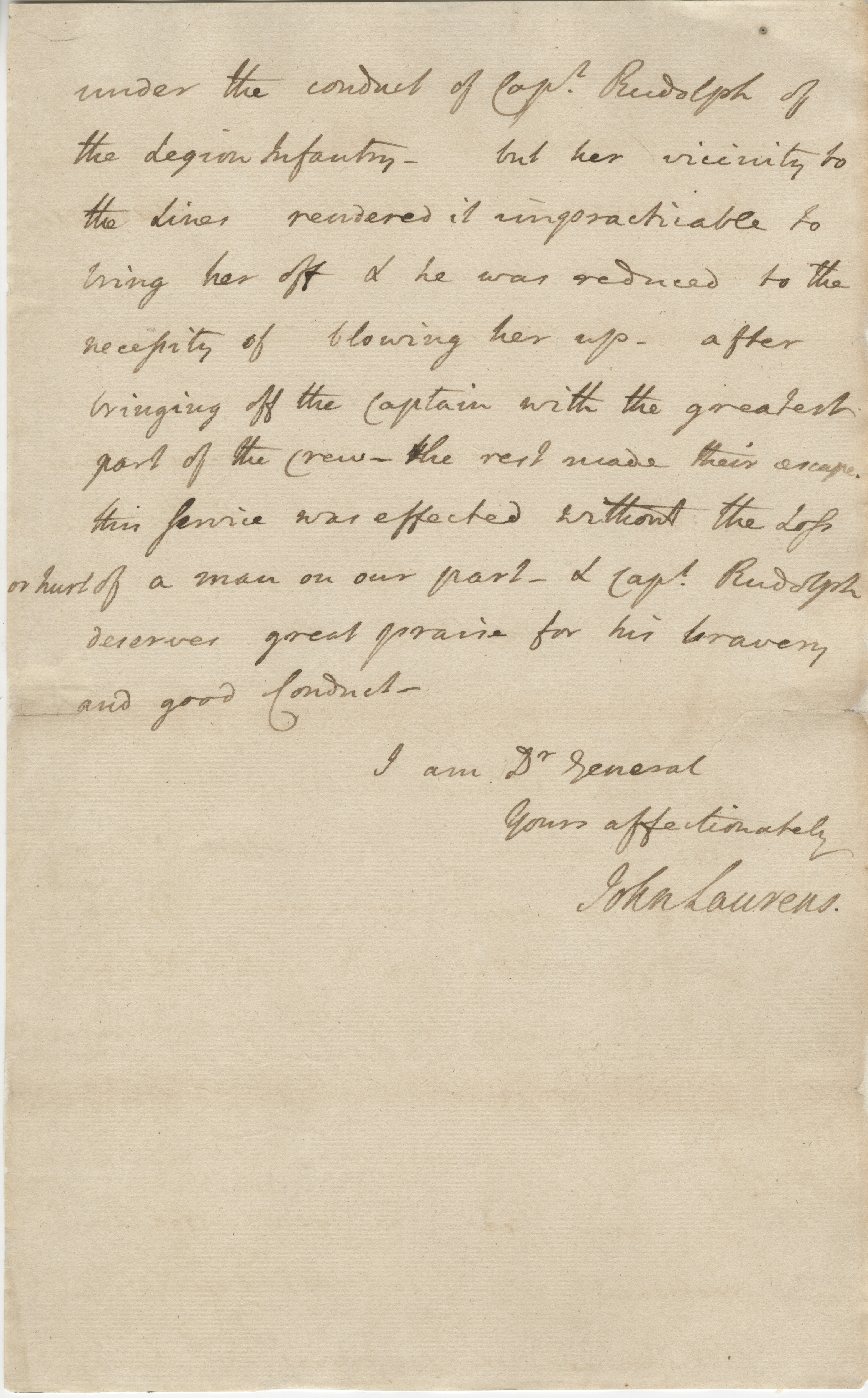
John Laurens to Nathanael Greene
March 20, 1782The Society of the Cincinnati, The Robert Charles Lawrence Fergusson Collection
page 5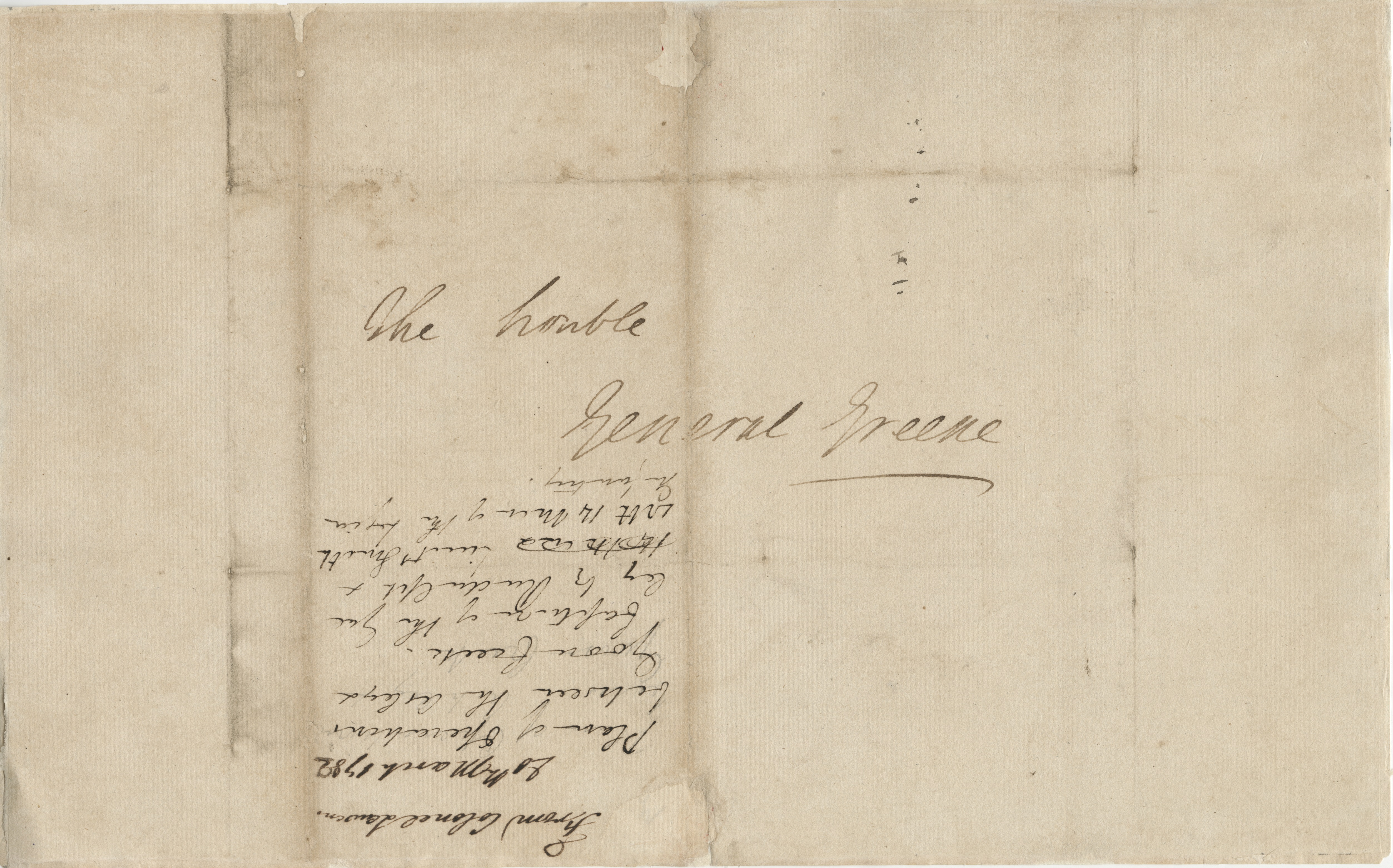
John Laurens to Nathanael Greene
March 20, 1782The Society of the Cincinnati, The Robert Charles Lawrence Fergusson Collection
page 6![Marie Joseph Paul Yves Roch Gilbert Du Motier, marquis de Lafayette, A.D.S. La Grange [France], November 10, 1825](https://www.americanrevolutioninstitute.org/wp-content/uploads/2019/10/MSS-L2010F168-Lafayette-ADS-La-Grange-November-10-1825-recto-large.jpg "Click for a larger view.")
Marie Joseph Paul Yves Roch Gilbert Du Motier, marquis de Lafayette, A.D.S. La Grange [France]
November 10, 1825The Society of the Cincinnati, The Robert Charles Lawrence Fergusson Collection
Soon after his return to France from his grand tour of the United States in 1824-1825, Lafayette wrote this memoir of his former comrade-in-arms Lt. Col. John Laurens of South Carolina, who was killed in action at Combahee River in 1782: "The brilliant, devoted, and steady services of Col. Laurens in our revolutionary struggle are so conspicuously connected with the history of American independence and freedom that a minute account of his civil, military, and political career would be superfluous. I shall only observe that either as a champion of a cause, and the citizen of a country both of which he loved with enthusiasm, or as the most valued aid de camp to the commander in chief, as a gallant leader in the field of action, as an intrepid volunteer, or also as a Representative of Congress ... he has display'd such eminent qualities, and patriotic virtues, as must impress every well informed mind with the highest sentiments of admiration and respect. That his disinterestness [sic] even to carelessness was a distinguished trait among his other qualities is a a fact well known to his surviving contemporaries to which may be added that whenever cause and country were at stake this disposition knew no bounds ..."![Marie Joseph Paul Yves Roch Gilbert Du Motier, marquis de Lafayette, A.D.S. La Grange [France], November 10, 1825](https://www.americanrevolutioninstitute.org/wp-content/uploads/2019/10/MSS-L2010F168-Lafayette-ADS-La-Grange-November-10-1825-verso-large.jpg "Click for a larger view.")
Marie Joseph Paul Yves Roch Gilbert Du Motier, marquis de Lafayette, A.D.S. La Grange [France]
November 10, 1825The Society of the Cincinnati, The Robert Charles Lawrence Fergusson Collection
page 2