Collections for the Classroom: America’s First Veterans
American Revolution Institute Weekly Teacher Workshops, American Revolution Institute
Washington, D.C. November 4, 2019—March 30, 2020
James Madison wrote that veterans of the American Revolution suffered a “singular hardship” that “can never be forgotten.” Yet because America’s civilian population suffered enormously during the eight-year conflict, honoring veterans for their “singular” service took more than a generation. Enlisted men like Joseph Plumb Martin, who served seven years in the Continental Army, were left feeling “turned adrift like old worn-out horses” until the early nineteenth century, when prosperity coupled with romantic sentiment toward the Revolution fostered an appreciation for the sacrifices made by the heroes of the War of Independence. The following American Revolution Institute museum and library collection items can be used as primary sources in the classroom to tell the story of America’s first veterans.
Additionally included is a gallery of other library and museum collection selections shared during our weekly teacher workshops (following the veteran exhibit items) as well as a downloadable PDF version of our purple heart lesson to accompany the Badge of Military Merit presently on display.
Click for a larger view.
A Pensioner of the Revolution
John Neagle (1796-1865)
1830
The Society of the Cincinnati, Museum purchase, 2017
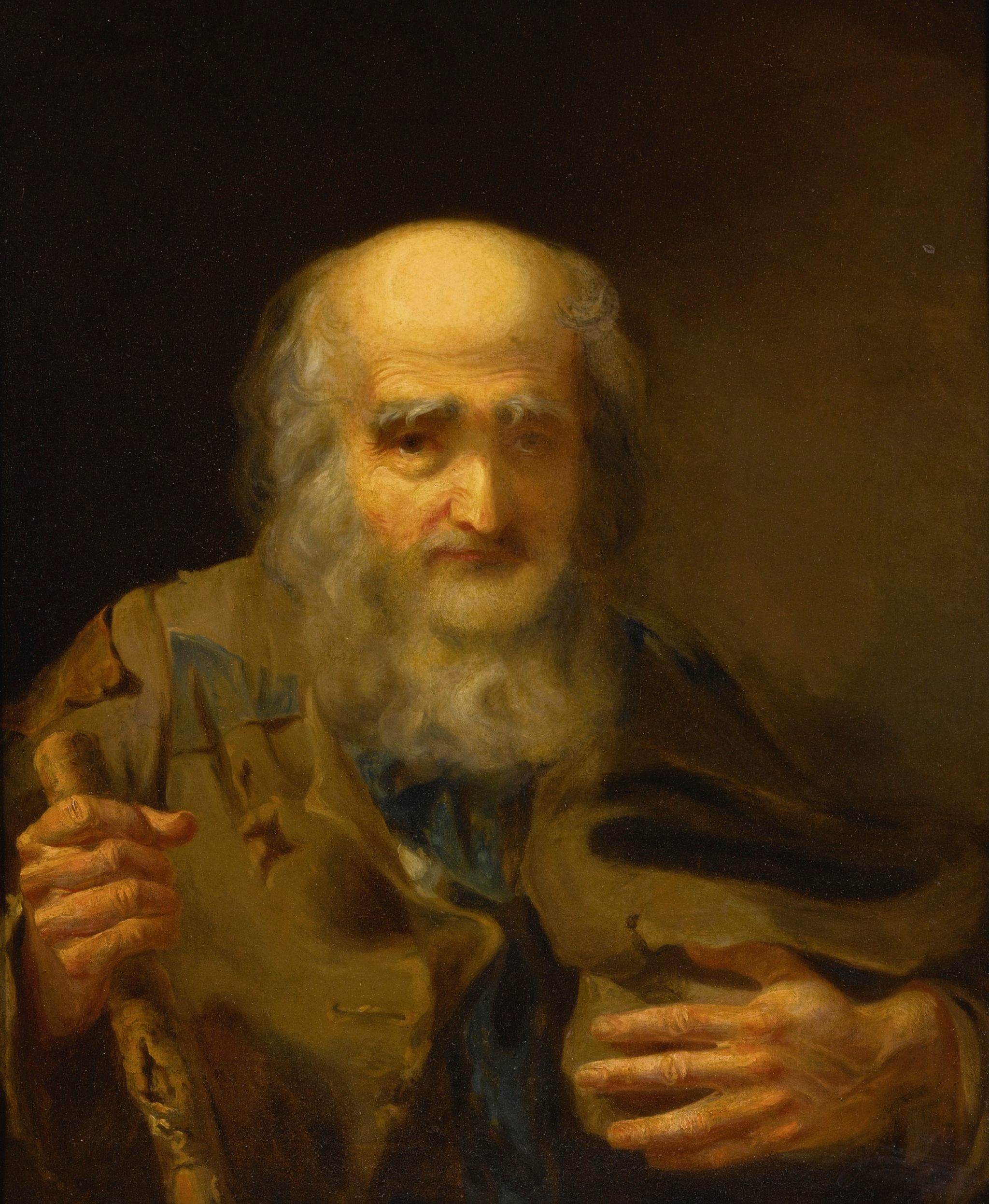
This somber and arresting portrait depicts a homeless veteran living on the street in Philadelphia named Joseph Winter. The painting attracted popular attention in early 1831, when John Sartain published a mezzotint engraving of the work titled Patriotism and Age, which became a call to the conscience of the nation to care for those who had fought its battles and won its freedom.
Click for a larger view.
Bryan Rossiter
John Trumbull (1756-1843)
ca. 1806-1808
New York State Society of the Cincinnati
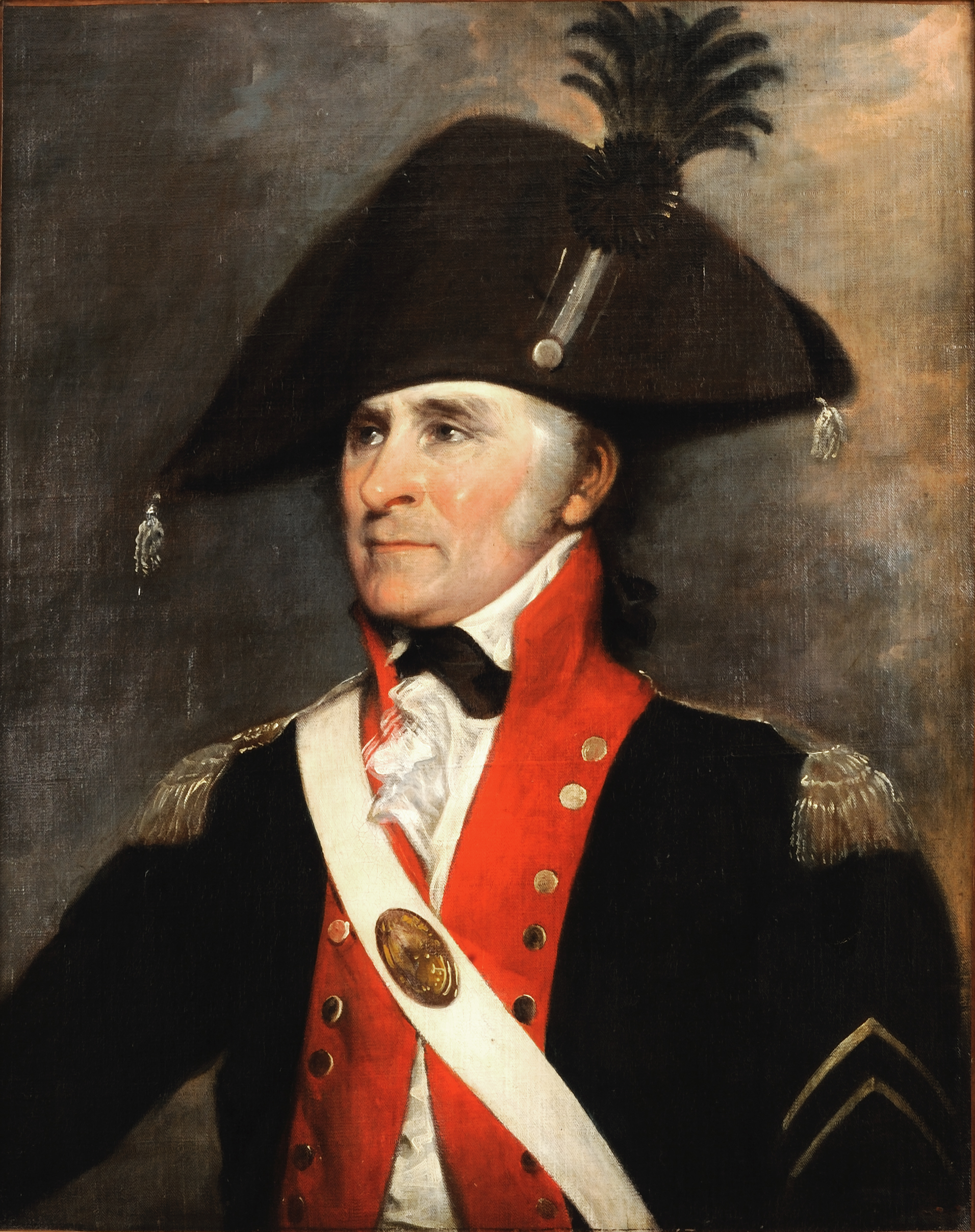
Veteran enlisted men like Bryan Rossiter (1760-1834), a sergeant in the Continental Army, waited decades to secure what was due to them. Rossiter settled in New York City after the war. As a veteran non-commissioned officer, he was not eligible to join the Society of the Cincinnati, but the New York branch appointed him sergeant at arms in 1801. John Trumbull’s portrait of Rossiter depicts him in his sergeant at arms uniform with two white chevrons on his left sleeve, indicating that Rossiter had been awarded the Badge of Merit.
Click for a larger view.
Sergeant Andw. Wallace
ca. 1835
The Society of the Cincinnati, The Robert Charles Lawrence Fergusson Collection
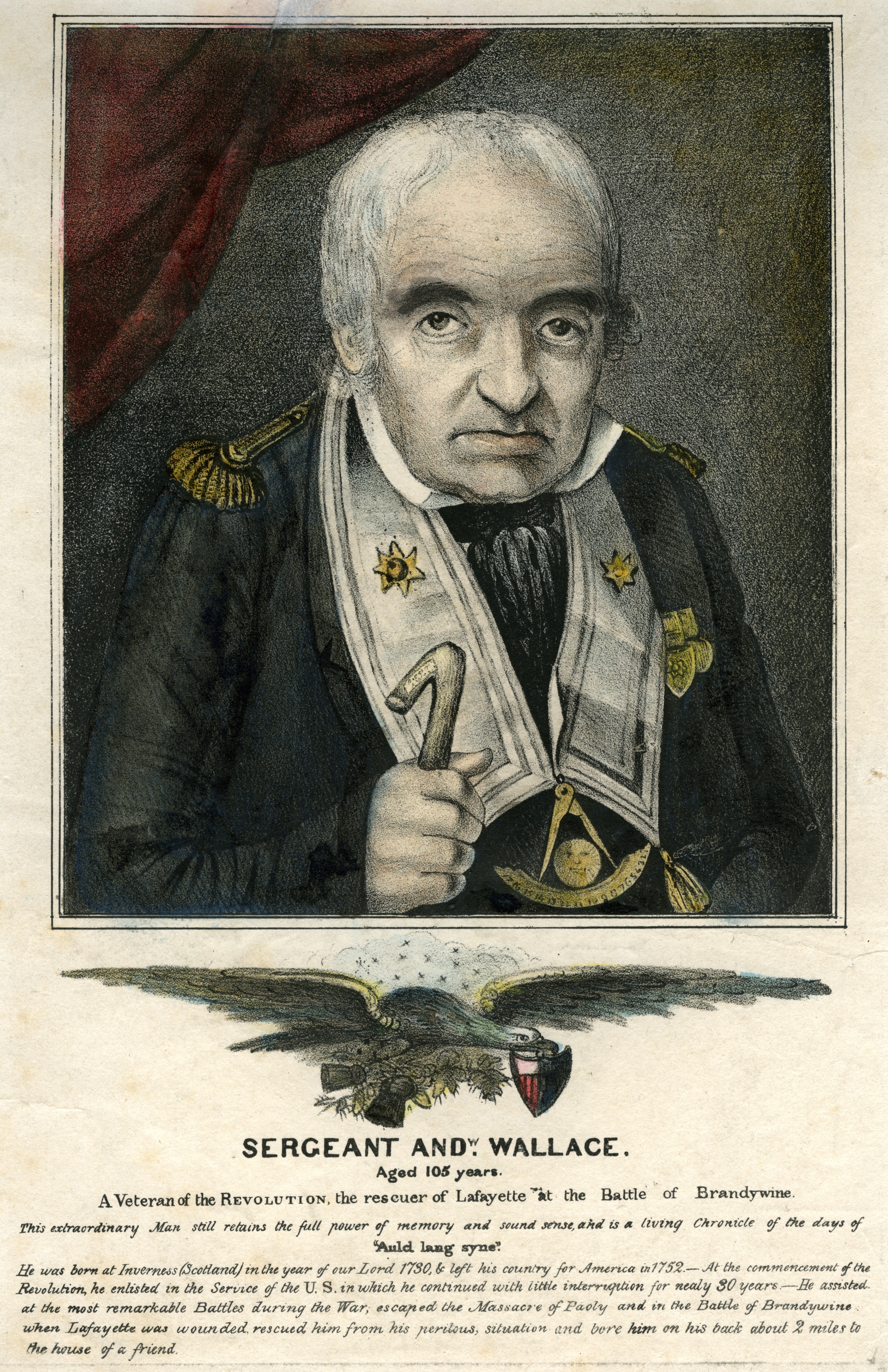
Hand-colored lithograph portrait of an elderly man in Masonic regalia titled, “Sergeant Andw. Wallace. Aged 105 years. A Veteran of the Revolution, the rescuer of Lafayette at the Battle of Brandywine.”
Click for a larger view.
Photographic print of Ralph Farnham
1860
The Society of the Cincinnati, The Robert Charles Lawrence Fergusson Collection
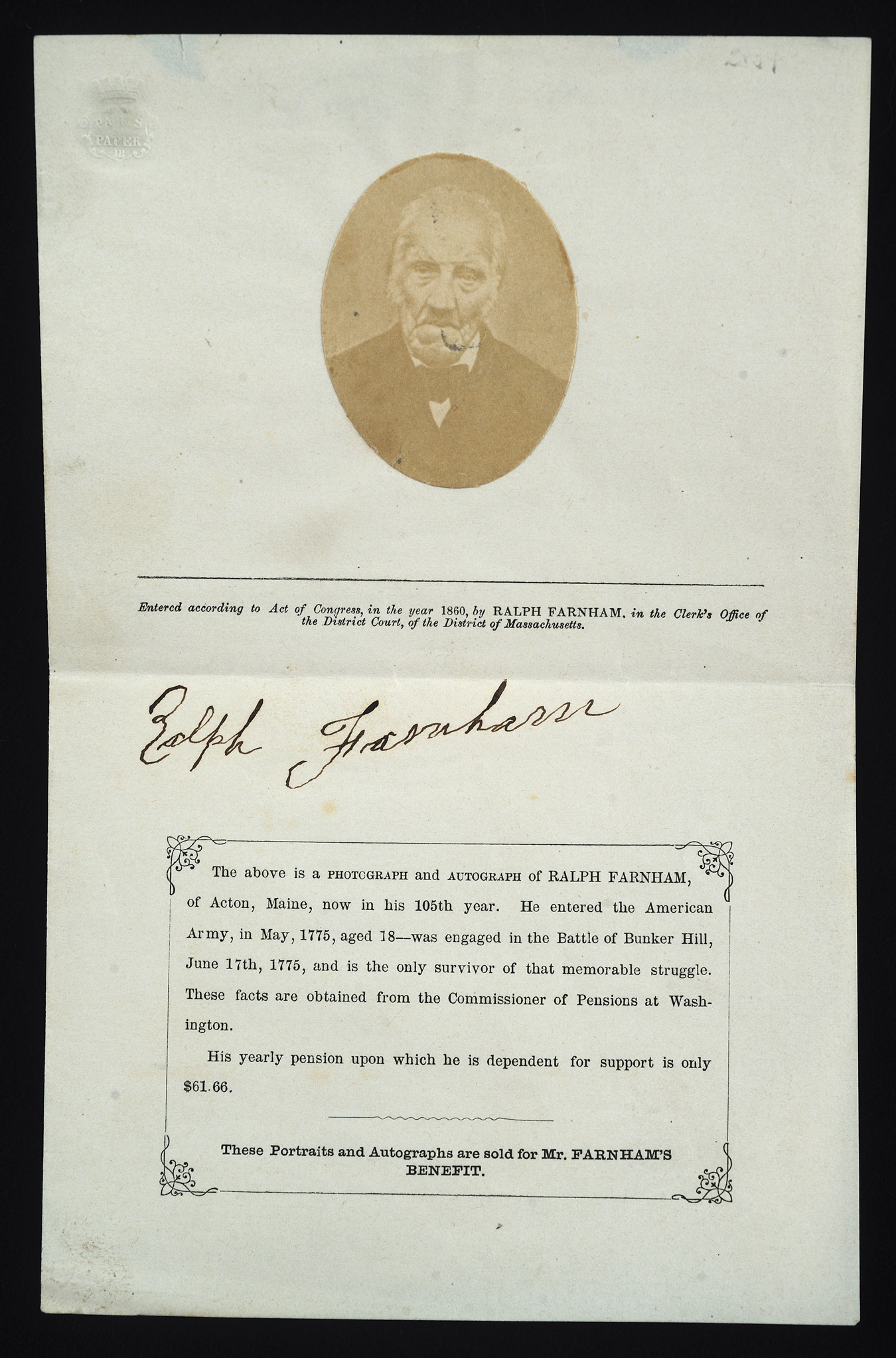
Small oval portrait (salt print) of Ralph Farnham of Acton, Maine, at the top of a leaflet with his autograph and printed text about him. Text asserts he was 105 years old, joined the army in 1775 at the age of eighteen, fought at the Battle of Bunker Hill, and is “the only survivor of that memorable struggle.” Sold to benefit Farnham, presumably to supplement his annual pension of $61.66. (The National Archives book lists a Ralph Farnham of Massachusetts who received a federal bounty land warrant (#9451-160-55) and a pension (S31018).)
Click for a larger view.
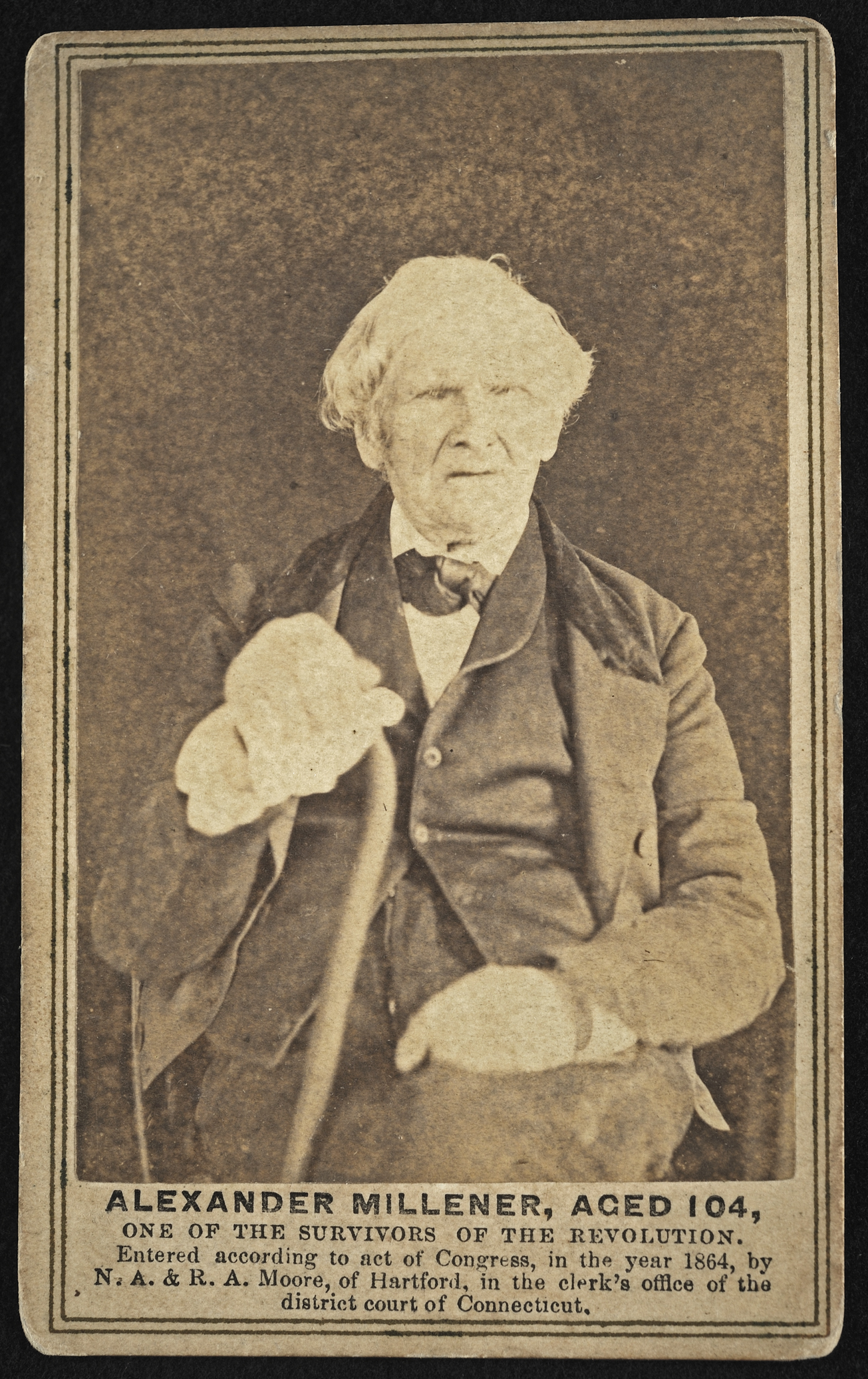
Alexander Millener, Aged 104
Hartford, Conn.: N. A. & R. A. Moore, 1864
The Society of the Cincinnati
Carte de visite albumen print, text below identifies Millener as “one of the survivors of the Revolution.” (Under the name Alexander Millener in the National Archives book, it says to see the name Alexander Marony, who received a federal pension (S42925).)
Click for a larger view.
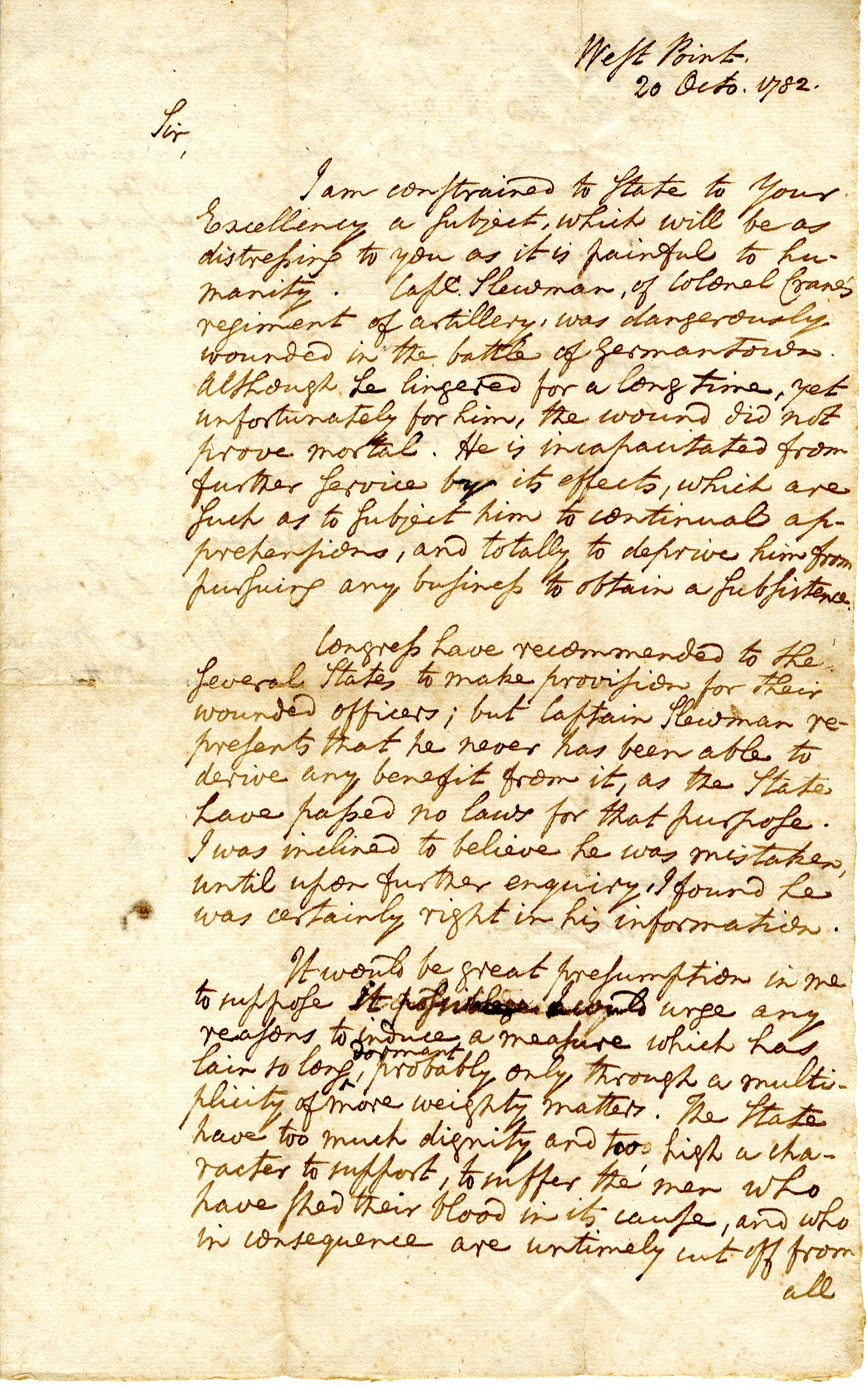
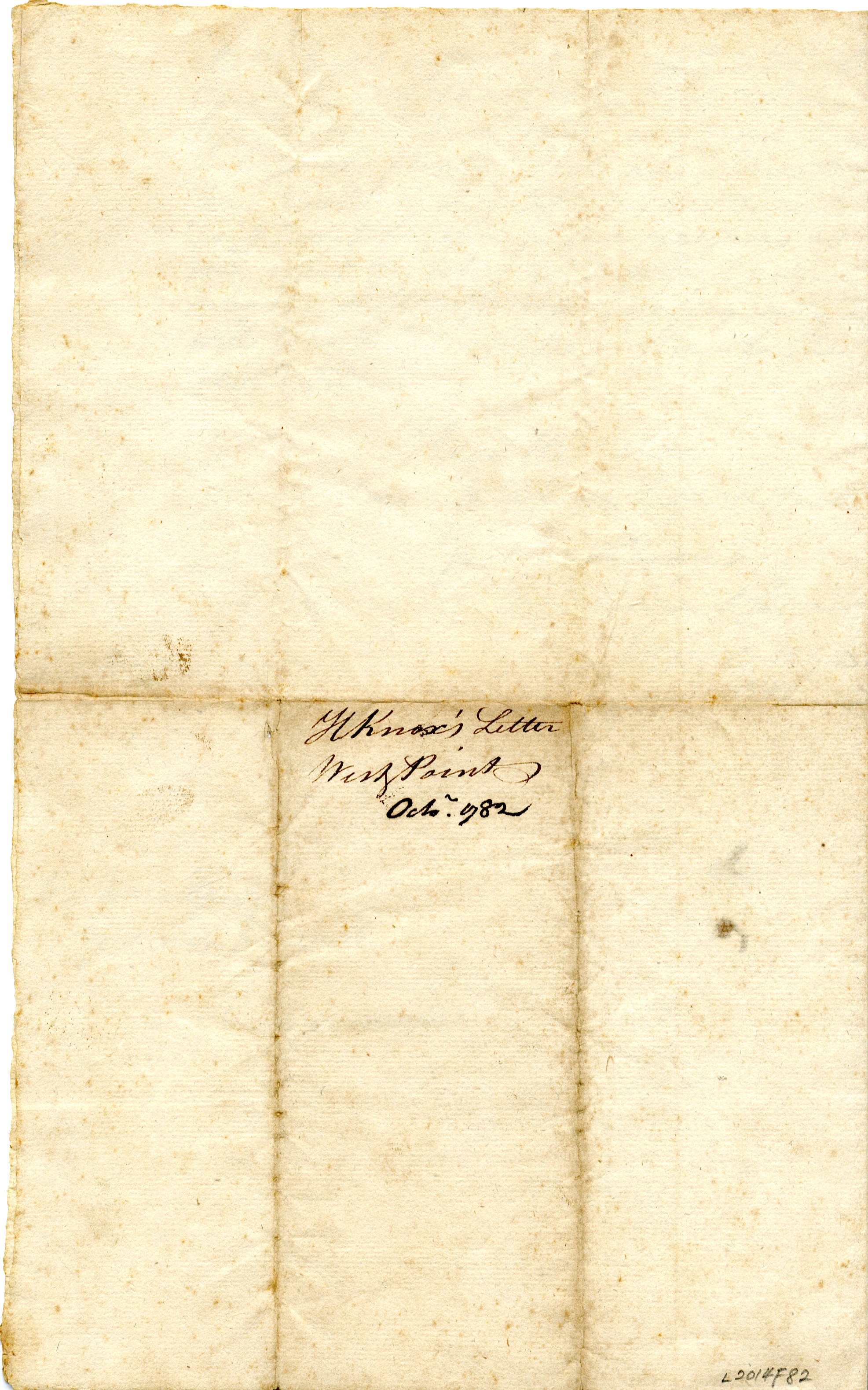
Henry Knox to John Hancock
October 20, 1782
The Society of the Cincinnati, The Robert Charles Lawrence Fergusson Collection
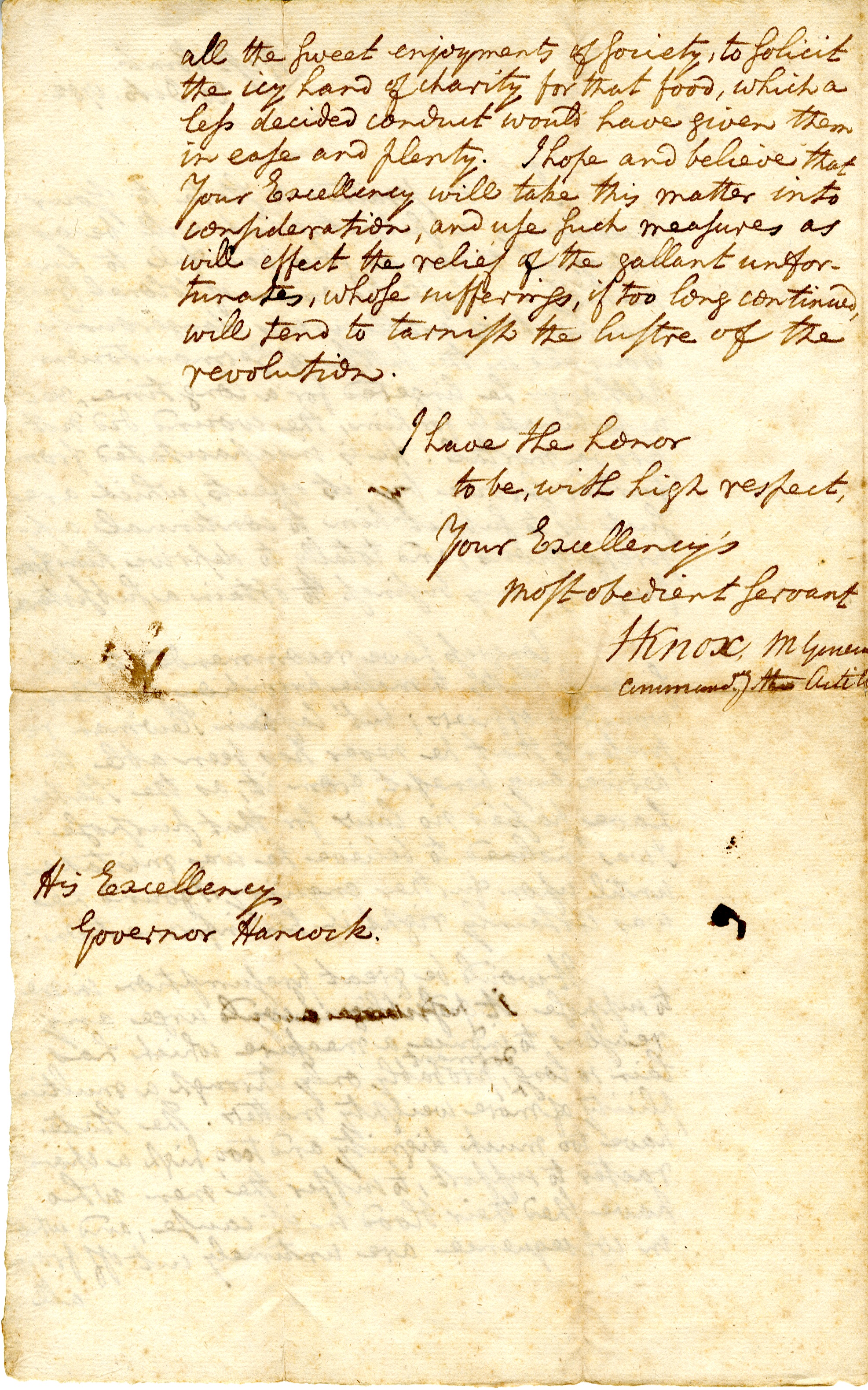
In this wartime letter, Henry Knox appealed to Governor John Hancock of Massachusetts for support for Capt. John Sluman of Crane’s Artillery Regiment, who was permanently disabled by wounds inflicted at the Battle of Germantown in 1777. Sluman was awarded a half-pay disability pension of $300 per year from Massachusetts in 1784. Congress assumed responsibility for disability pensions in 1792 and paid Sluman $300 annually until his death in 1816.
Click for a larger view.
Henry Knox to John Hancock
October 20, 1782
The Society of the Cincinnati, The Robert Charles Lawrence Fergusson Collection
page 2
Click for a larger view.
Henry Knox to John Hancock
October 20, 1782
The Society of the Cincinnati, The Robert Charles Lawrence Fergusson Collection
page 3
Click for a larger view.
Henry Knox to John Hancock
October 20, 1782
The Society of the Cincinnati, The Robert Charles Lawrence Fergusson Collection
page 4
Click for a larger view.
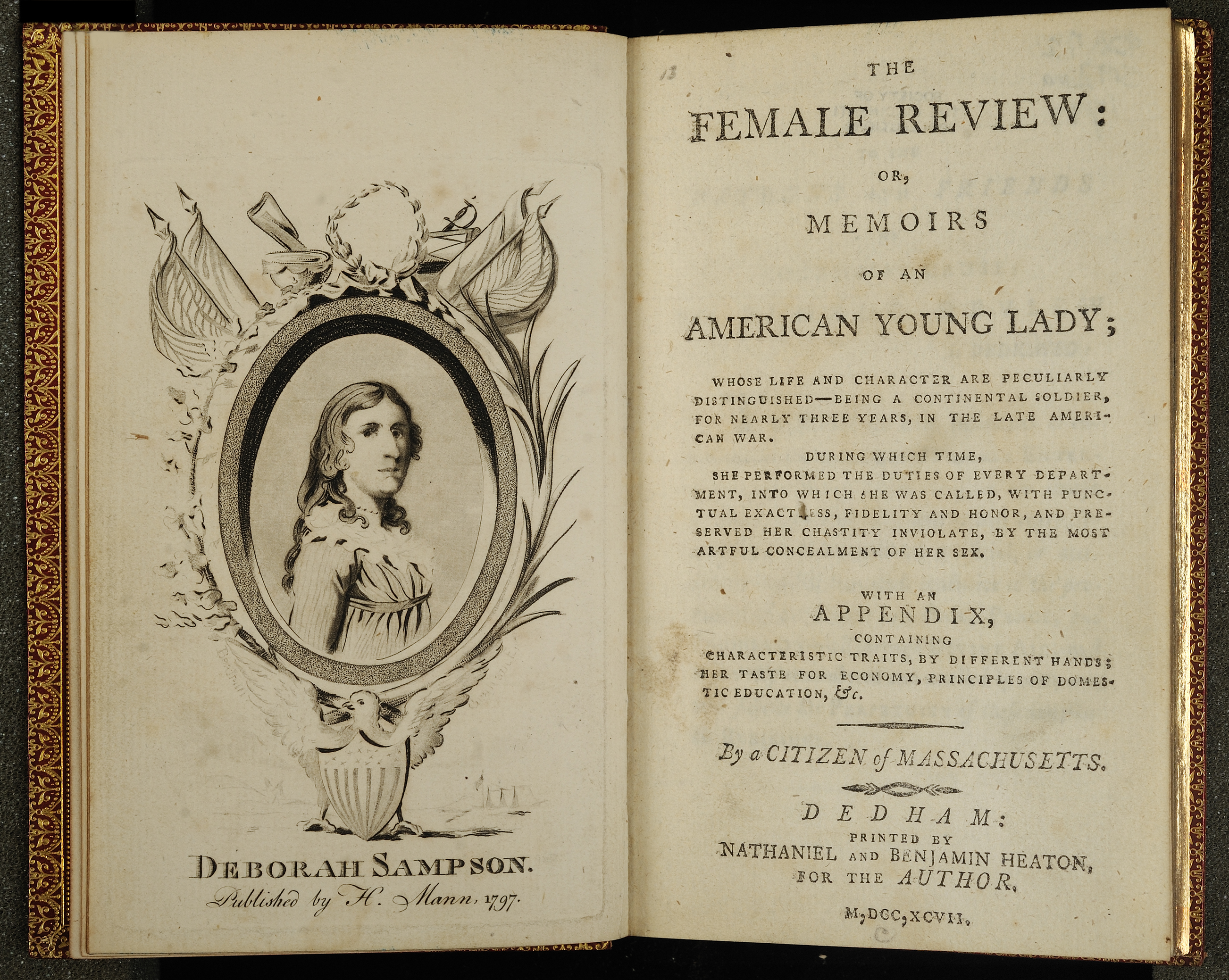
The Female Review: or, Memoirs of an American Young Lady
“A Citizen of Massachusetts” [Herman Mann]
Dedham, Mass.: Nathaniel and Benjamin Heaton, for the Author, 1797
The Society of the Cincinnati, The Robert Charles Lawrence Fergusson Collection
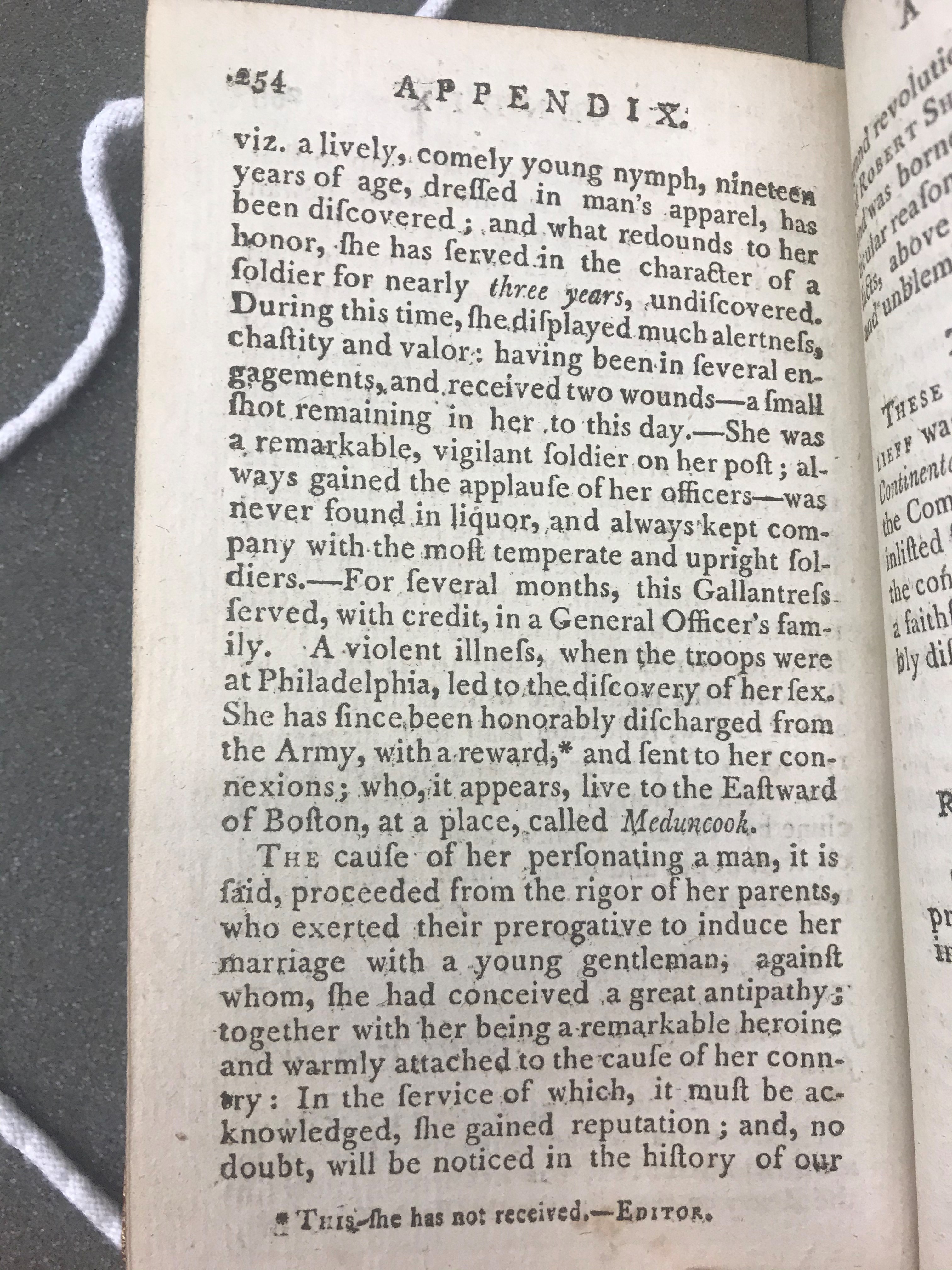
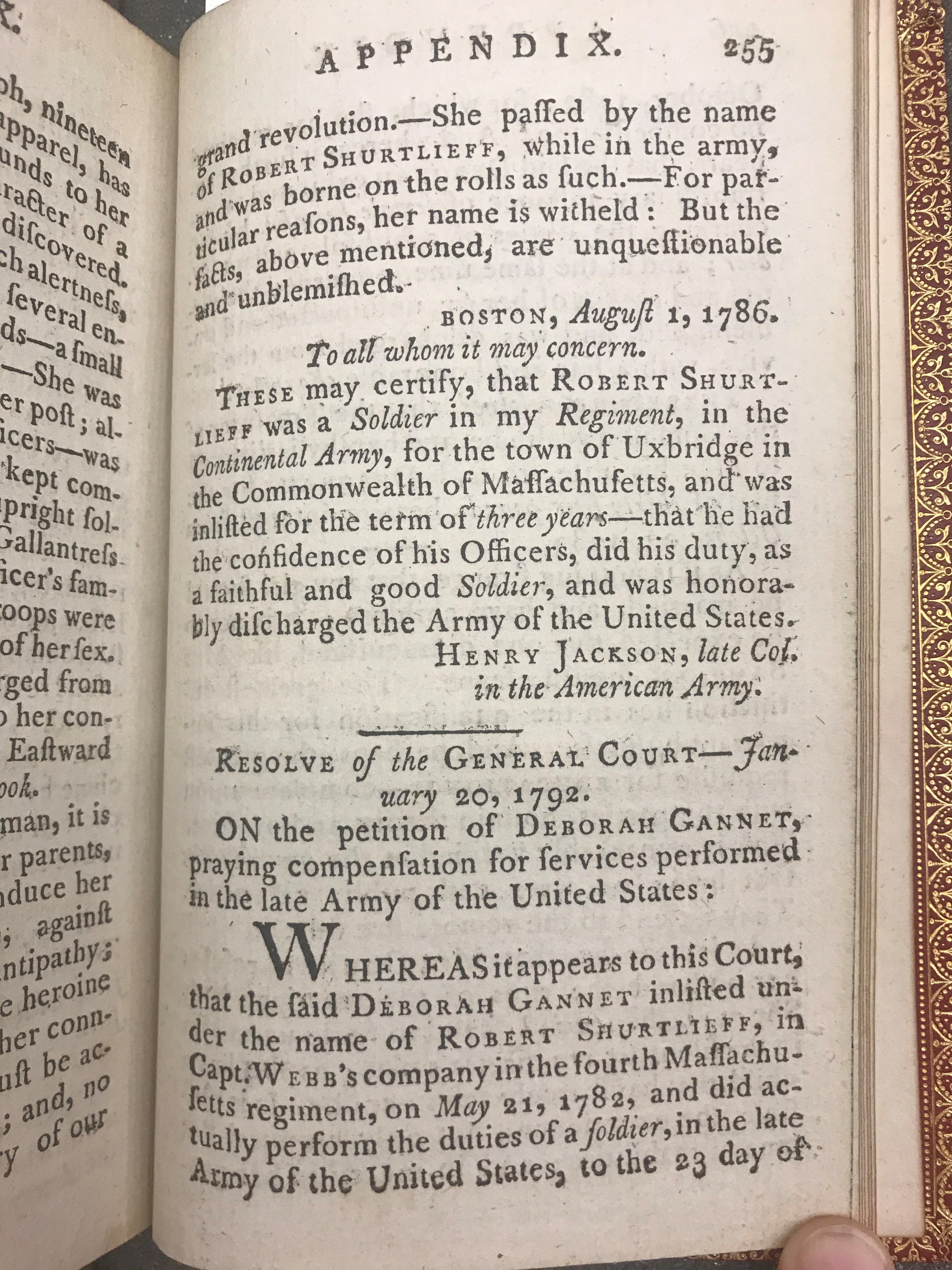
Deborah Sampson (1760-1827) enlisted in the Massachusetts Continental Line in May 1782 using the name “Robert Shurtleff.” Mixing fact with romantic inventions, this imaginative account of Sampson’s wartime service was published to support her case for a pension. In 1805 she received a disability pension of $4 a month, which she relinquished to accept a pension of $8 a month awarded under the Pension Act of 1818.
Click for a larger view.
The Female Review: or, Memoirs of an American Young Lady
“A Citizen of Massachusetts” [Herman Mann]
Dedham, Mass.: Nathaniel and Benjamin Heaton, for the Author, 1797
The Society of the Cincinnati, The Robert Charles Lawrence Fergusson Collection
page 254
Click for a larger view.
The Female Review: or, Memoirs of an American Young Lady
“A Citizen of Massachusetts” [Herman Mann]
Dedham, Mass.: Nathaniel and Benjamin Heaton, for the Author, 1797
The Society of the Cincinnati, The Robert Charles Lawrence Fergusson Collection
page 255
Click for a larger view.
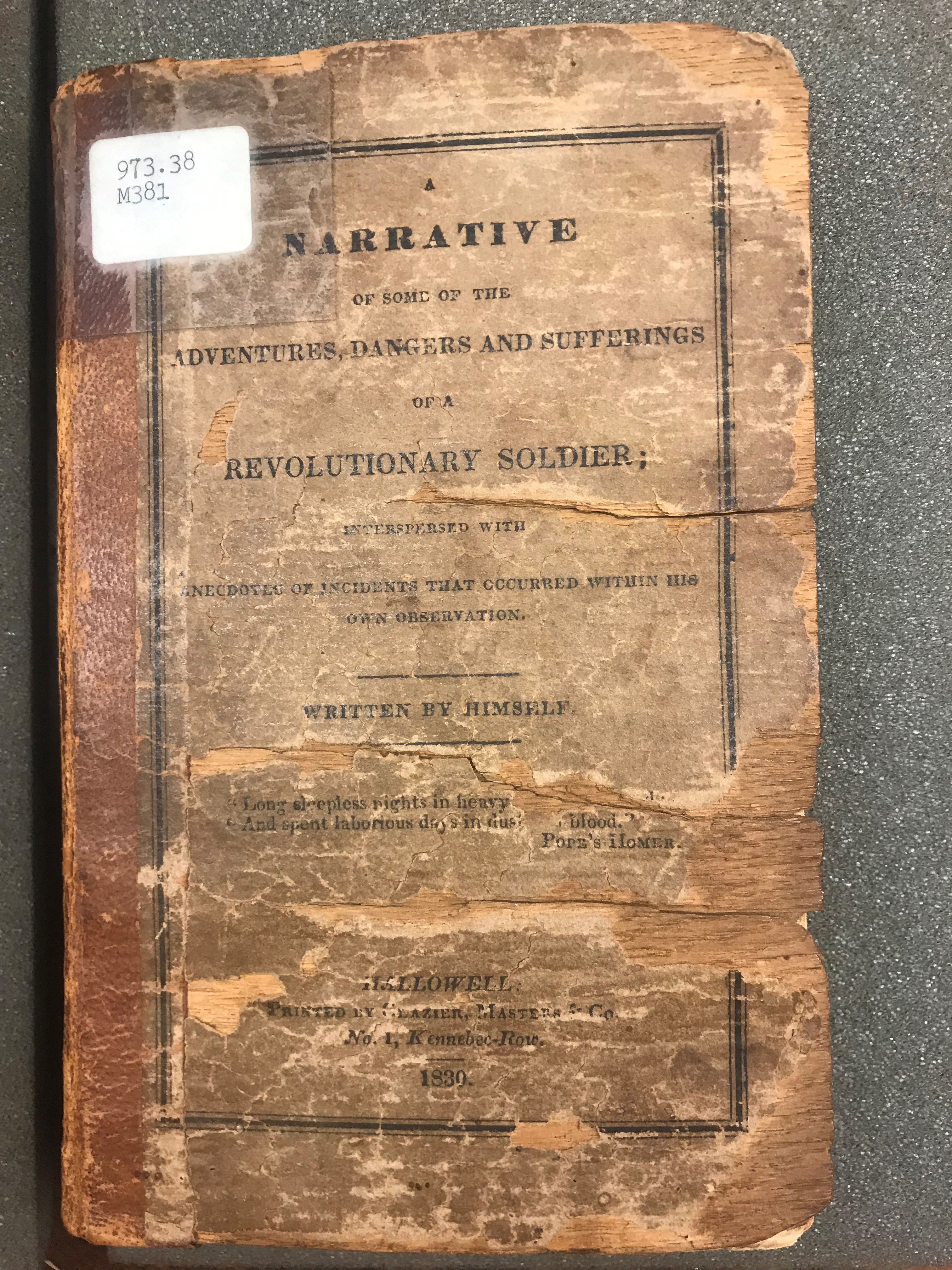
A Narrative of Some of the Adventures, Dangers and Sufferings of a Revolutionary Soldier
Joseph Plumb Martin
Hallowell, [Maine]: Printed by Glazier, Masters & Co., 1830
The Society of the Cincinnati
In the Preface: “every private soldier in an army thinks his particular services as essential to carry on the war he is engaged in, as the services of the most influential general; and why not? what could officers do without such men? Nothing at all.” Narrative ends with several pages on disappointments after the war: “the war was over, and the prize won for which we had been contending through eight tedious years. But the soldiers said but very little about it … Starved, ragged and meagre, not a cent to help themselves with, and no means or method in view to remedy or alleviate their condition; this was appaling in the extreme” (p. 202). Published anonymously; author is listed on the title page only as “written by himself.” Joseph Plumb Martin (1759-1850) was an enlisted man in the Connecticut militia and Continental Army.
Click for a larger view.
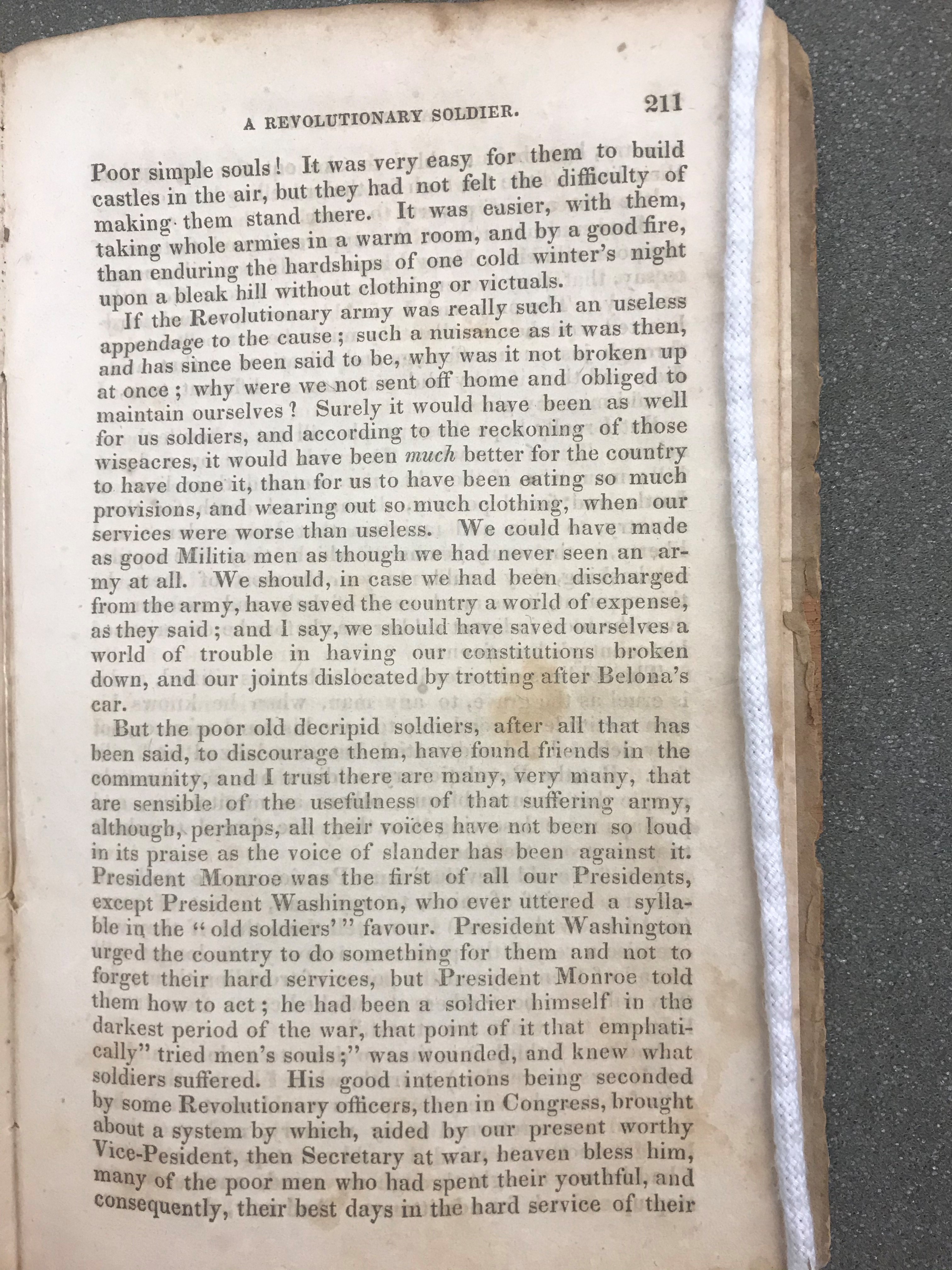
A Narrative of Some of the Adventures, Dangers and Sufferings of a Revolutionary Soldier
Joseph Plumb Martin
Hallowell, [Maine]: Printed by Glazier, Masters & Co., 1830
The Society of the Cincinnati
page 211
Click for a larger view.
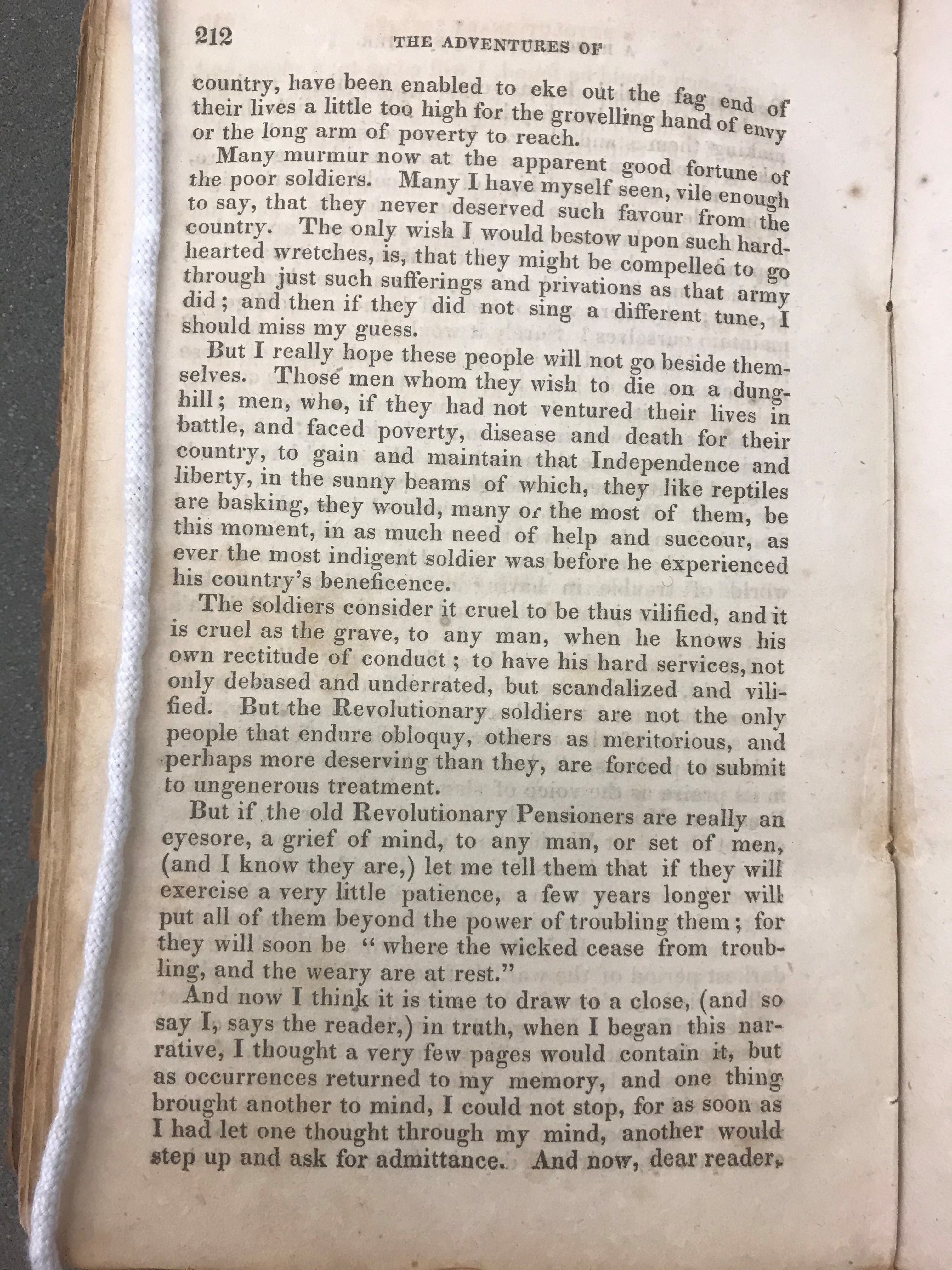
A Narrative of Some of the Adventures, Dangers and Sufferings of a Revolutionary Soldier
Joseph Plumb Martin
Hallowell, [Maine]: Printed by Glazier, Masters & Co., 1830
The Society of the Cincinnati
page 212
Click for a larger view.
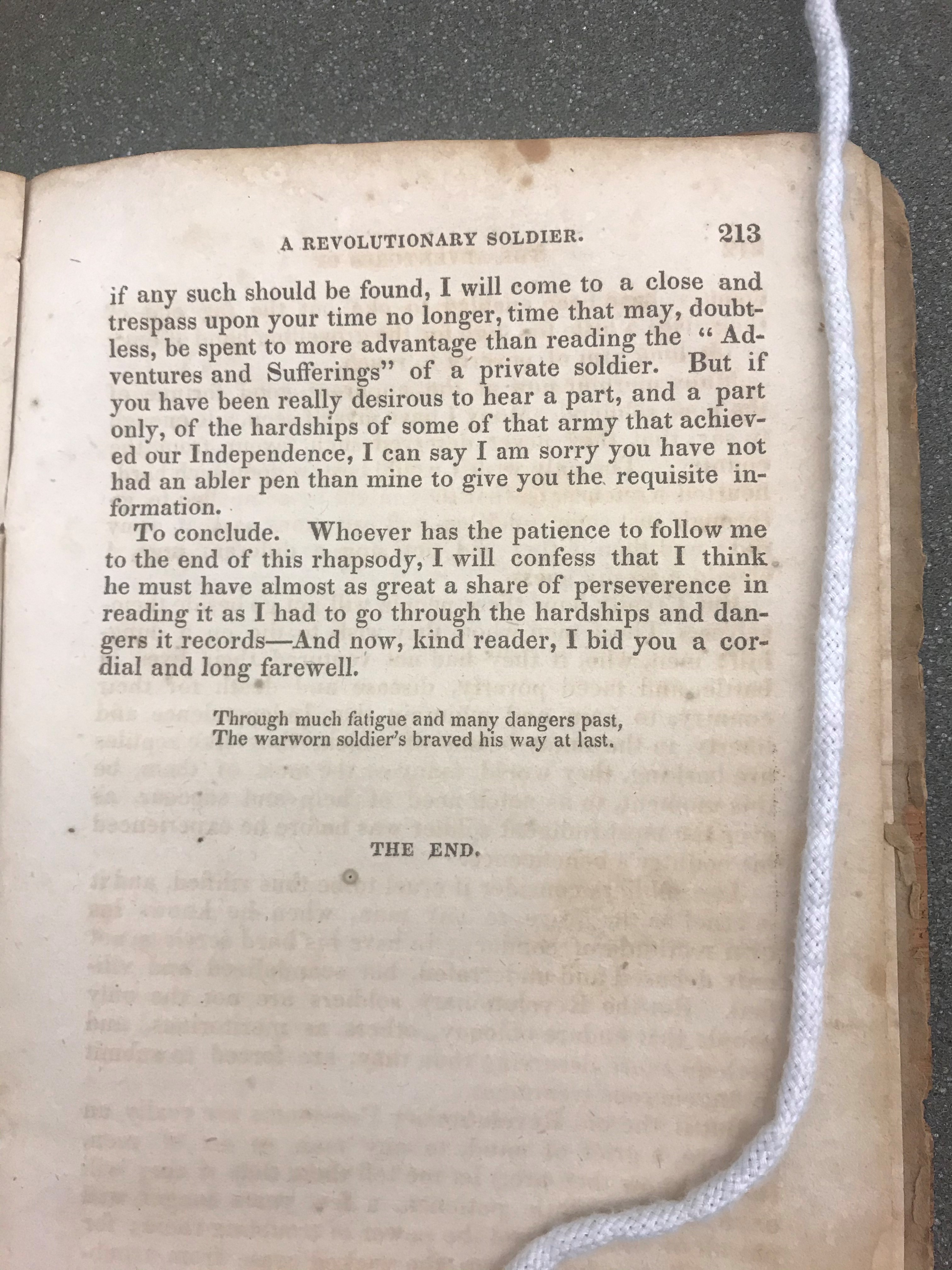
A Narrative of Some of the Adventures, Dangers and Sufferings of a Revolutionary Soldier
Joseph Plumb Martin
Hallowell, [Maine]: Printed by Glazier, Masters & Co., 1830
The Society of the Cincinnati
page 213
Click for a larger view.
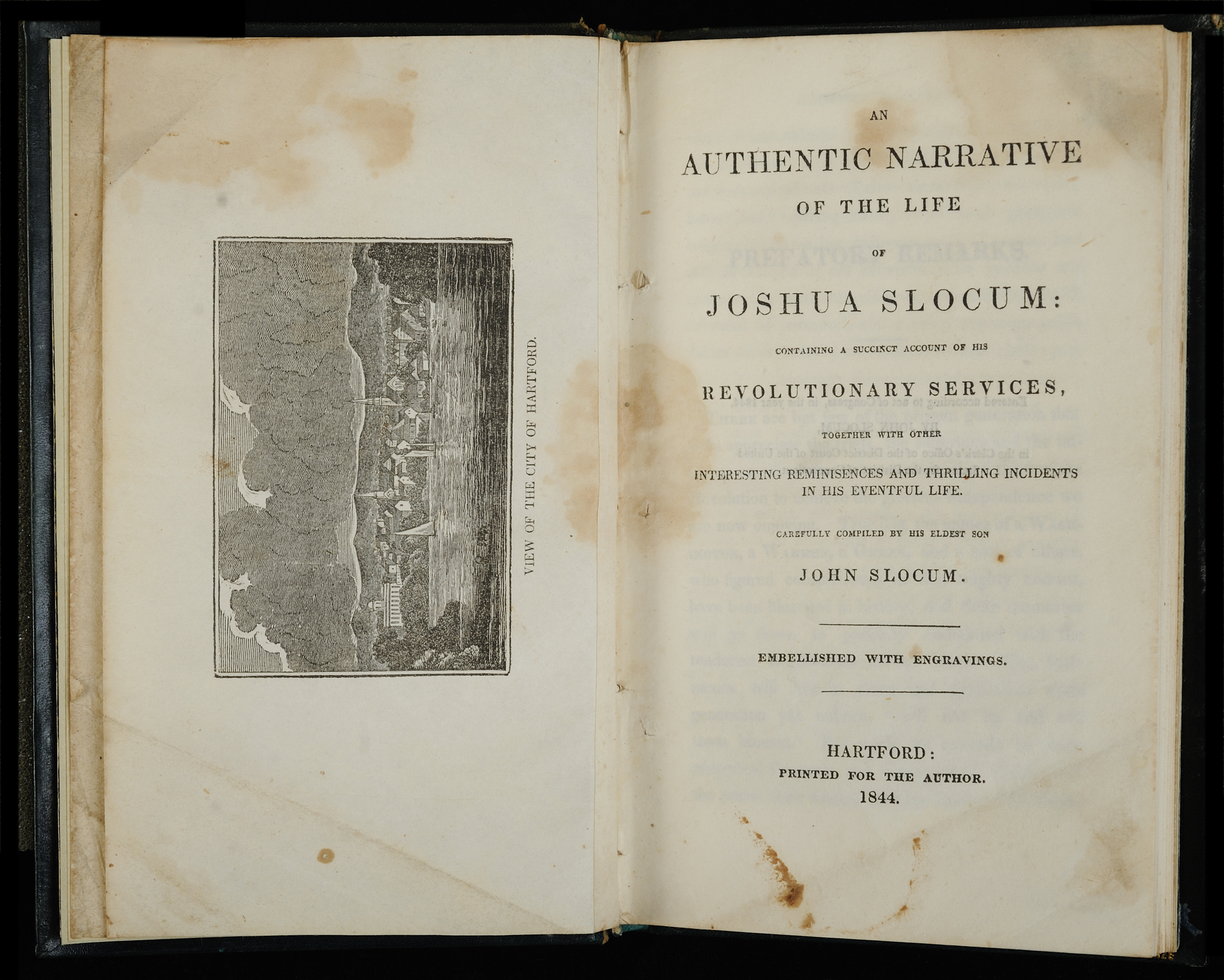
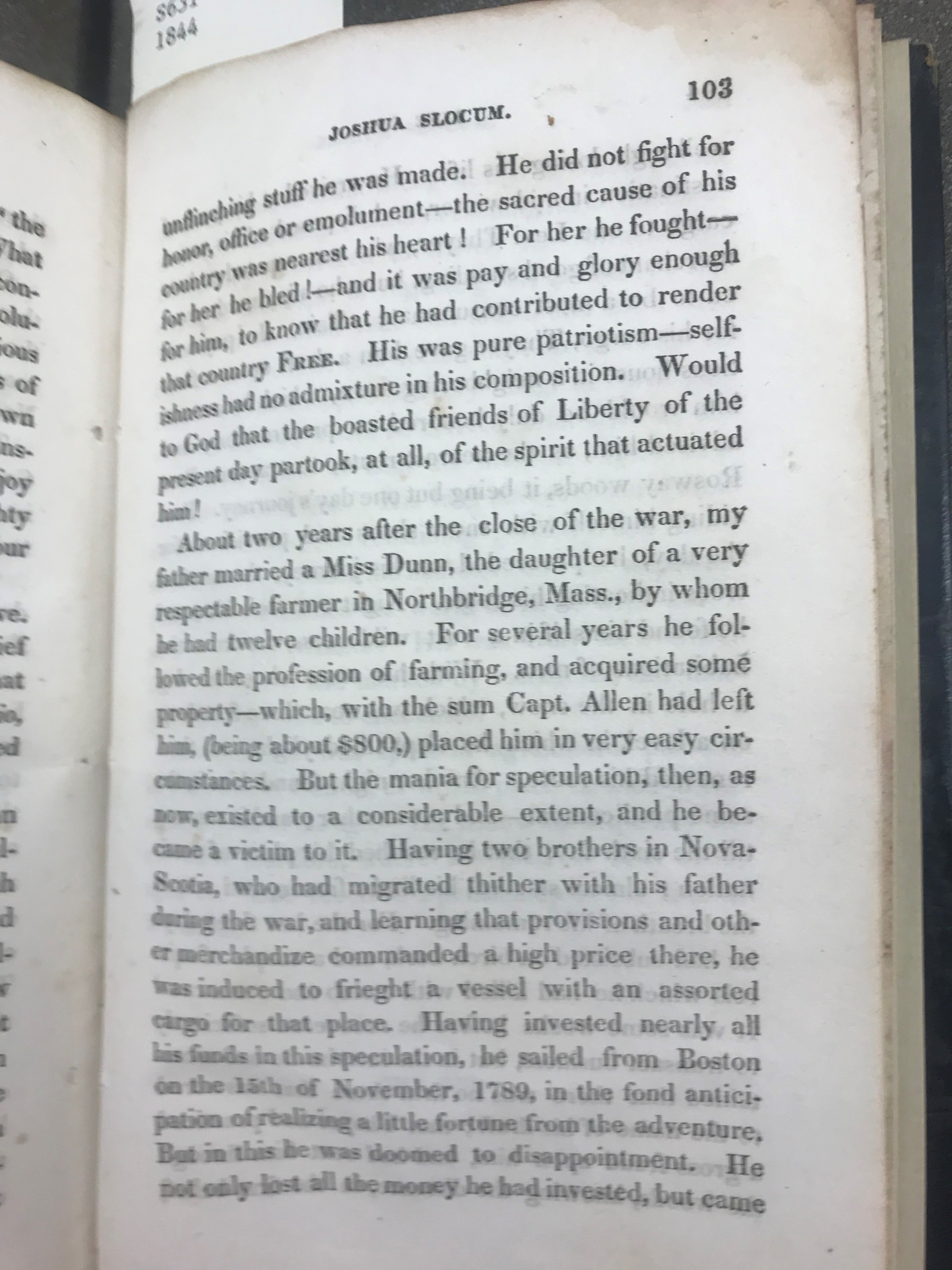
An Authentic Narrative of the Life of Joshua Slocum
Hartford: Printed for the author, 1844
The Society of the Cincinnati, The Robert Charles Lawrence Fergusson Collection
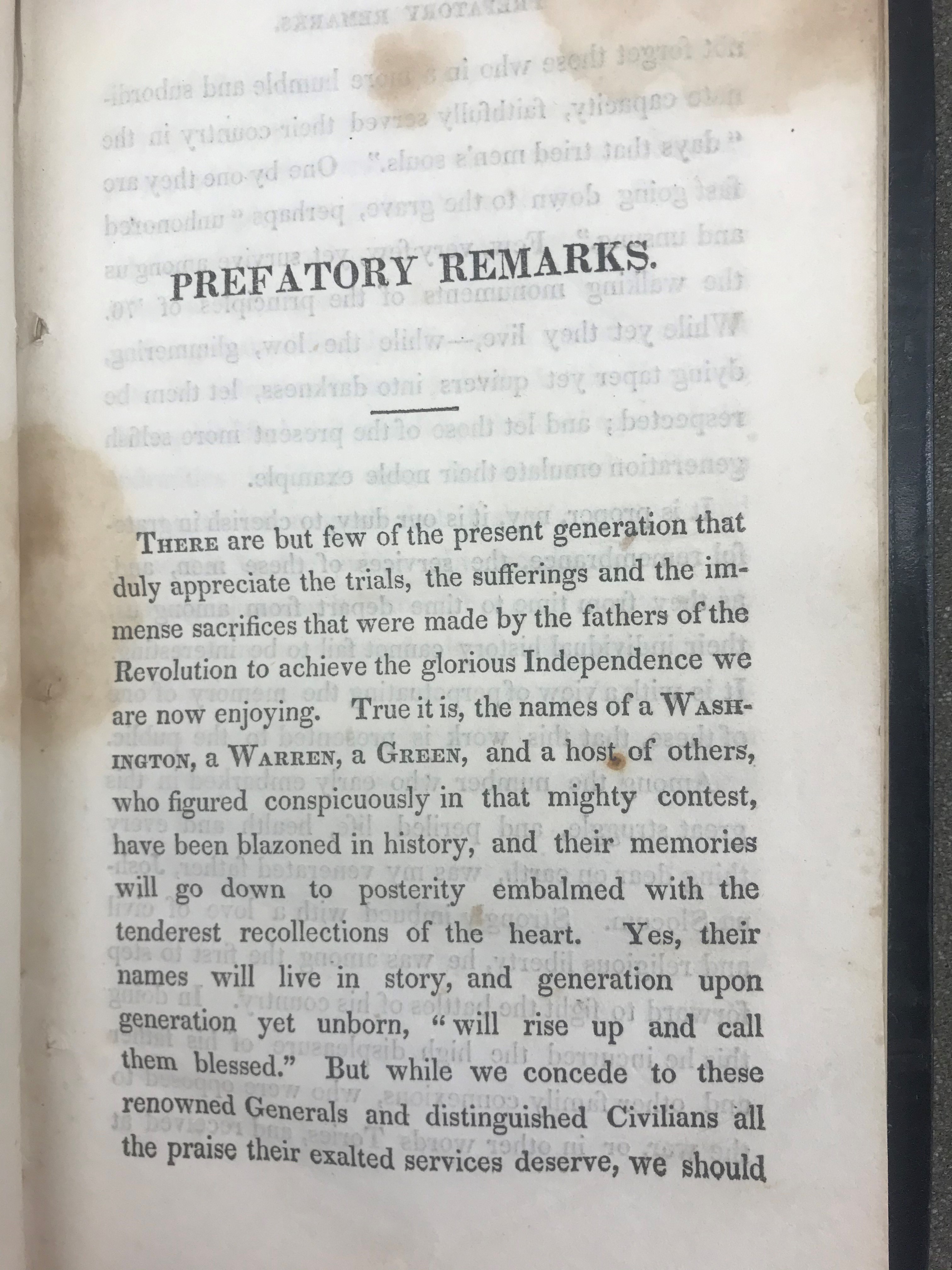
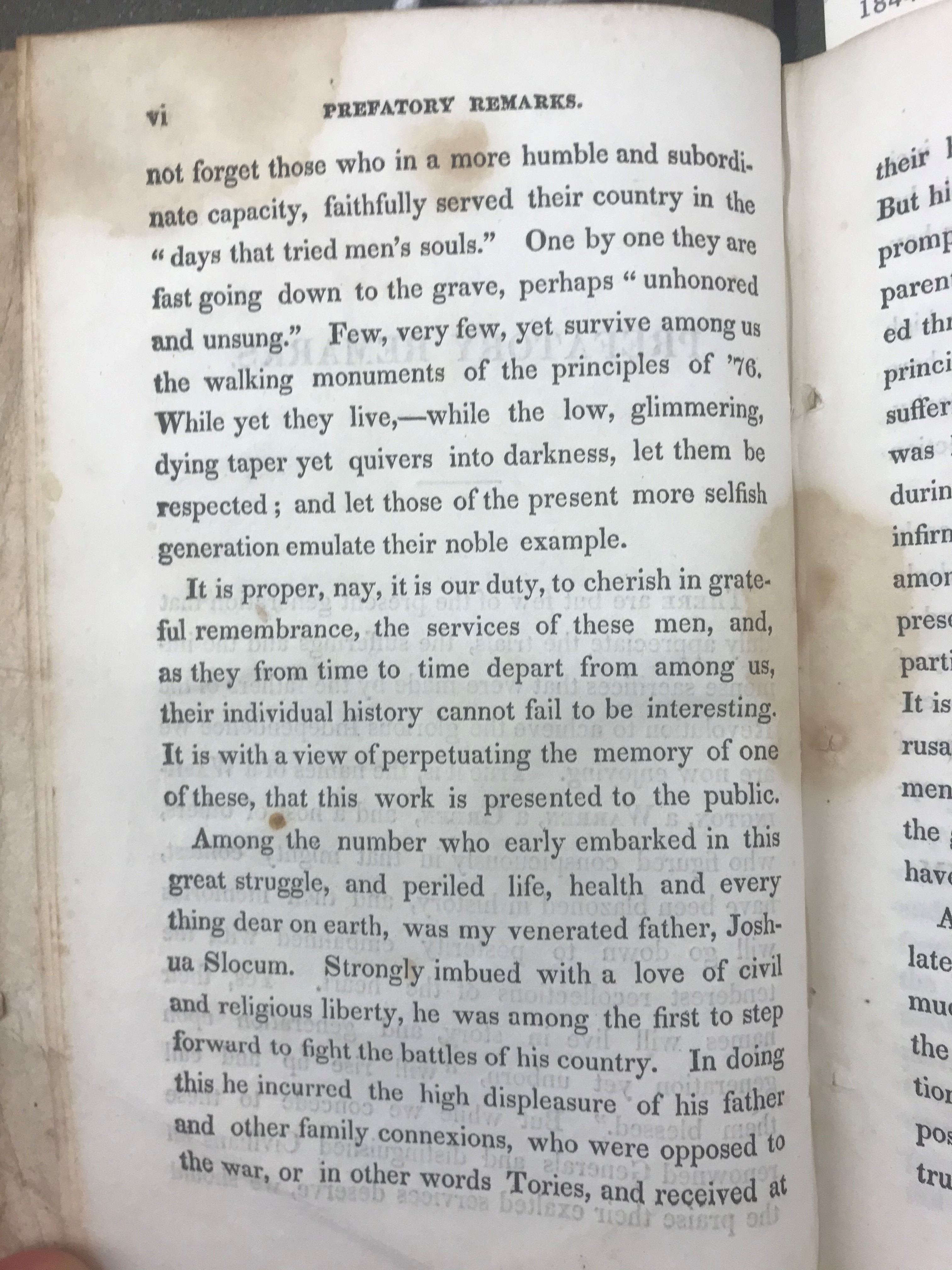
Prefatory Remarks: “The names of a Washington, a Warren, a Green, and a host of others, who figured conspicuously in that mighty contest, have been blazoned in history, and their memories will go down to posterity embalmed with the tenderest recollections of the heart. … But while we concede to these renowned Generals and distinguished Civilians all the praise their exalted service deserve, we should not forget those who in a more humble and subordinate capacity, faithfully served their country … While yet they live,—while the low, glimmering, dying taper yet quivers into darkness, let them be respected; and let those of the present more selfish generation emulate their noble example” (pp. v-vi). Edited by John Slocum, the subject’s son. View of the city of Hartford on the frontispiece.
Click for a larger view.
An Authentic Narrative of the Life of Joshua Slocum
Hartford: Printed for the author, 1844
The Society of the Cincinnati, The Robert Charles Lawrence Fergusson Collection
page v
Click for a larger view.
An Authentic Narrative of the Life of Joshua Slocum
Hartford: Printed for the author, 1844
The Society of the Cincinnati, The Robert Charles Lawrence Fergusson Collection
page vi
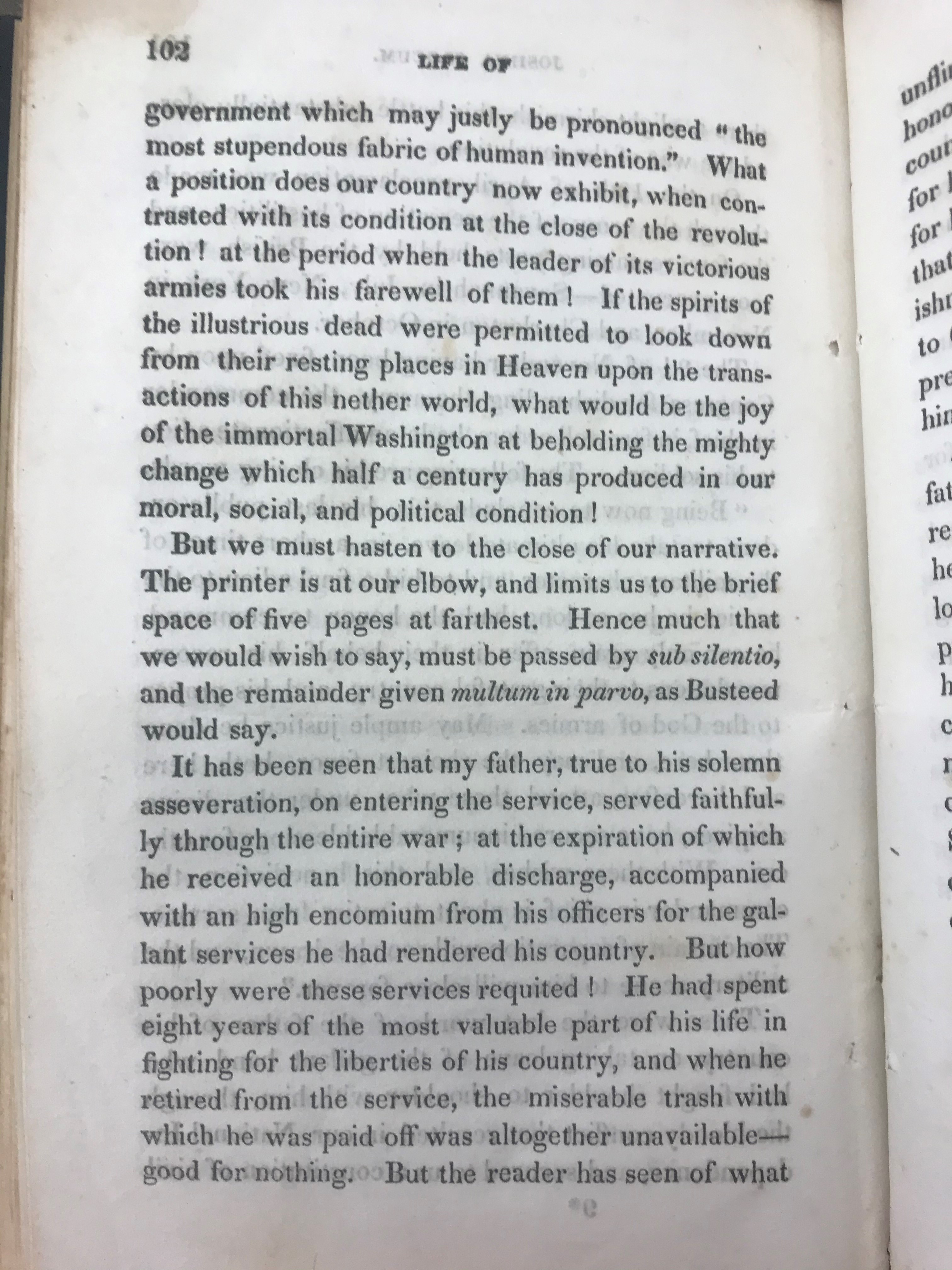
Click for a larger view.
An Authentic Narrative of the Life of Joshua Slocum
Hartford: Printed for the author, 1844
The Society of the Cincinnati, The Robert Charles Lawrence Fergusson Collection
page 102
Click for a larger view.
An Authentic Narrative of the Life of Joshua Slocum
Hartford: Printed for the author, 1844
The Society of the Cincinnati, The Robert Charles Lawrence Fergusson Collection
page 103
Click for a larger view.
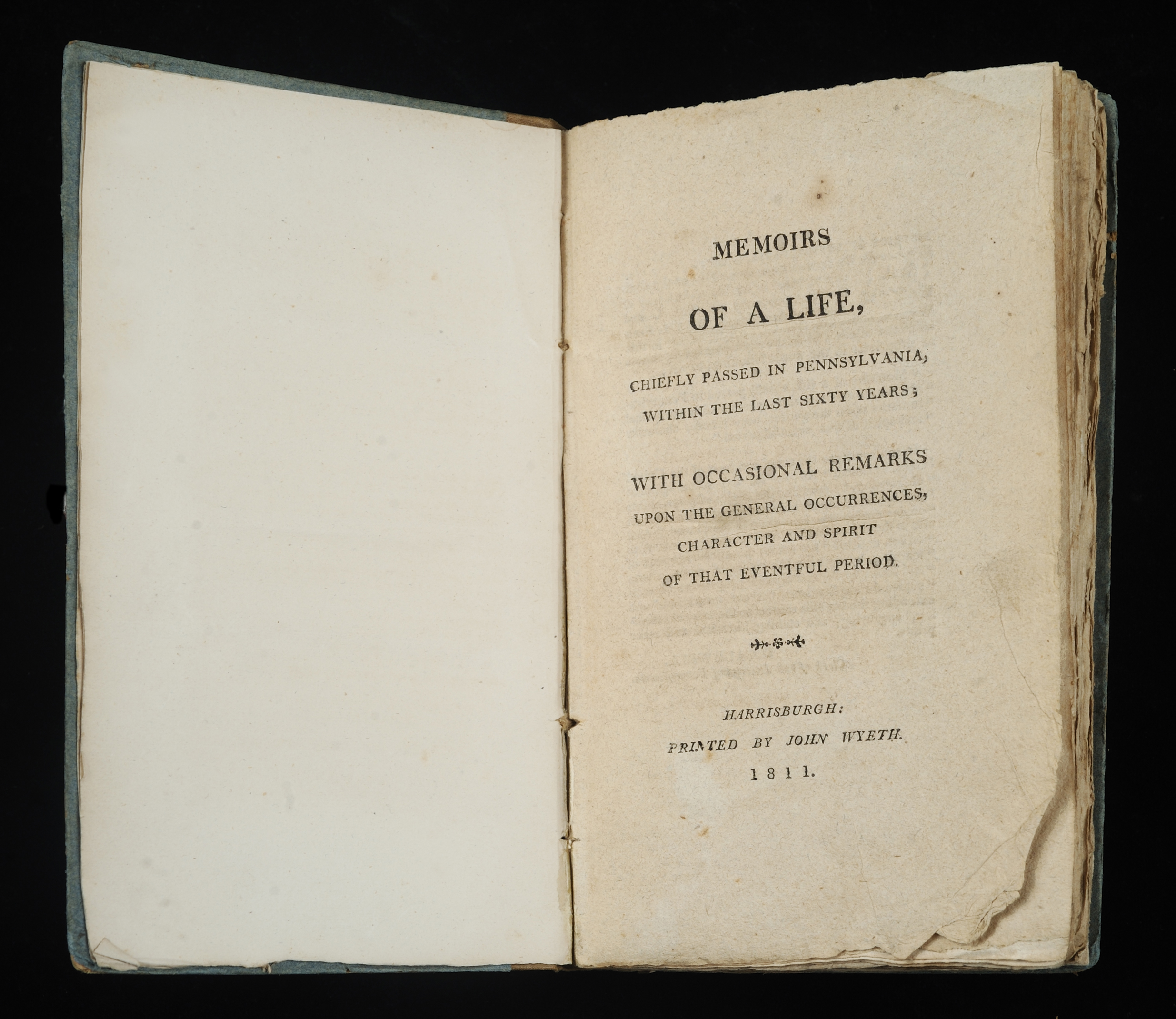
Memoirs of a Life, Chiefly Passed in Pennsylvania
Alexander Graydon
Harrisburgh: Printed by John Wyeth, 1811
The Society of the Cincinnati, Gift of Jack and Janet Warren, 2003
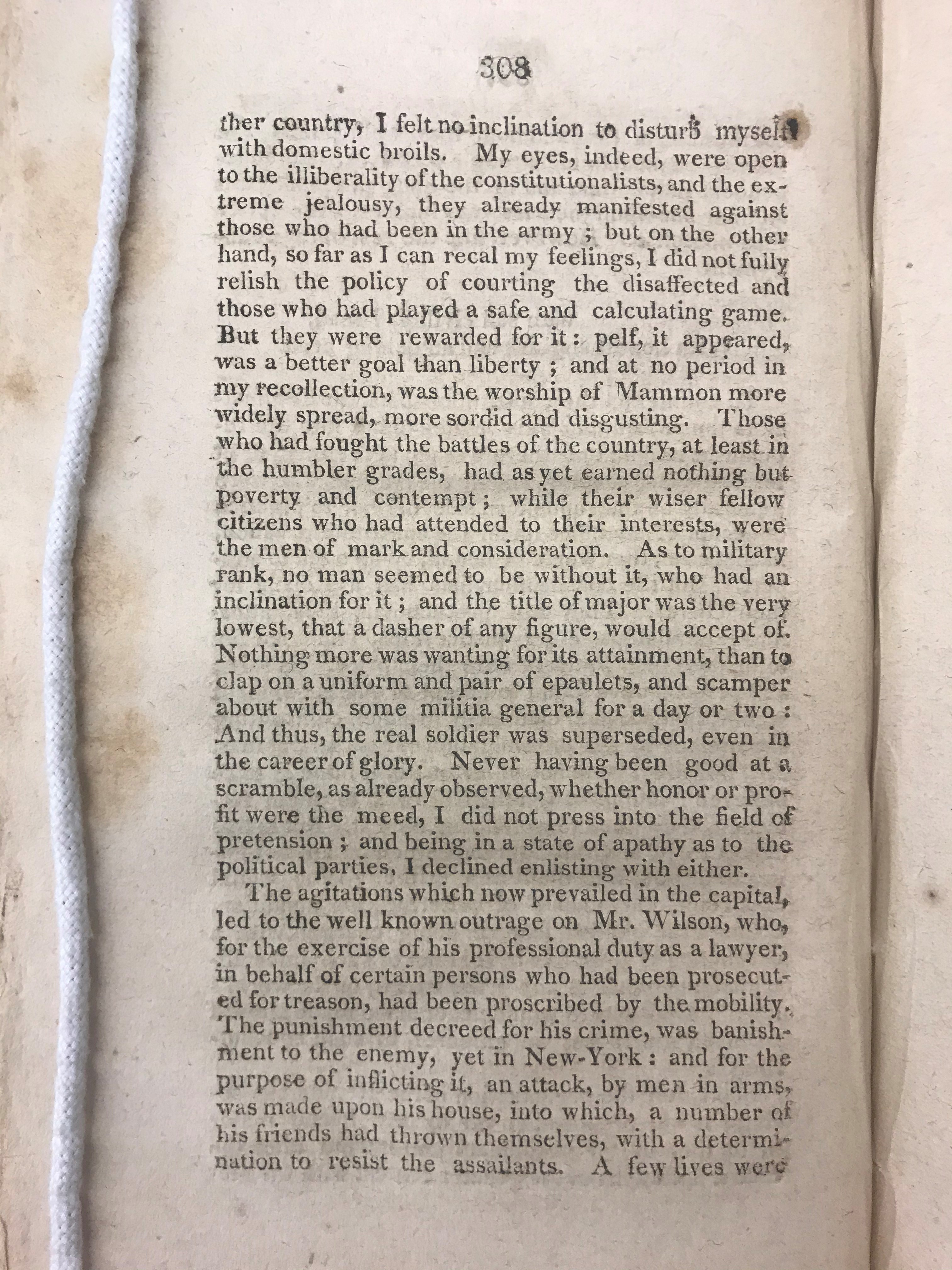
Alexander Graydon (1752-1818), a captain in the Pennsylvania Continental Line, received a federal pension (S39623) and bounty land warrant (#806) for 300 acres, issued on January 5, 1791. Writes that, during the late 1780s, Revolutionary War veterans "had as yet earned nothing but poverty and contempt" (p. 308).
Click for a larger view.
Memoirs of a Life, Chiefly Passed in Pennsylvania
Alexander Graydon
Harrisburgh: Printed by John Wyeth, 1811
The Society of the Cincinnati, Gift of Jack and Janet Warren, 2003
page 308
Click for a larger view.
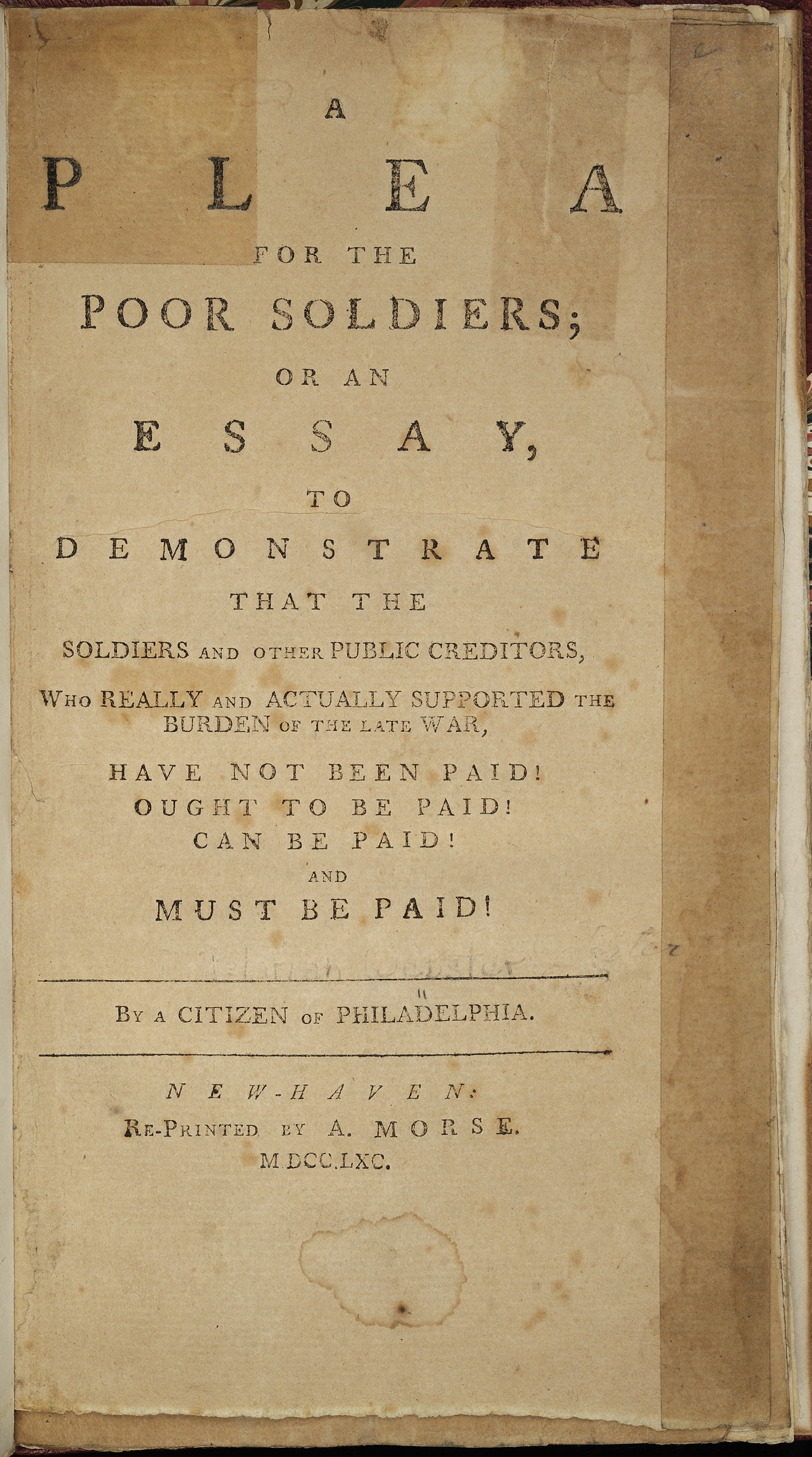
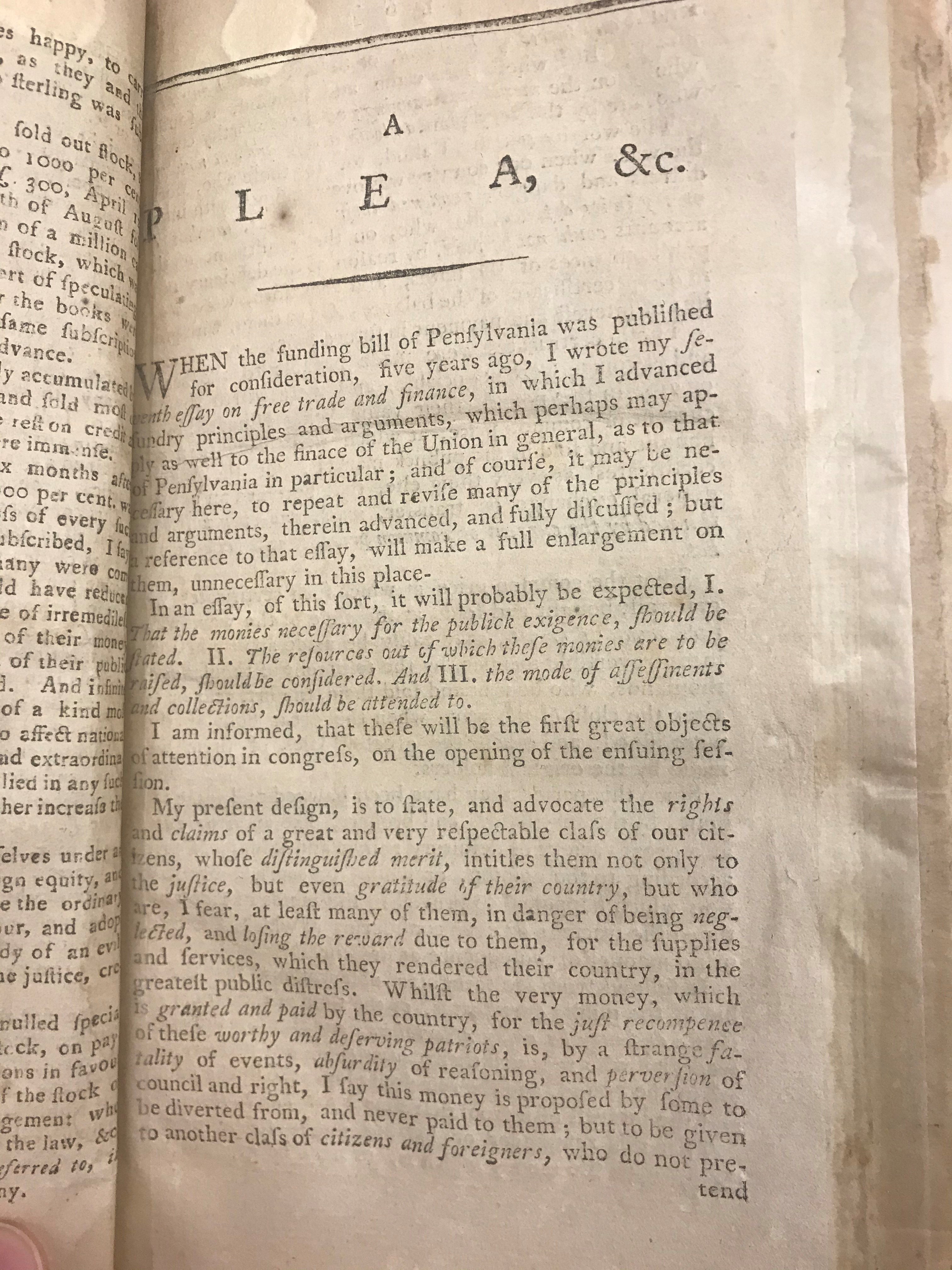
A Plea for the Poor Soldiers; or An Essay, to Demonstrate that the Soldiers and Other Public Creditors Who Really and Actually Supported the Burden of the Late War, Have Not Been Paid! Ought to be Paid! Can be Paid! And Must be Paid!
New-Haven: Re-printed by A. Morse, 1790
The Society of the Cincinnati, The Robert Charles Lawrence Fergusson Collection
title page
Click for a larger view.
A Plea for the Poor Soldiers; or An Essay, to Demonstrate that the Soldiers and Other Public Creditors Who Really and Actually Supported the Burden of the Late War, Have Not Been Paid! Ought to be Paid! Can be Paid! And Must be Paid!
New-Haven: Re-printed by A. Morse, 1790
The Society of the Cincinnati, The Robert Charles Lawrence Fergusson Collection
Argues for the need to pay the debt owed to those Americans first before foreign debt is paid. Signed “A Citizen of Philadelphia”—Authorship attributed to Pelatiah Webster (1726-1795), a noted Federalist who wrote political essays mostly on financial issues. Second edition—first edition published in Philadelphia earlier in 1790.
Click for a larger view.
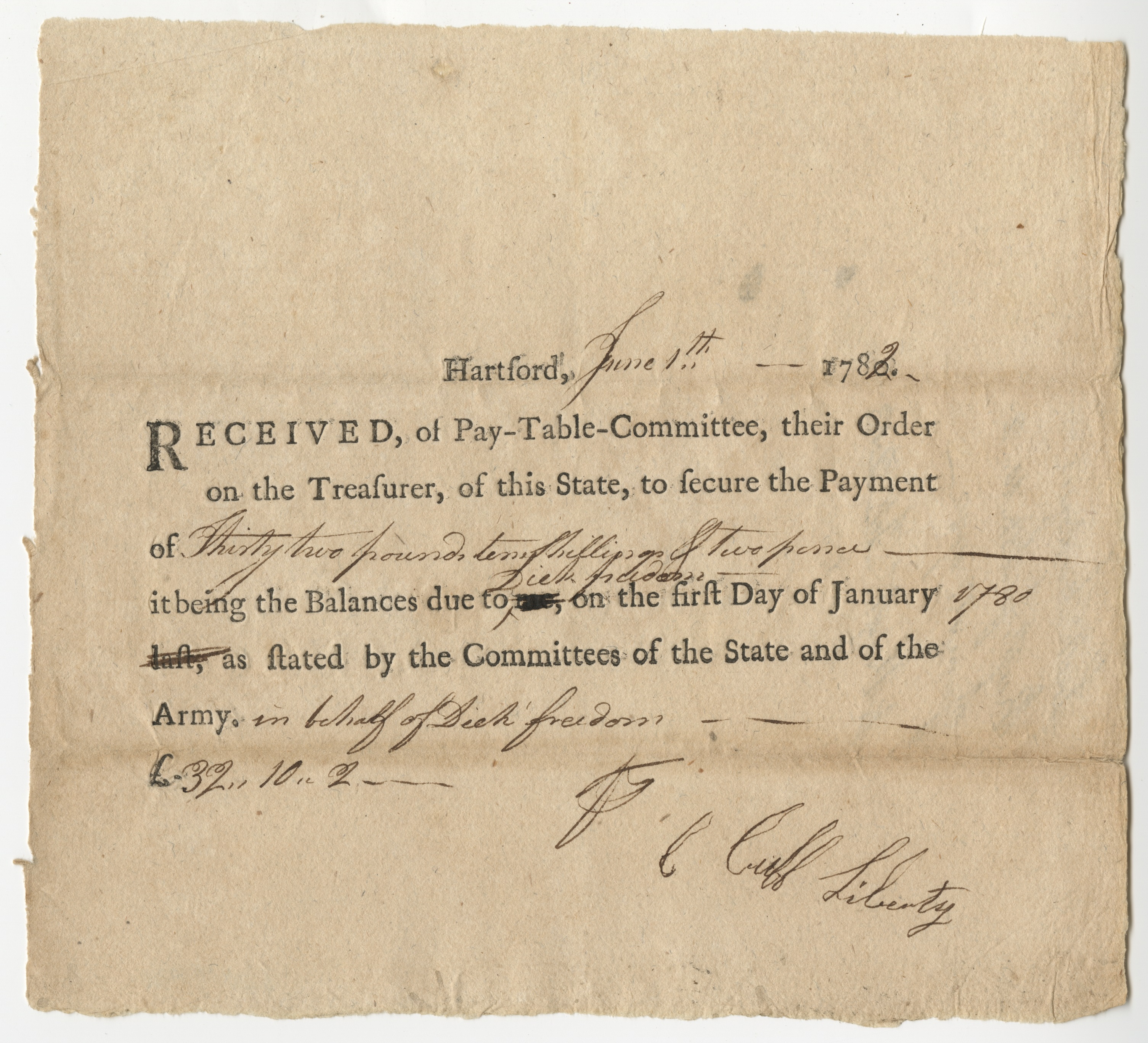
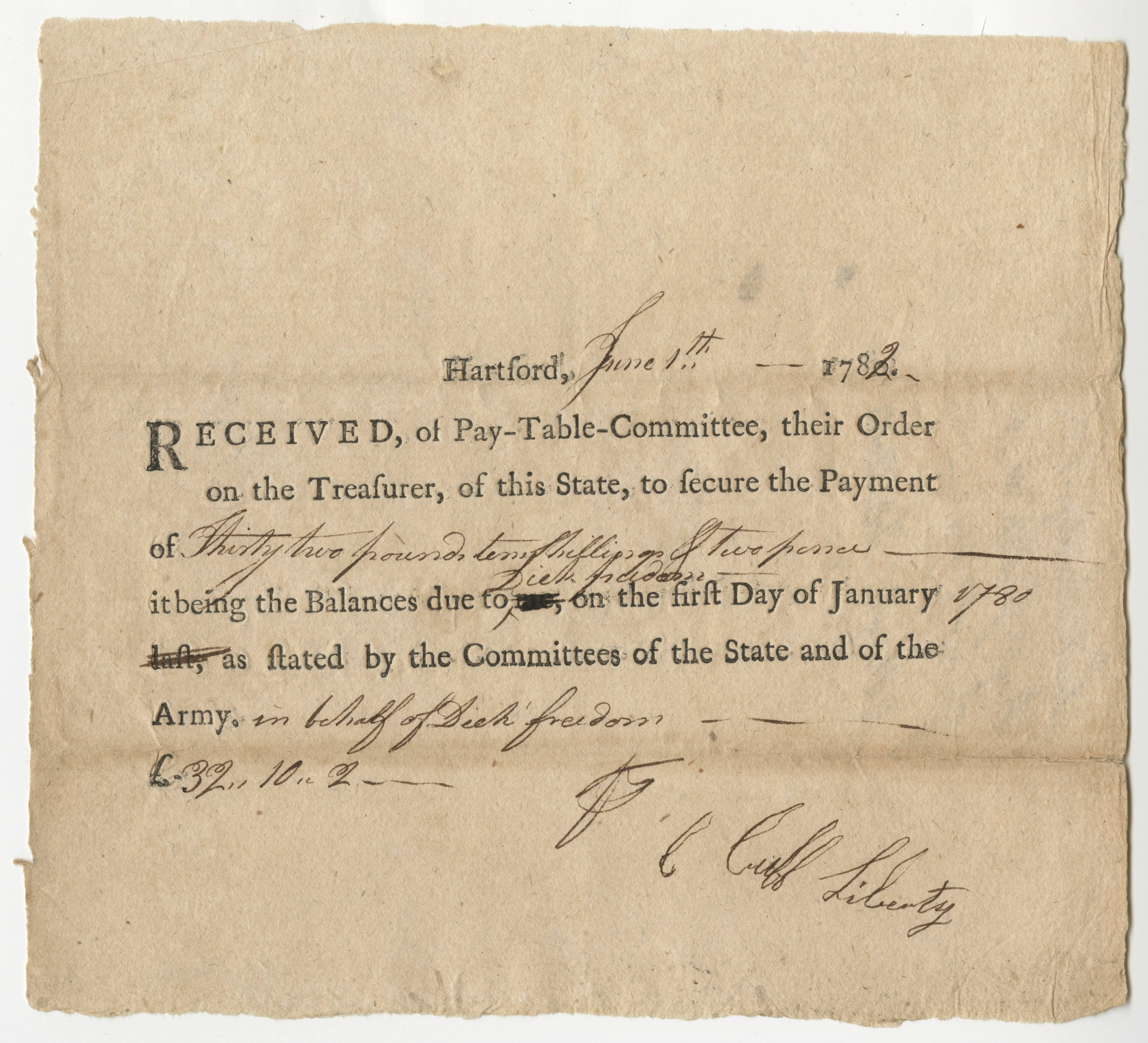
Receipt of Pay-Table-Committee
Hartford, June 7, 1782
The Society of the Cincinnati,The Robert Charles Lawrence Fergusson Collection
Signed for Dick Freedom by Cuff Liberty. Dick Freedom and Cuff Liberty were African-American participants in the Revolutionary War who adopted aspirational names during their service. Dick Freedom and Cuff Liberty served in the all-black Second Company of the Fourth Connecticut Regiment.
Click for a larger view.
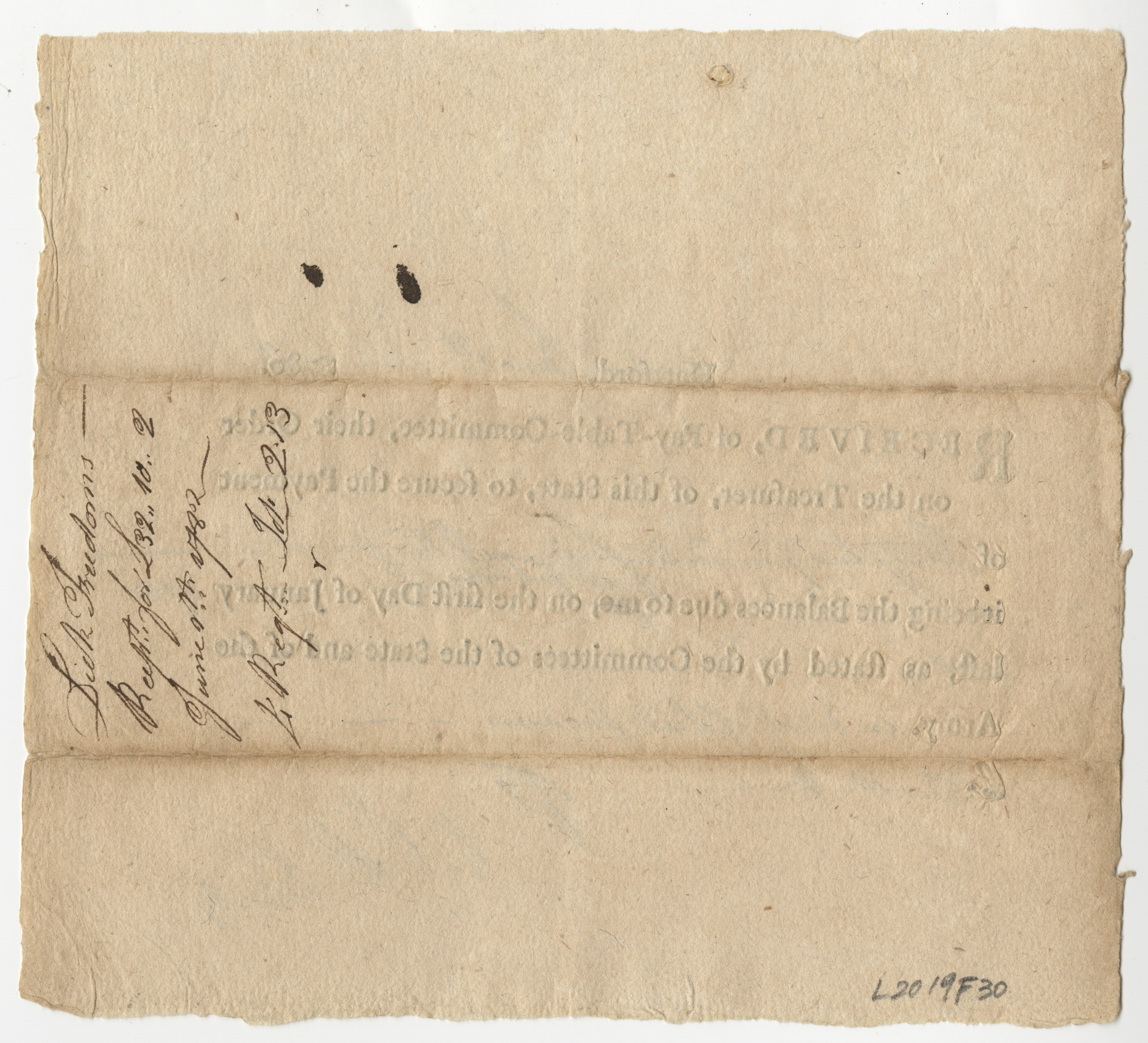
Receipt of Pay-Table-Committee
Hartford, June 7, 1782
The Society of the Cincinnati,The Robert Charles Lawrence Fergusson Collection
page 2
Click for a larger view.
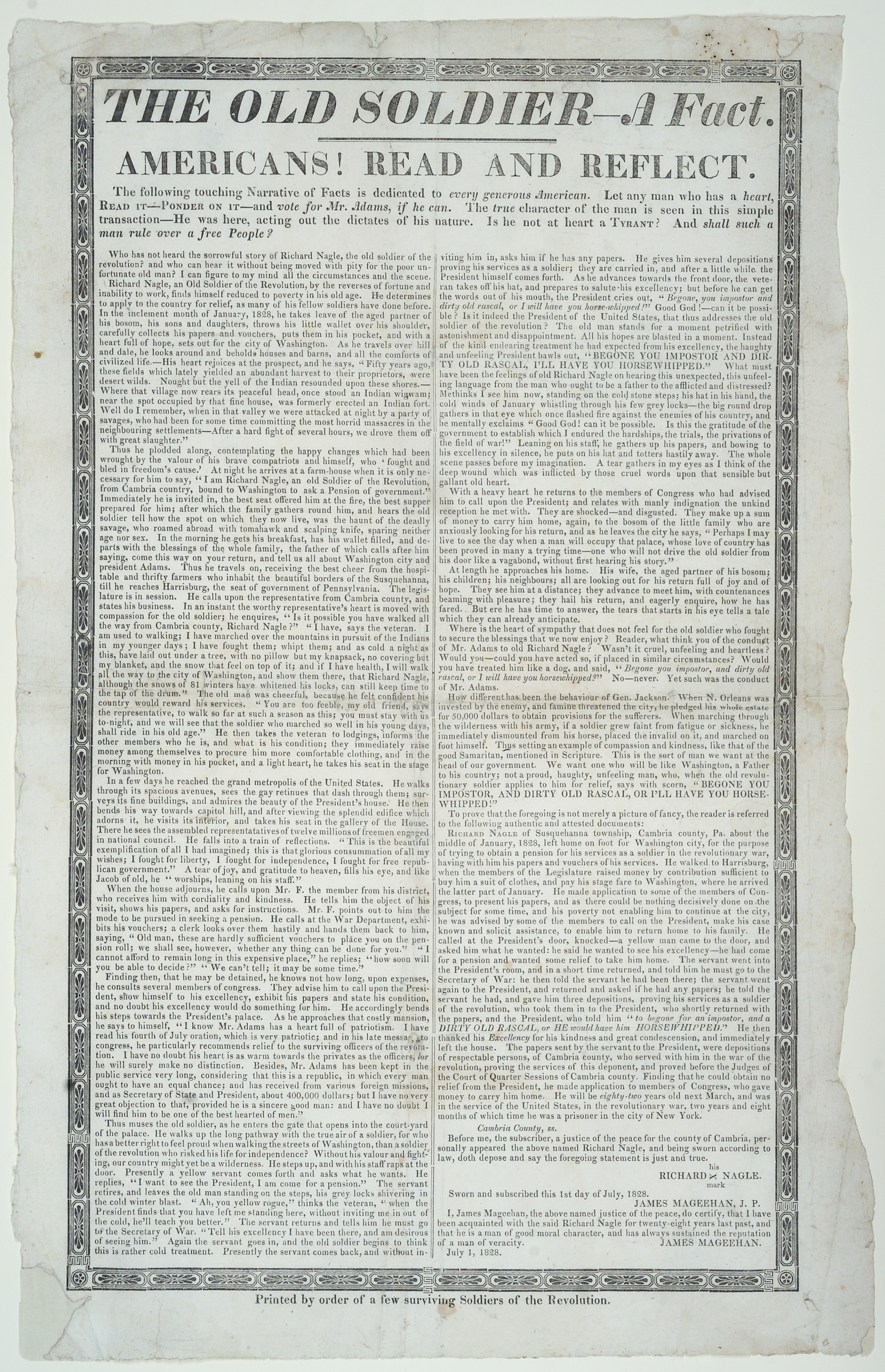
The Old Soldier—A Fact
Printed by order of a few surviving Soldiers of the Revolution, 1828
The Society of the Cincinnati, The Robert Charles Lawrence Fergusson Collection
This broadside from the presidential campaign of 1828 relates the mistreatment of a Revolutionary War veteran seeking a pension by John Quincy Adams and assures readers that Andrew Jackson would correct the injustices of the Adams administration toward veterans. “Where is the heart of sympathy,” the broadside asks, “that does not feel for the old soldier who fought for the blessings we now enjoy?”
Click for a larger view.
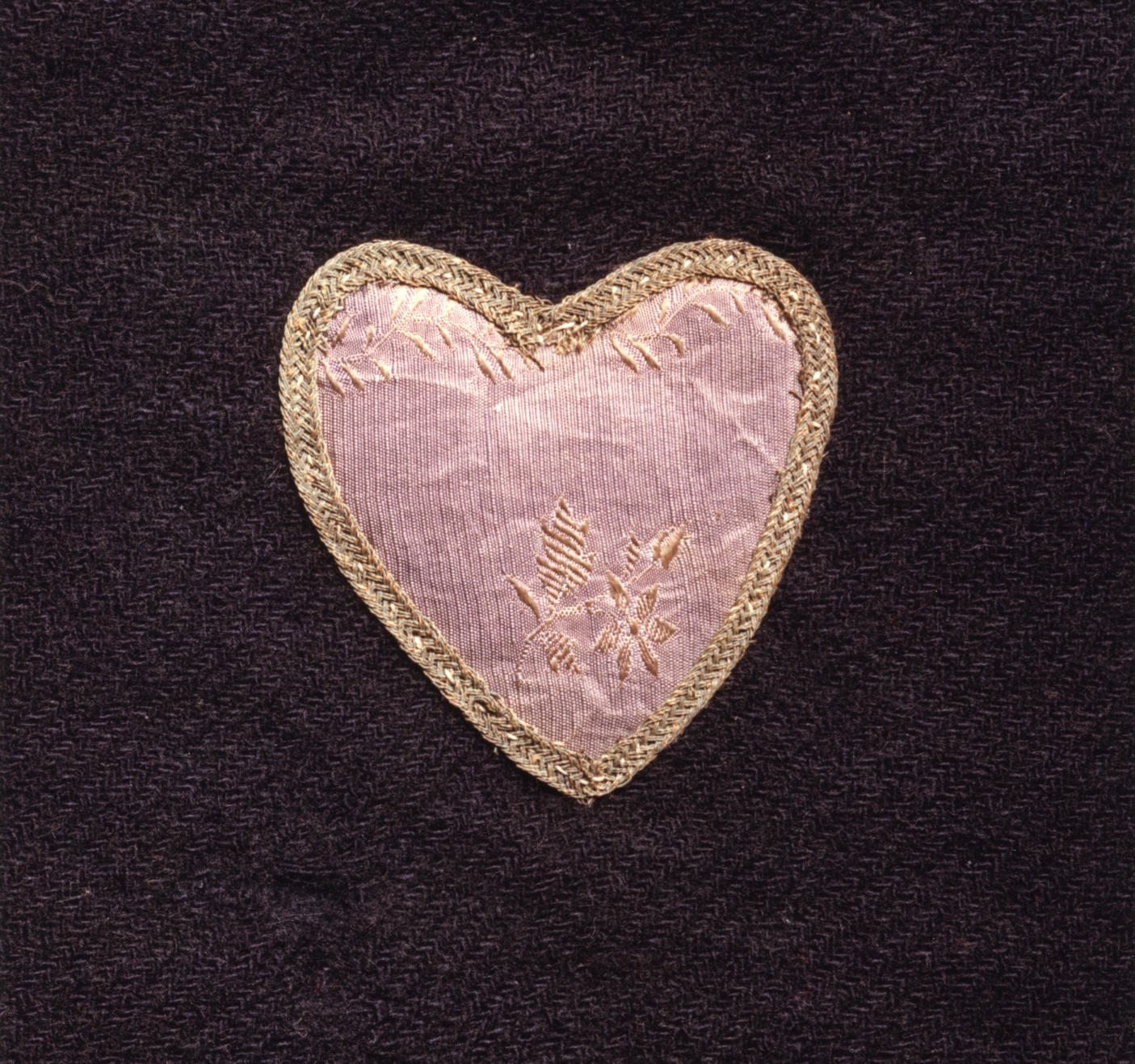
Badge of Military Merit
ca. 1782-1783
Collection of the American Independence Museum, Exeter, NH and the Society of the Cincinnati in the State of New Hampshire. Gift of William L. Willey.
George Washington created the Badge of Military Merit—the first military decoration for enlisted men—on August 7, 1782. The award recognized distinguished conduct and was intended to encourage “virtuous ambition” and “every species of Military merit.” Soldiers honored with the award “shall be permitted to wear on his facings over the left breast, the figure of a heart in purple cloth, or silk, edged with narrow lace or binding.” Only two reputed examples are known, of which this is one. The decoration fell out of use after the Revolutionary War but was revived in 1932 as the modern Purple Heart.
Click for a larger view.
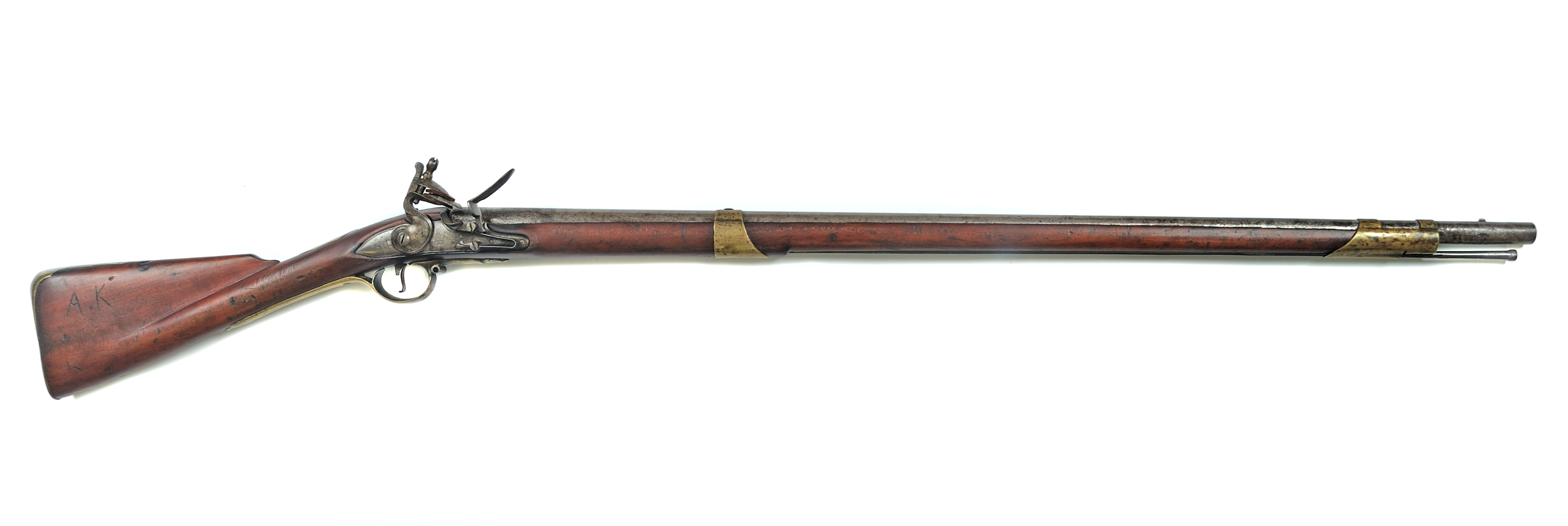
American restocked British Pattern 1756 light dragoon carbine
The Society of the CincinnatiIn May 1776, American privateers captured 1,000 light dragoon carbines aboard a British supply ship near Boston Harbor. Carbines, shorter and lighter than a standard infantry musket, were intended for use by cavalry, artillery, and other units that fought or moved on horseback. George Washington ordered that these captured firearms be sent to the army in New York, which was preparing to defend the city from a British invasion. American armorers altered the original carbine with a new cherry stock, new ramrod, and distinctive French-style brass barrel bands.
Click for a larger view.
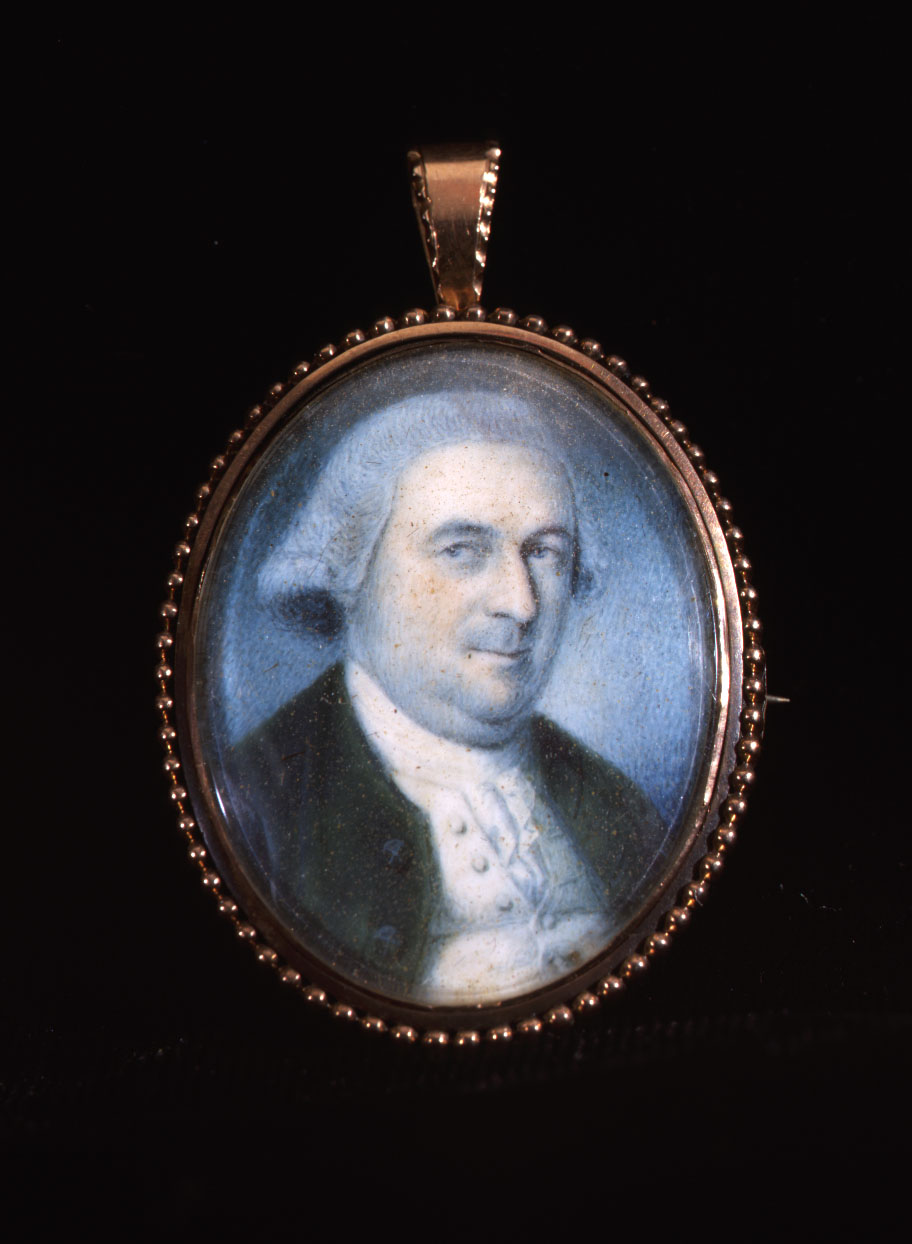
The Honorable Burwell Bassett
Charles Willson Peale
1778Gift of Burwell Bassett Smith, 1960
Burwell Bassett was born in New Kent County, Virginia in 1734. He was married to Anna Maria Dandridge, the sister of Martha Washington. He was a member of the House of Burgesses from 1764 until the Revolution.
Click for a larger view.
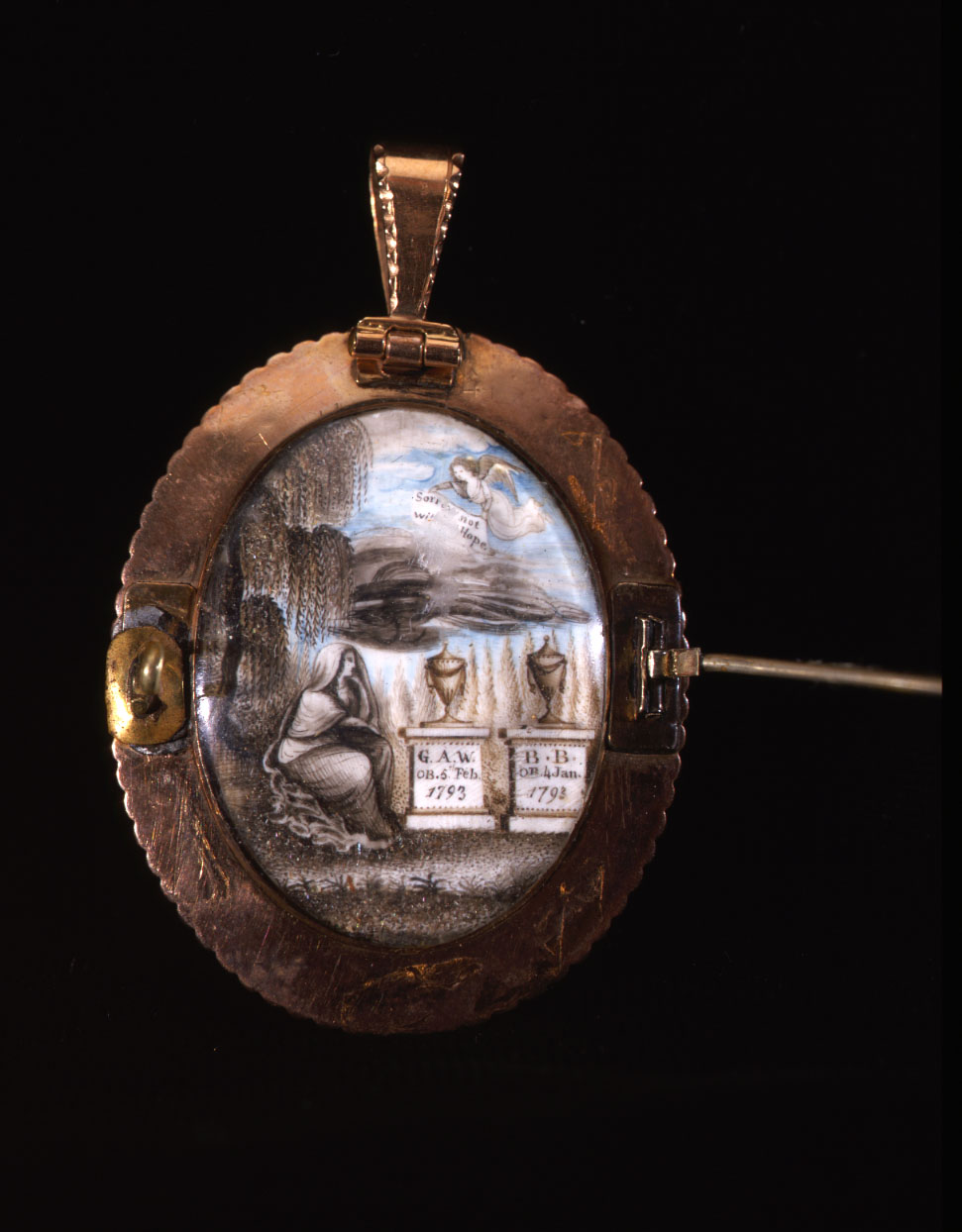
The Honorable Burwell Bassett (reverse)
unknown artist
ca. 1793Gift of Burwell Bassett Smith, 1960The portrait of Bassett may have been painted for his daughter, Frances, who married George Washington's nephew, Colonel George Augustine Washington, in 1785. In 1793, following following the death of both her husband and father, the portrait miniature was reset with a mourning design at the back. The scene depicts a draped female figure in mourning seated under a willow. Two urns are inscribed with the death dates of Washington and Bassett. An angel in the sky bears a scroll reading "Sorrow not/without hope." Included in the paint mixture, was hair from either Washington or Bassett
Click for a larger view.
Partially printed D.S., Hartford, June 7th 1782: receipt of Pay-Table-Committee
Cuff Liberty, Dick Freedom, Committee of the Pay Table; Connecticut. Treasury Dept.
1782The Society of the Cincinnati, The Robert Charles Lawrence Fergusson CollectionPayment receipt signed for Dick Freedom by Cuff Liberty. Dick Freedom and Cuff Liberty were African American participants in the Revolutionary War who adopted aspirational names during their service. They served in the all-African American Second Company of the Fourth Connecticut Regiment.
Click for a larger view.

Art Sacrificed to the Public!:The Historiscope!
Samuel Bowles & Co., printers, Springfield, Massachusetts
1868The Robert Charles Lawrence Fergusson CollectionSatirical broadside for a presentation of the historiscope, "A Complete Panorama of America!." A script intended to be read aloud and imitation admission tickets would also have been included with the poster and historiscope.
Click for a larger view.
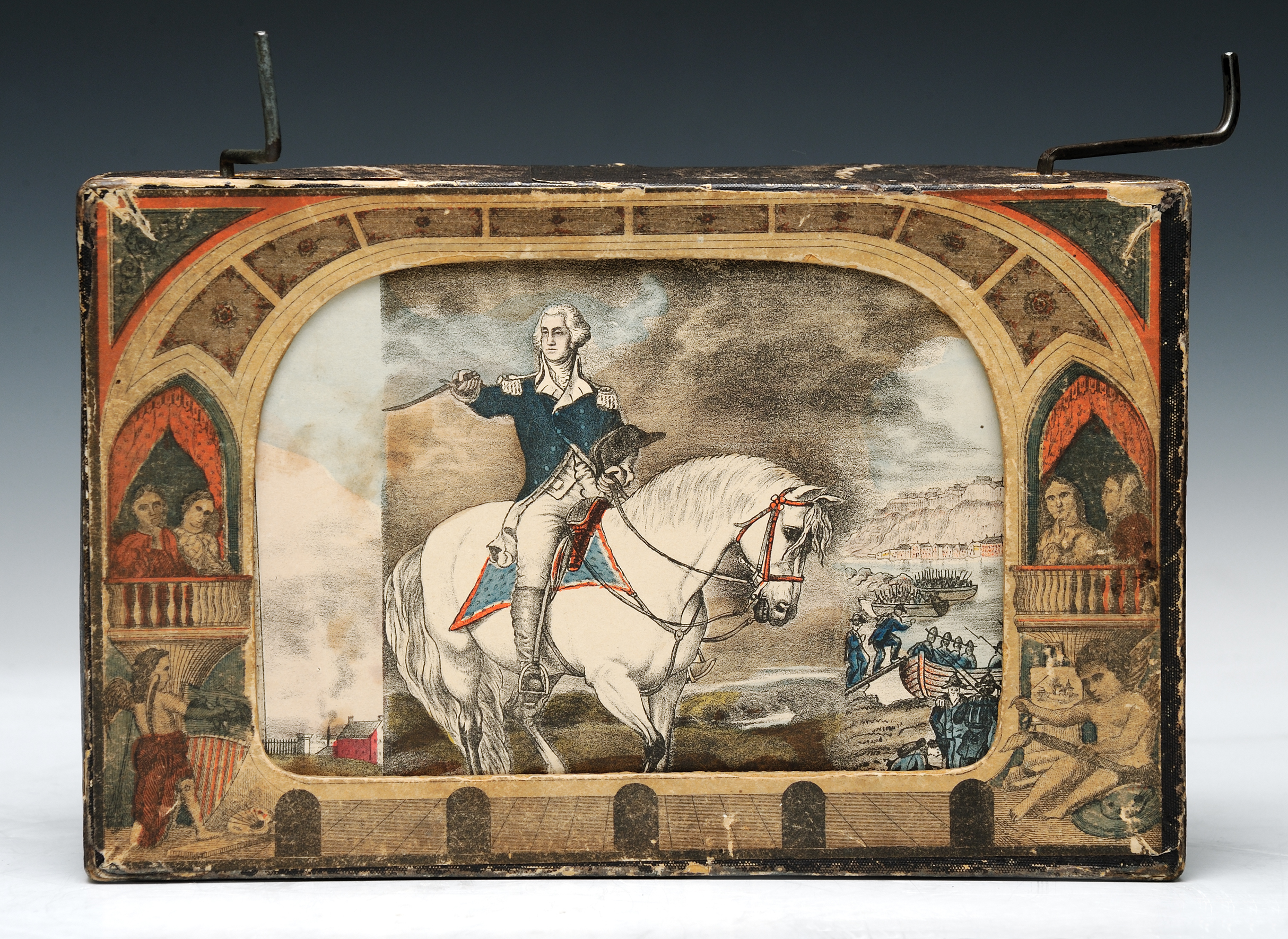
"The Historiscope: A Panorama & History of America"[George Washington on his horse]
Milton Bradley & Co., Springfield, Massachusetts
ca.1860-1890
The Robert Charles Lawrence Fergusson Collection
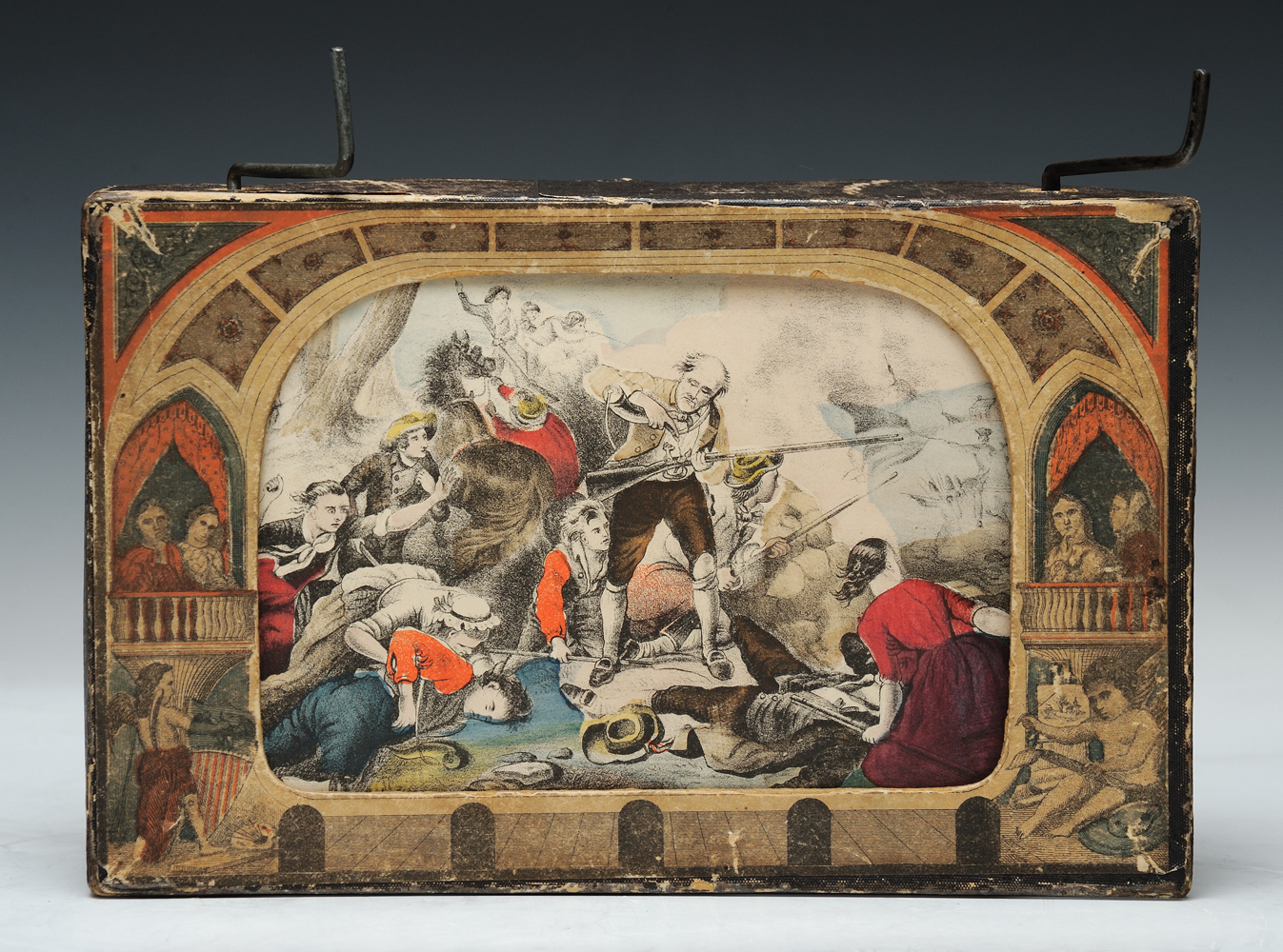
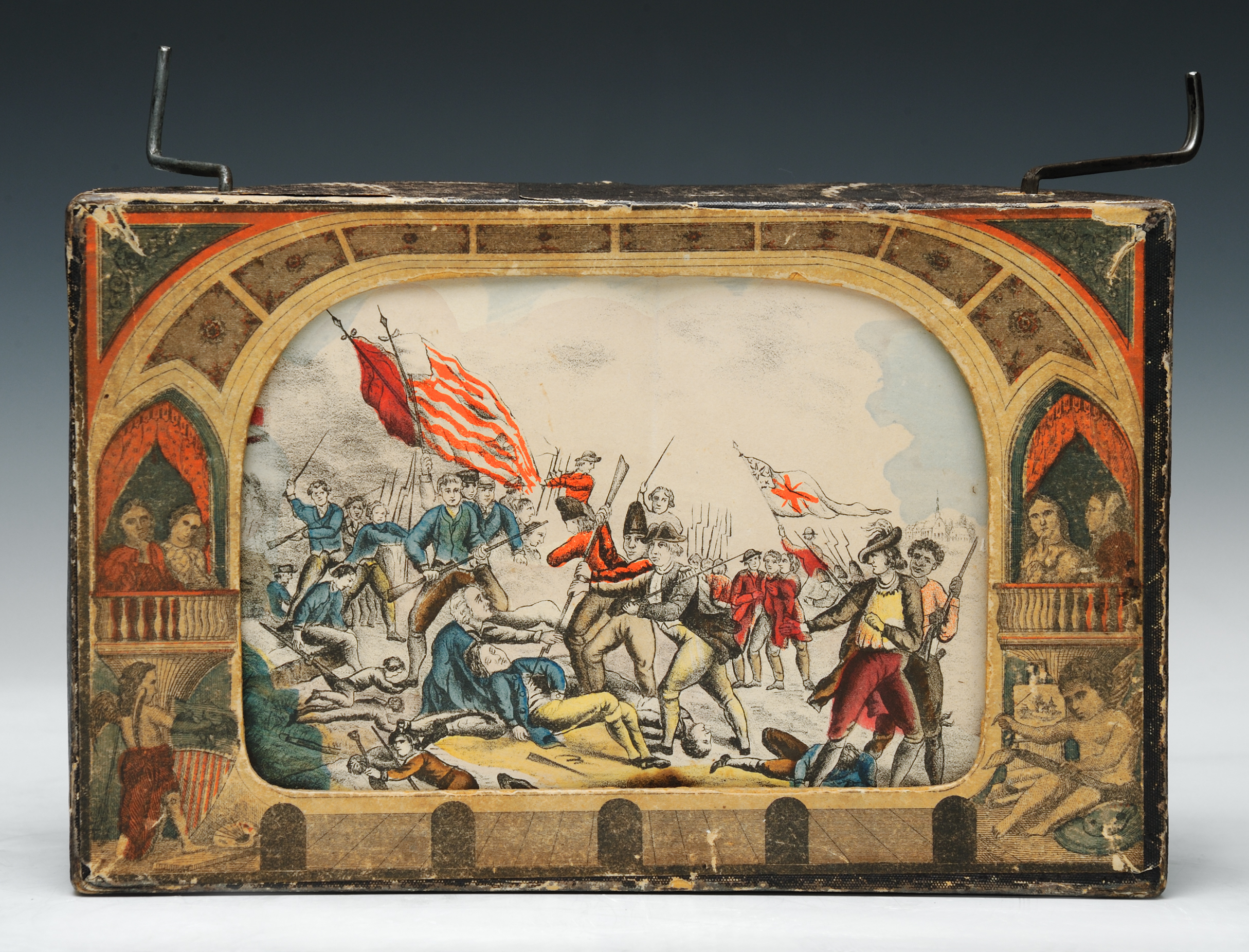
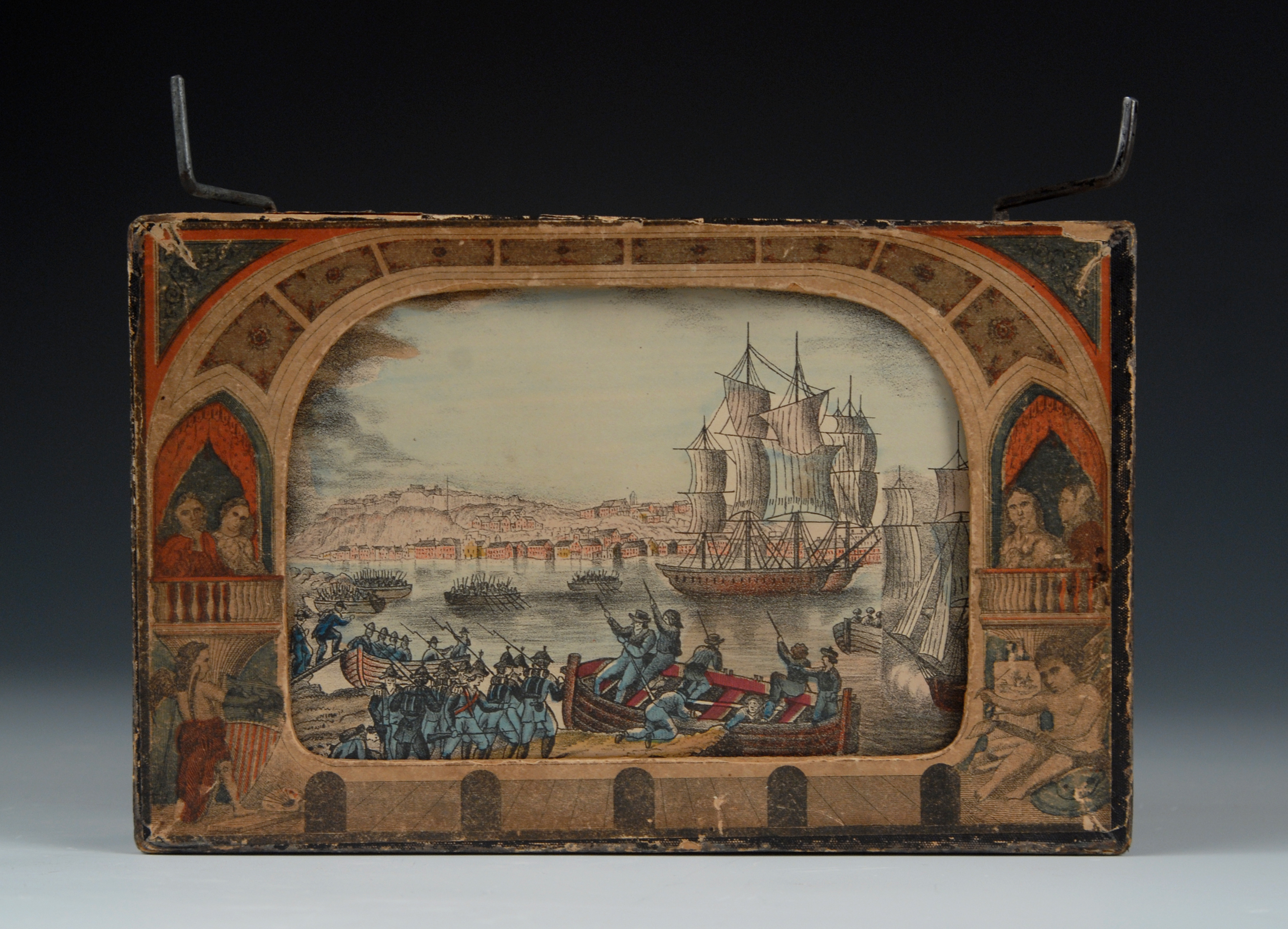
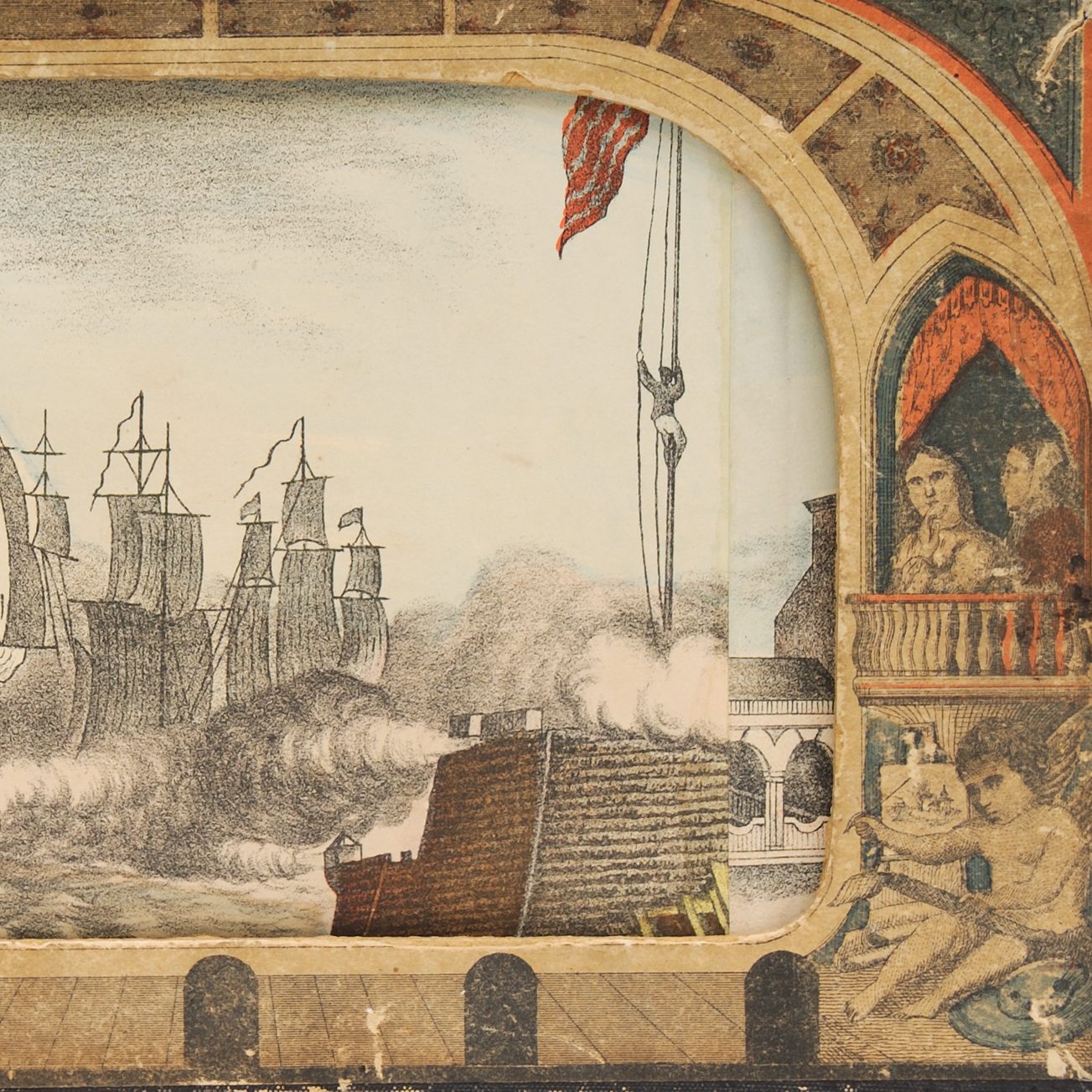
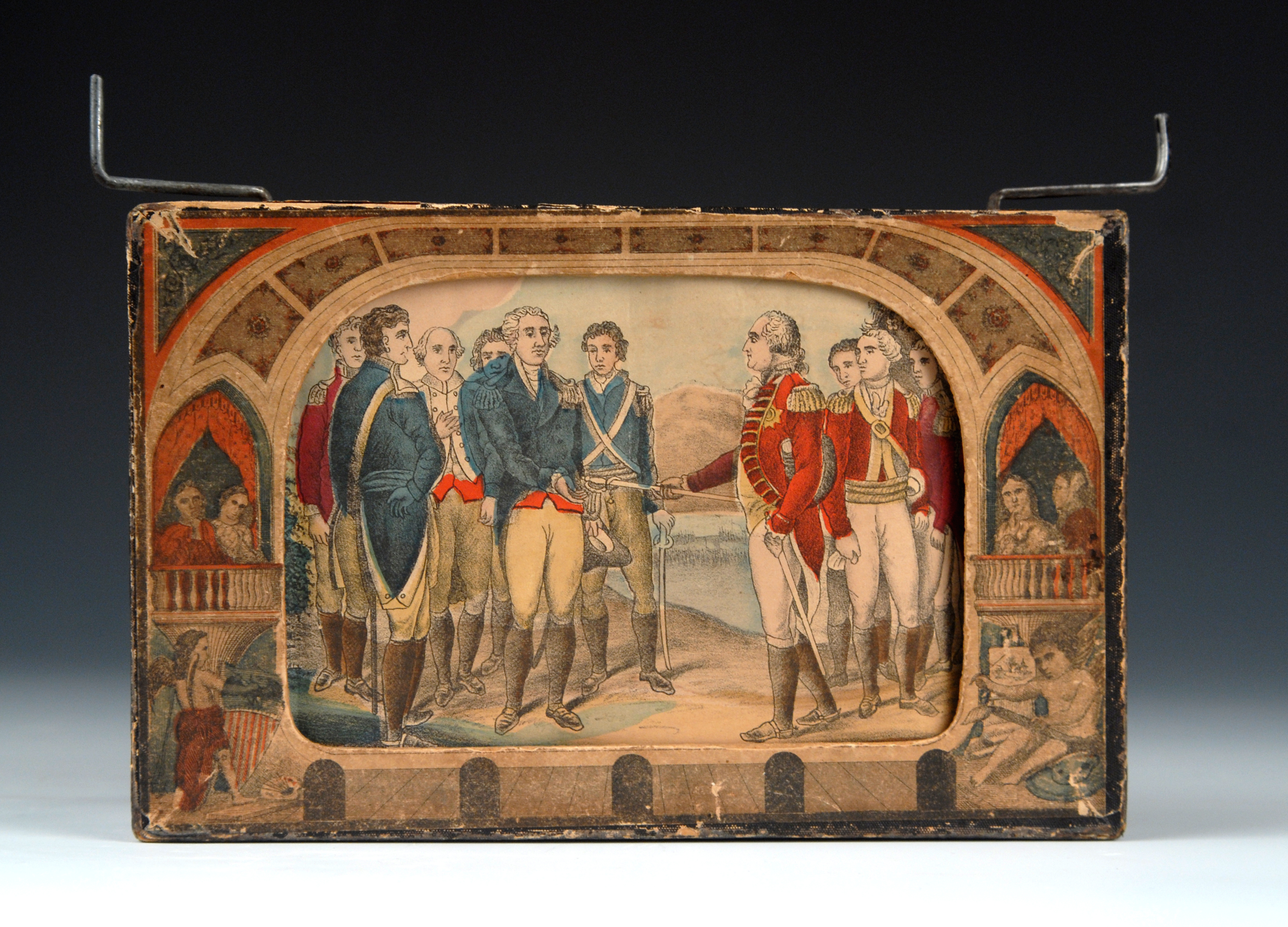
This toy consists of a scrolling set of twenty-four hand-colored lithographs set into a theatrical background. A child would present the images to their family as a show, using a script that accompanied the toy. Half of the scenes depict heroes and events of the Revolutionary War, reflecting what mid-nineteenth century American celebrated from the nation's founding.This scene depicts George Washington on his horse accompanying a description of the events of the Second Continental Congress.
Click for a larger view.
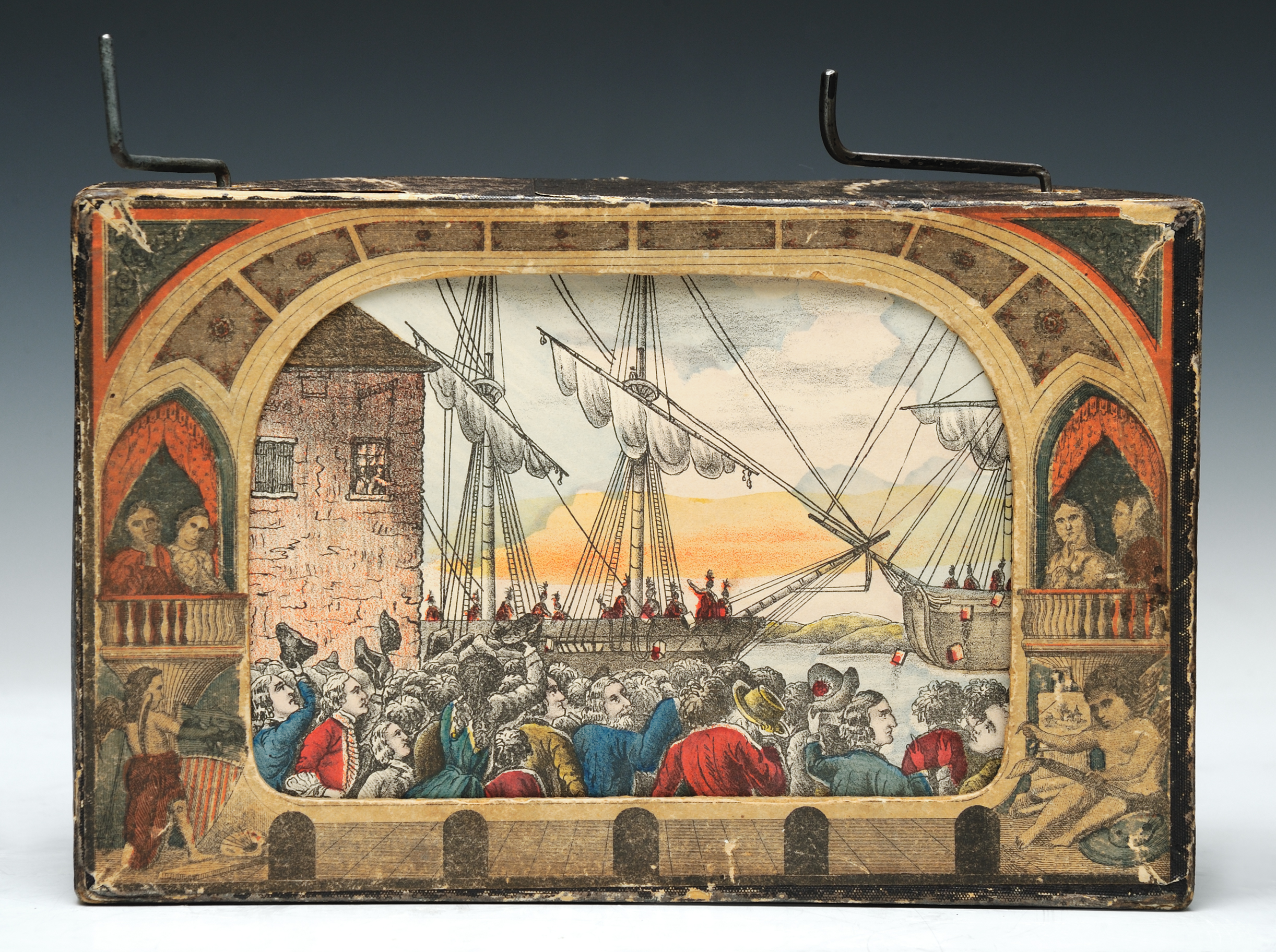
"The Historiscope: A Panorama & History of America"[Boston Tea Party]
Milton Bradley & Co., Springfield, Massachusetts
ca.1860-1890
The Robert Charles Lawrence Fergusson Collection
This toy consists of a scrolling set of twenty-four hand-colored lithographs set into a theatrical background. A child would present the images to their family as a show, using a script that accompanied the toy. Half of the scenes depict heroes and events of the Revolutionary War, reflecting what mid-nineteenth century American celebrated from the nation's founding.This scene depicts the Boston Tea Party. The accompanying script reads, "We will now return to Boston to attend a little tea party . . . This act led the British Parliament to adopt measures of retaliation until all attempts at reconccilation having proved fruitless, the colonists were driven to the dread alternative of war."
Click for a larger view.
"The Historiscope: A Panorama & History of America"[Battles of Lexington and Concord]
Milton Bradley & Co., Springfield, Massachusetts
ca.1860-1890
The Robert Charles Lawrence Fergusson Collection
This toy consists of a scrolling set of twenty-four hand-colored lithographs set into a theatrical background. A child would present the images to their family as a show, using a script that accompanied the toy. Half of the scenes depict heroes and events of the Revolutionary War, reflecting what mid-nineteenth century American celebrated from the nation's founding.The accompanying script describes the battle as "a most spirited representation of the first blow for liberty."
Click for a larger view.
"The Historiscope: A Panorama & History of America"[Battle of Bunker Hill]
Milton Bradley & Co., Springfield, Massachusetts
ca.1860-1890
The Robert Charles Lawrence Fergusson Collection
This toy consists of a scrolling set of twenty-four hand-colored lithographs set into a theatrical background. A child would present the images to their family as a show, using a script that accompanied the toy. Half of the scenes depict heroes and events of the Revolutionary War, reflecting what mid-nineteenth century American celebrated from the nation's founding.The accompanying script describes the action as "the first actual battle of the war."
Click for a larger view.
"The Historiscope: A Panorama & History of America"[Battle of Quebec]
Milton Bradley & Co., Springfield, Massachusetts
ca.1860-1890
The Robert Charles Lawrence Fergusson Collection
This toy consists of a scrolling set of twenty-four hand-colored lithographs set into a theatrical background. A child would present the images to their family as a show, using a script that accompanied the toy. Half of the scenes depict heroes and events of the Revolutionary War, reflecting what mid-nineteenth century American celebrated from the nation's founding.This scene depicts the Battle of Quebec. The accompanying script reads, "after a siege of three weeks an attempt was made to take Quebec by assault, in which General Montgomery was killed, the assailants defeated, and many killed and taken prisoners."
Click for a larger view.
"The Historiscope: A Panorama & History of America"[Fort Moultrie]
Milton Bradley & Co., Springfield, Massachusetts
ca.1860-1890
The Robert Charles Lawrence Fergusson Collection
This toy consists of a scrolling set of twenty-four hand-colored lithographs set into a theatrical background. A child would present the images to their family as a show, using a script that accompanied the toy. Half of the scenes depict heroes and events of the Revolutionary War, reflecting what mid-nineteenth century American celebrated from the nation's founding.This scene depicts the 1776 British attack on Fort Moultrie in South Carolina.
Click for a larger view.
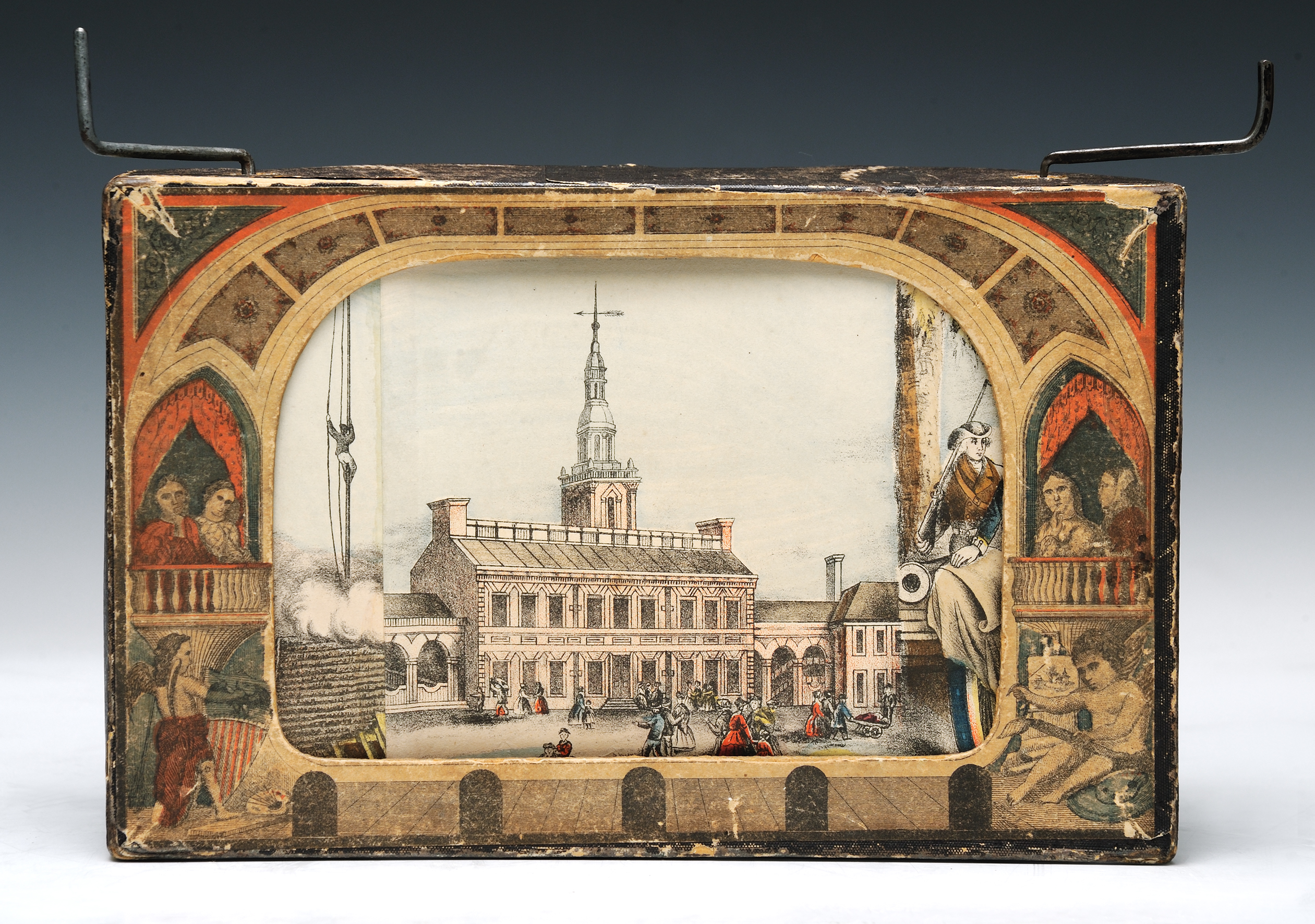
"The Historiscope: A Panorama & History of America"[Independence Hall]
Milton Bradley & Co., Springfield, Massachusetts
ca.1860-1890
The Robert Charles Lawrence Fergusson Collection
This toy consists of a scrolling set of twenty-four hand-colored lithographs set into a theatrical background. A child would present the images to their family as a show, using a script that accompanied the toy. Half of the scenes depict heroes and events of the Revolutionary War, reflecting what mid-nineteenth century American celebrated from the nation's founding.This scene depicts Independence Hall in Philadelphia.
Click for a larger view.
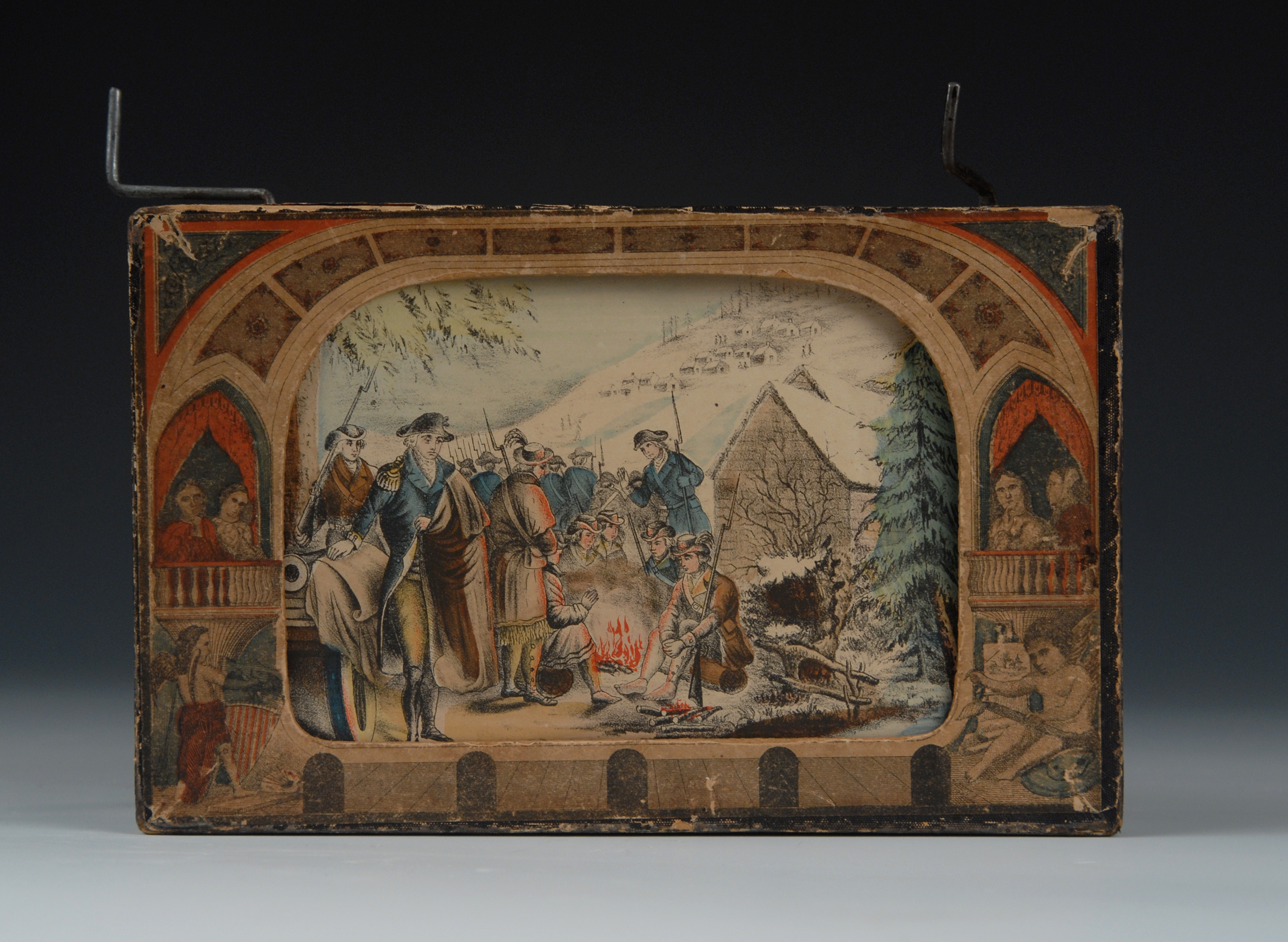
"The Historiscope: A Panorama & History of America"[Valley Forge]
Milton Bradley & Co., Springfield, Massachusetts
ca.1860-1890
The Robert Charles Lawrence Fergusson Collection
This toy consists of a scrolling set of twenty-four hand-colored lithographs set into a theatrical background. A child would present the images to their family as a show, using a script that accompanied the toy. Half of the scenes depict heroes and events of the Revolutionary War, reflecting what mid-nineteenth century American celebrated from the nation's founding. The accompanying script reads, "In December 1777, Washington took up his Winter quarters at Valley Forge, and with rude huts for shelter, often times destitute of food, without blankets for the nigth, or sufficient clothing, the Patriot army passed the darkest hours of the Revolution."
Click for a larger view.
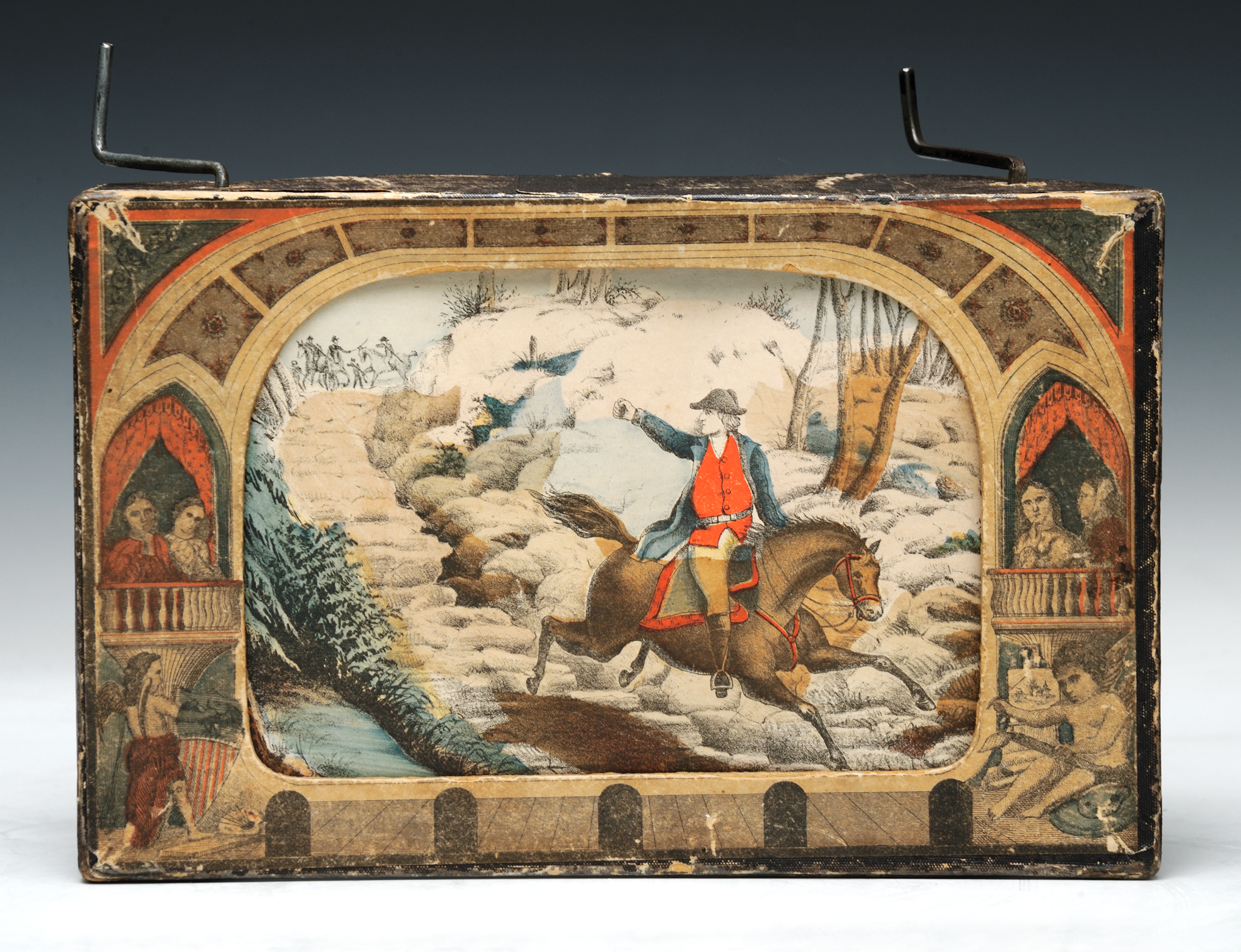
"The Historiscope: A Panorama & History of America"[Israel Putnam]
Milton Bradley & Co., Springfield, Massachusetts
ca.1860-1890
The Robert Charles Lawrence Fergusson Collection
This toy consists of a scrolling set of twenty-four hand-colored lithographs set into a theatrical background. A child would present the images to their family as a show, using a script that accompanied the toy. Half of the scenes depict heroes and events of the Revolutionary War, reflecting what mid-nineteenth century American celebrated from the nation's founding.This scene depicts the escape of General Israel Putnam.
Click for a larger view.
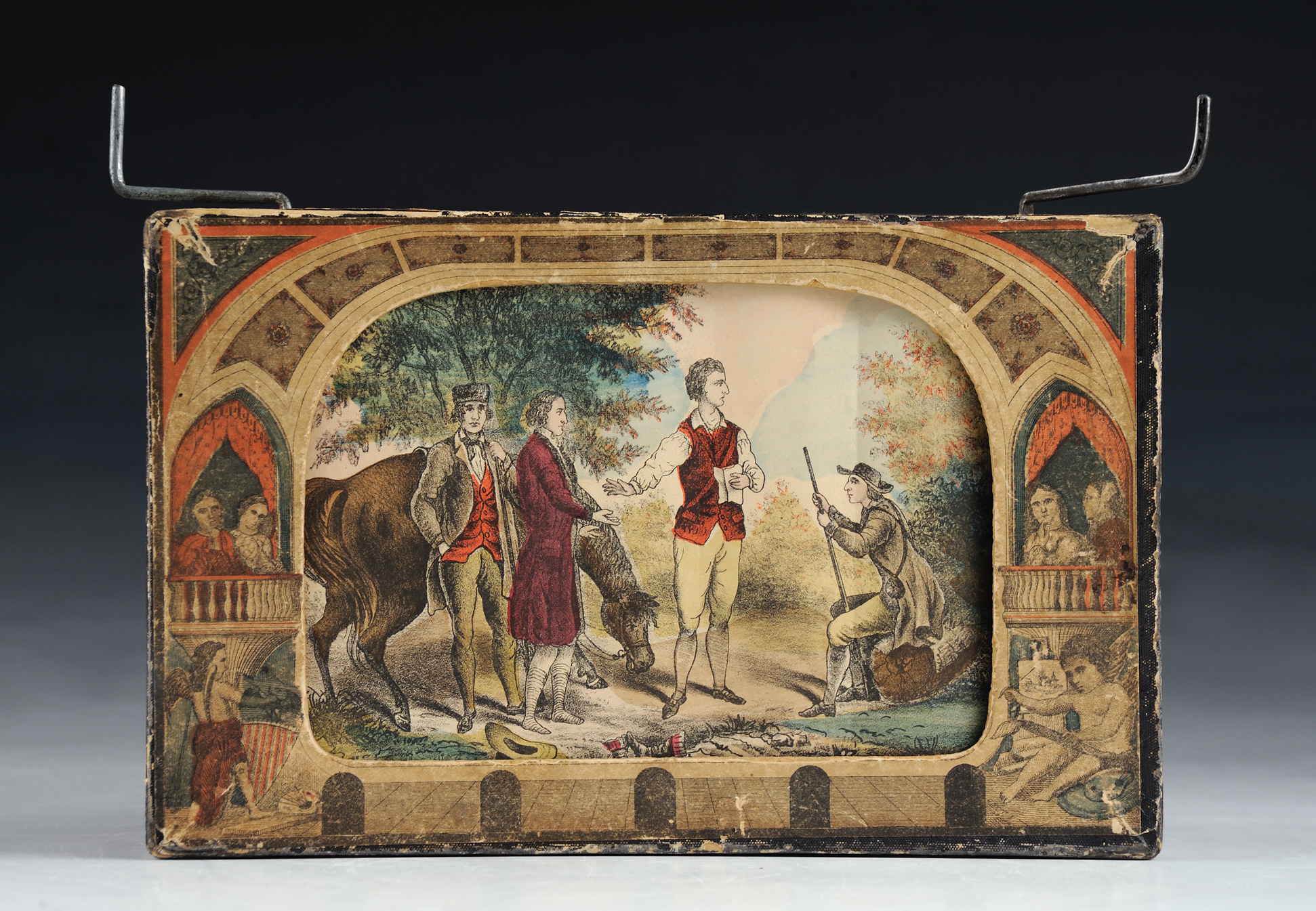
"The Historiscope: A Panorama & History of America"[Capture of John André]
Milton Bradley & Co., Springfield, Massachusetts
ca.1860-1890
The Robert Charles Lawrence Fergusson Collection
This toy consists of a scrolling set of twenty-four hand-colored lithographs set into a theatrical background. A child would present the images to their family as a show, using a script that accompanied the toy. Half of the scenes depict heroes and events of the Revolutionary War, reflecting what mid-nineteenth century American celebrated from the nation's founding. This scene depicts the capture of British major John André in September 1780.
Click for a larger view.
"The Historiscope: A Panorama & History of America"[Battle of Yorktown]
Milton Bradley & Co., Springfield, Massachusetts
ca.1860-1890
The Robert Charles Lawrence Fergusson Collection
This toy consists of a scrolling set of twenty-four hand-colored lithographs set into a theatrical background. A child would present the images to their family as a show, using a script that accompanied the toy. Half of the scenes depict heroes and events of the Revolutionary War, reflecting what mid-nineteenth century American celebrated from the nation's founding. The accompanying script describes "the last battle of the Revolution [where] Lord Cornwallis surrendered his forces to Washington . . . and subsequently ended the Revolutionary War."
Click for a larger view.
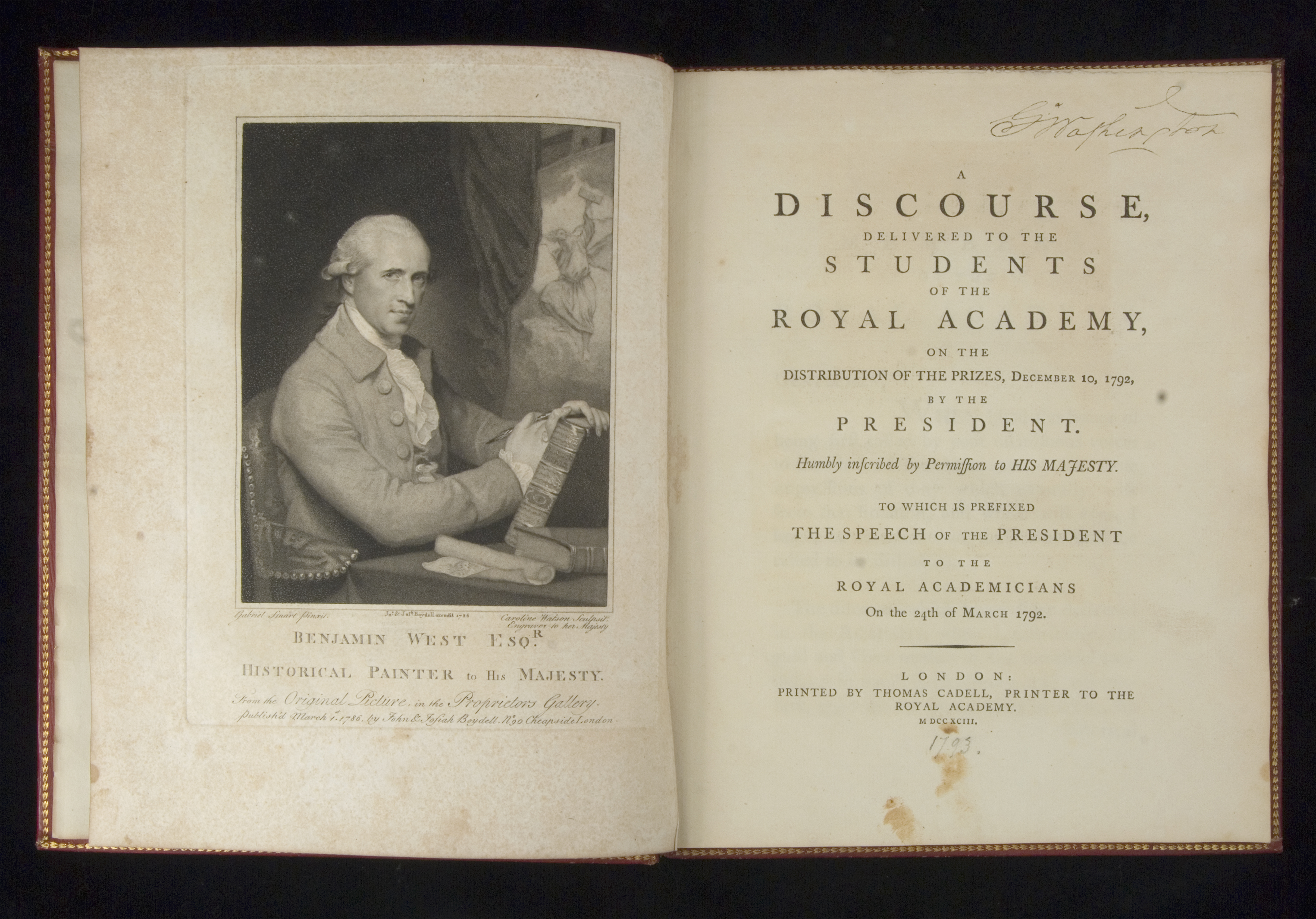
A Discourse, Delivered to the Students of the Royal Academy
Benjamin West
London: Printed by Thomas Cadell, 1793Gift of Rosamond Whitney Carr, 2008This volume is inscribed by the author to George Washington, and it bears Washington’s signature on the title page. The American-born artist Benjamin West became an official court painter to King George III, but he retained his allegiance to the cause of his native country through the Revolution. West particularly admired Washington, and Washington, in turn, admired West’s aesthetic ideas of meticulous realism. West co-founded, with Sir Joshua Reynolds, the Royal Academy of Arts, and West succeeded Reynolds as president of the Academy in 1792.
Click for a larger view
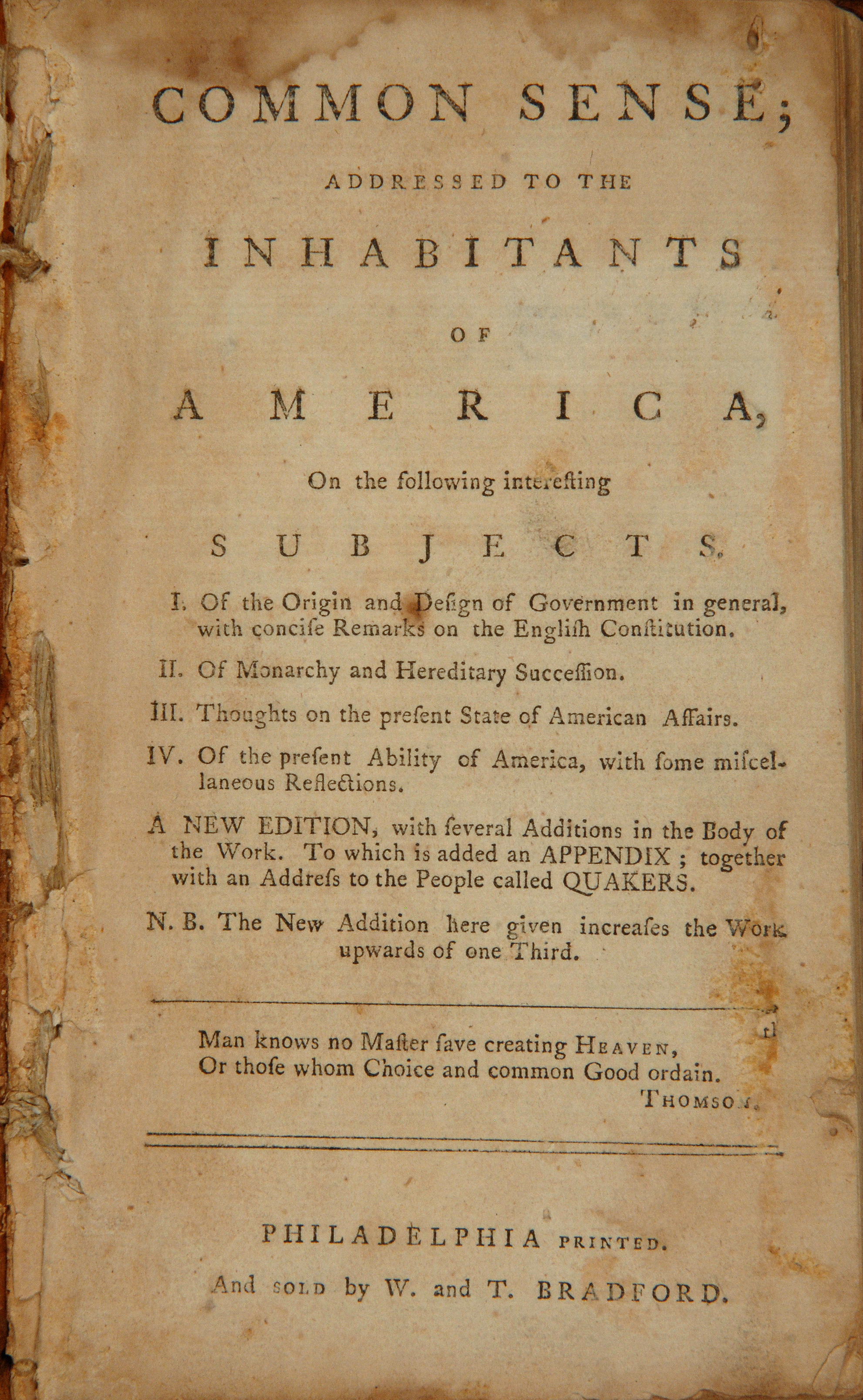
Common Sense: Addresses to the Inhabitants of America on the following interesting subjects
Thomas Paine
Philadelphia: Printed and sold by W. and T. Bradford, 1776The Robert Charles Lawrence Fergusson CollectionThis copy of Paine's most famous work is part of a larger bound set of pamphlets of era on the subject of American independence and the early United States.
Click for a larger view.
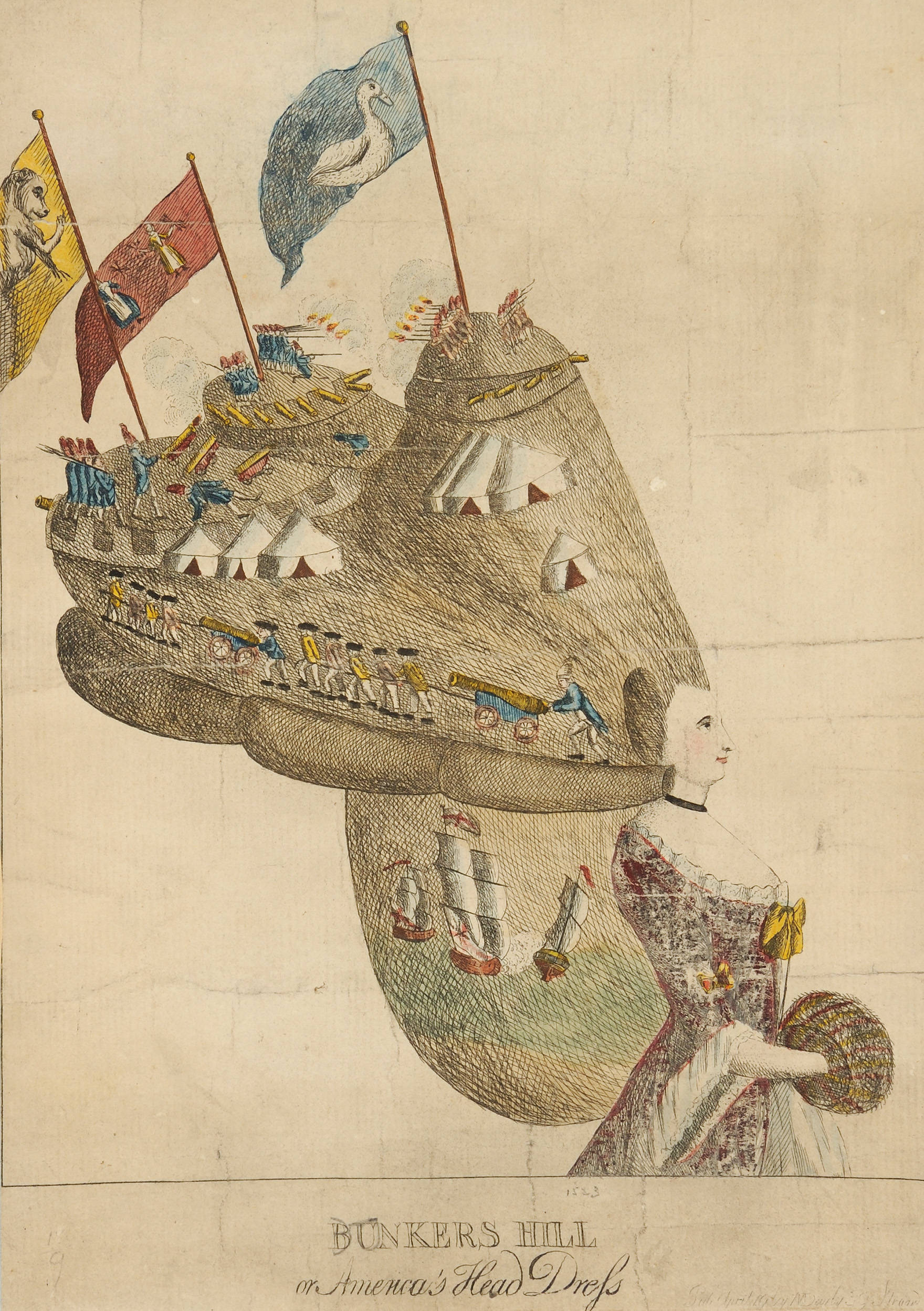
Bunkers Hill or America's Head Dress
Mary Darly
London: M. Darly,[1776]The Robert Charles Lawrence Fergusson CollectionPublished on the first anniversary of the Battles of Lexington and Concord, this pro-American satire depicts a great military battle taking place in a fashionable woman’s enormously tall coiffure, complete with ships, marching soldiers, cannon, flags and tents.