Supporting scholarship and promoting popular understanding of the American Revolution is central to the work of the American Revolution Institute. The Institute welcomes distinguished scholars and authors to share their insights and discuss their latest research with the public at Anderson House through lectures, author's talks and panel discussions. The Institute also hosts a variety of other historical programs throughout the year, including our Lunch Bite object talks, battlefield tours, special Anderson House tour programs and other events. Many of the events we offer are free.

March 2023
Lunch Bite – The Diplomatic Uniform of Larz Anderson
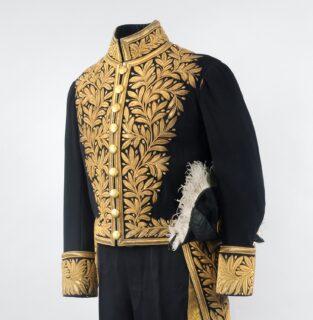
Museum Collections and Operations Manager Paul Newman discusses a diplomatic uniform made for Larz Anderson by Davies & Son of London, England, for his appointment as the U.S. minister to Belgium in 1911. At the time, U.S. diplomats were prescribed to wear civilian suits, however as it was normal for diplomats to be presented before foreign dignitaries and their courts, many had decorative uniforms made for themselves. This Lunch Bite will focus on Larz Anderson’s diplomatic uniform from our museum…
Find out more »Author’s Talk – East Florida in the Revolutionary Era, 1763-1785
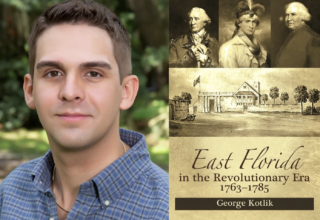
In 1763 Great Britain organized the colony of East Florida, which formed the entirety of what is now the state of Florida east of the Apalachicola River. Today, the history of East Florida is seldom studied, relegated to the outskirts of literature on the colonial and revolutionary era. Yet, the Revolution in East Florida included a violent border war that erupted between East Florida and the state of Georgia in 1775, two noteworthy battles fought on East Florida soil and…
Find out more »Author’s Talk – The Wandering Army: The Campaigns that Transformed the British Way of War
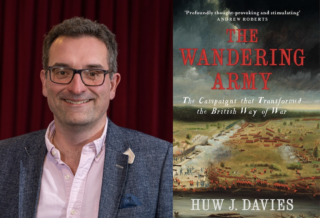
In 1774, Gen. Henry Clinton embarked on a "martial grand tour," visiting the battlefields of Europe with his friend, the military theorist Henry Lloyd. What the two observed on their travels would change the British approach to the war that broke out in North America the following year. From his practical and theoretical study of military history Clinton concluded that battles should only be fought when decisive political objectives could be achieved, but he instead realized that armies should be…
Find out more »Art in Bloom DC 2023
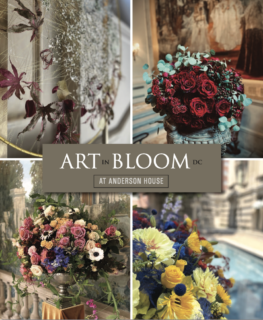
Back by popular demand, Art in Bloom DC returns to Anderson House on March 27-30, 2023! This popular event fills our historic headquarters with dozens of floral arrangements inspired by the art and architecture of Anderson House. Art in Bloom provides a unique opportunity in the nation’s capital to stroll through the museum at your own pace, viewing interpretations of specific artworks, furnishings and architectural details rendered in a floral medium by some of Washington’s most creative and innovative floral…
Find out more »April 2023
Lecture – All the World’s a Stage: The Role of Architecture and Interior Decor in Entertaining at Anderson House, 1905-1929
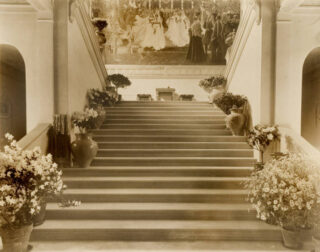
Anderson House, the winter home of Larz and Isabel Anderson between 1905 and 1937, stands as a testament to all that was gracious and in good taste in entertaining during the waning decades of America’s Gilded Age. An architectural masterpiece based on the English late Baroque period, with elements from the French Beaux-Arts tradition, the house was designed as both a splendid stage upon which the social status and careers of the couple could be promoted and advanced, and as…
Find out more »